


Nano Banana 2 Lite
- Cost per image
- $0.042
- p50 latency
- 4.0s
- Native output
- 1408×768
- Images benchmarked
- 111
Nano Banana 2 Lite is Google's volume tier and fourth of 23 on our blended ranking at 3.58. That result rests on balance rather than peaks: second in the field on composition at 4.78, fourth on latency with a 4.0 second median, and 4.92 on text, which is mid-table rather than a peak. Only transparency sits at the bottom, a zero like most of the field. At $0.042 per image it is not the cheapest lane any more, with Muse Image at $0.010 and FLUX.2 Turbo at $0.008 both below it. For integrators it remains the balanced default when generation cost scales with your users, strong on the categories a product generates every day without leading any of them.
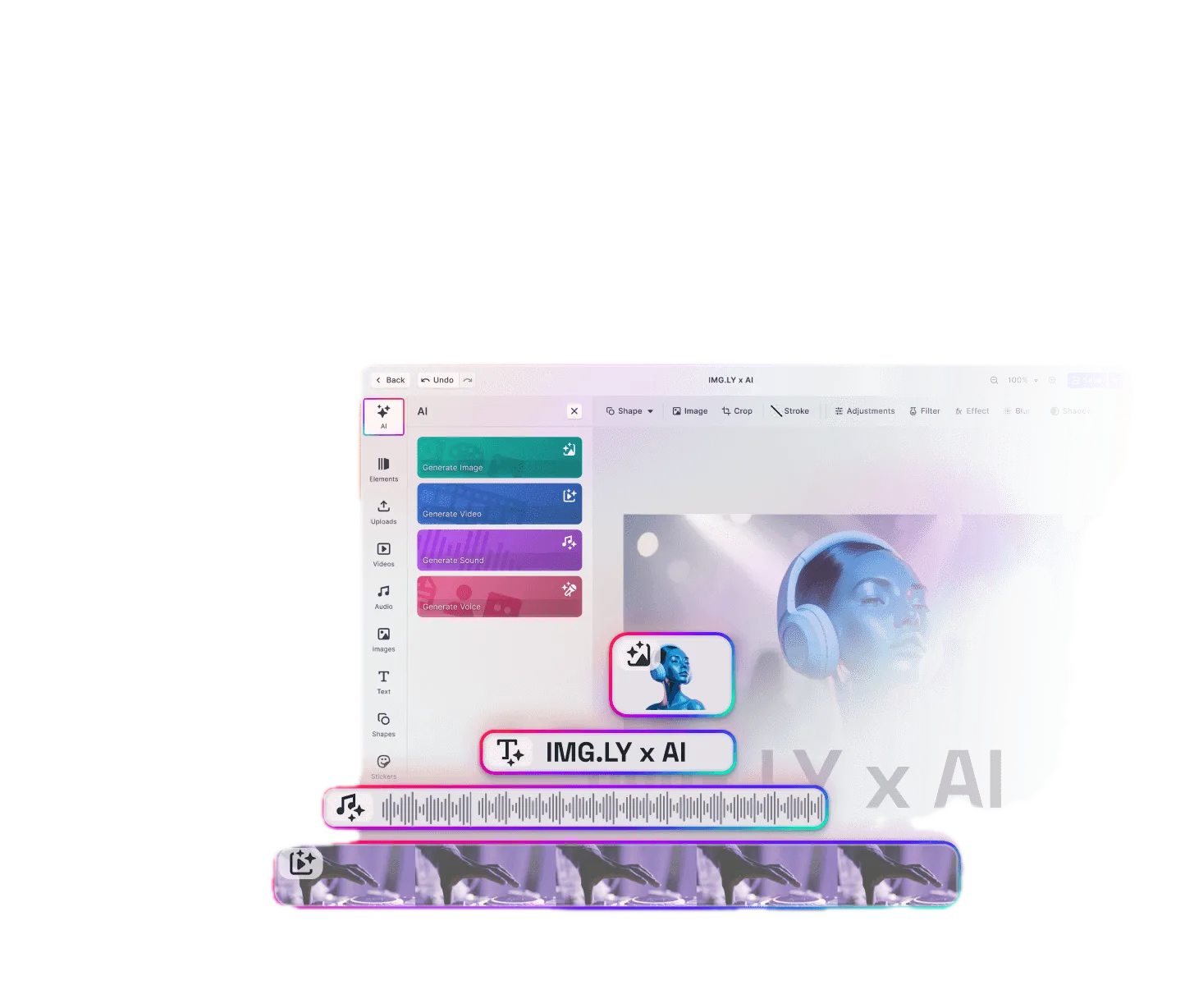
If Nano Banana 2 Lite makes your shortlist, the next question is where its output lands: an AI design agent like IMG.LY CoDesign turns generations into editable design files instead of flat images.
Licensing: Commercial use via Google Gemini API terms.
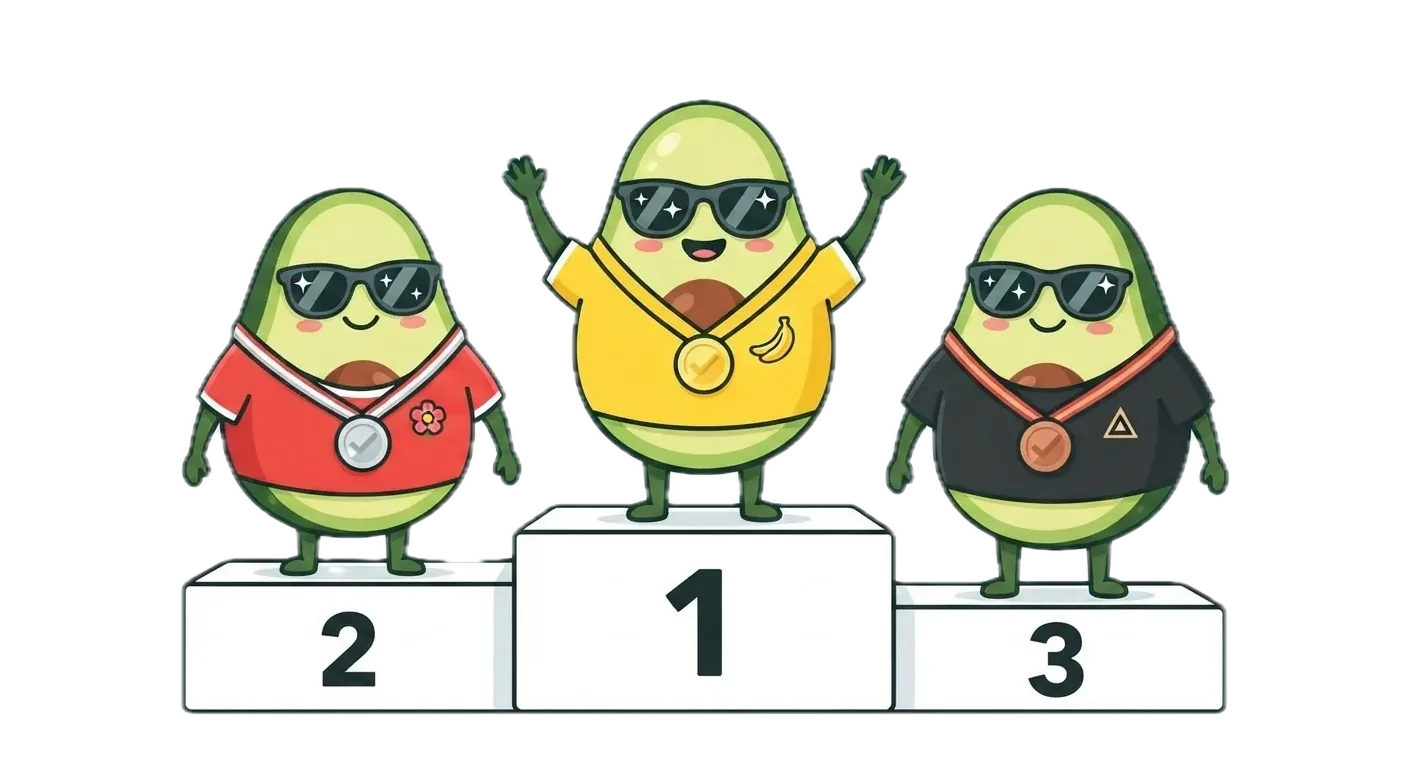
The Nano Banana family

Nano Banana 2 Lite scores at a glance
- Typography & Text Rendering
- 4.3 / 5
- Logos, Icons & Vector-Style
- 4.0 / 5
- Brand-Color Fidelity
- 3.8 / 5
- Transparency & Cutouts
- 3.2 / 5
- Composition & Negative Space
- 4.2 / 5
- Human Subjects: Faces & Hands
- 3.9 / 5
- Product & E-Commerce Staging
- 4.1 / 5
- Consistency & Repeatability
- 3.8 / 5
- Print Detail & Resolution
- 4.0 / 5
- Style Adherence & Art Direction
- 4.1 / 5
- Print-Production Graphics
- 4.2 / 5
- UI & Design Mockups
- 4.1 / 5
- Diagrams & Data Viz
- 4.3 / 5
- Structured Spec Adherence
- 3.8 / 5
Benchmarks by category
Typography & Text Rendering
This benchmark asks each model to set a single made-up brand name, 'Aurelia', as a clean geometric wordmark. Text is where image models most visibly fail, and a misspelled or malformed logo is worthless to a design team, so we treat exact spelling and legible letterforms as a hard requirement rather than a bonus. It is the fastest way to separate models you can trust with customer-facing text from those you cannot. A concert poster is text-as-content: two exact strings set at two sizes in a real layout. It tests whether a model can render a multi-line headline and subheading correctly and place them in a clean grid, the everyday job behind posters, flyers and social headers. Packaging labels are small, dense, and unforgiving: a single wrong character fails the SKU. This tests legible product typography at label scale, the exact demand behind e-commerce and print packaging mockups. Non-Latin scripts are where most models fall apart, and IMG.LY has international print and social customers. One CJK sign is enough to separate models that handle multi-byte glyphs from those that mangle them (full multilingual coverage is a planned deep-dive).
All Typography & Text Rendering benchmarks
How Nano Banana 2 Lite scored here
Wordmark
Compare all modelsPoster Headline
Compare all modelsProduct Label
Compare all modelsCJK Neon Sign
Compare all modelsLogos, Icons & Vector-Style
Here we ask for a flat, three-color vector mascot, the kind of asset a brand would actually ship as a logo. It tests whether a model can hold a constrained, clean vector style with thick outlines and a limited palette instead of drifting into photorealistic or over-detailed rendering. We included it because logo and icon work is a core design-production job, and often the first reason a team reaches for image generation at all. Icon sets are a core design-system deliverable and a strict test of set consistency: six glyphs must share one stroke weight, one accent color and a uniform grid. Models that drift in weight or style between icons fail the job. Emblem badges test crisp, single-color vector-style rendering with a tight circular composition, the look brand and merch teams reach for. Soft edges or added colors break the engraving aesthetic.
All Logos, Icons & Vector-Style benchmarks
How Nano Banana 2 Lite scored here
Brand-Color Fidelity
This prompt names two exact brand colors by hex and asks the model to use only those. We compare the color each model actually rendered against the requested values with the CIEDE2000 distance, the same perceptual metric print shops use. Brand-color fidelity is non-negotiable for marketing and packaging work, and it is one of the few quality criteria we can measure automatically and objectively, which is why it anchors the pilot. Duotone is a brand-styling staple for posters and editorial. Naming both tones by hex makes color fidelity measurable with the same CIEDE2000 pipeline, testing whether a model holds an exact two-color mapping. This is the calibration anchor for the whole color pipeline: a known 24-patch reference with published values, fully auto-scorable via CIEDE2000. It also exposes whether a model can hold many exact colors at once without drift. Banding is a silent print killer: a gradient that looks fine on screen posterizes on paper. This tests smooth tonal transitions, detectable programmatically via histogram analysis, and directly serves web-to-print buyers.
All Brand-Color Fidelity benchmarks
How Nano Banana 2 Lite scored here
Two-Color Illustration
Compare all modelsDuotone Portrait
Compare all modelsColorChecker Chart
Compare all modelsSmooth Gradient
Compare all modelsTransparency & Cutouts
A die-cut sticker needs a genuinely transparent background: real alpha, not a checkerboard pattern painted into the pixels. This benchmark checks whether the model emits a true alpha channel that a production pipeline can composite. We included it because print-on-demand and merch workflows depend on it, and because it exposes a gap the whole field currently shares. In the pilot, no model produced usable transparency, which is a finding worth publishing on its own. Apparel and print-on-demand pipelines need the graphic alone on real alpha, ready to place on any garment. This tests a limited-palette screen-print look plus a genuine transparent background with no mockup baked in. Clean photorealistic cutouts are the currency of DAM and design libraries. This tests real alpha plus edge quality on a soft, wispy subject (petals, stem) where haloing and dirty edges usually show.
All Transparency & Cutouts benchmarks
How Nano Banana 2 Lite scored here
Die-Cut Sticker
Compare all modelsT-Shirt Graphic
Compare all modelsIsolated Cutout
Compare all modelsComposition & Negative Space
This asks for a wide banner with the subject pushed into one third and a clean, uncluttered sky filling the rest for text overlay. It tests deliberate composition and negative space, the difference between an image and a usable layout. Marketing and ad creative live or die on having room for a headline, so we check whether a model can leave space on purpose instead of filling every pixel. Vertical story and reel backgrounds must leave a clean, dark zone for captions, the mobile-social equivalent of overlay-safe space. This tests deliberate composition in 9:16 with detail pushed away from the caption area. Luxury ad layouts rely on symmetry and generous margins around a single hero. This tests compositional control in the opposite direction from N01: precise centering and empty space on all sides for framing and copy.
All Composition & Negative Space benchmarks
How Nano Banana 2 Lite scored here
Banner with Negative Space
Compare all modelsVertical Story Background
Compare all modelsCentered Product Margin
Compare all modelsSpatial & Compositional Adherence
We ask for an exact count and arrangement: three blue cubes stacked on the left, one red sphere on the right. It is a precise test of whether a model follows spatial and numerical instructions instead of approximating them. Counting and placement are classic failure modes for image models, and getting them right is a prerequisite for any templated or data-driven layout, so the suite includes a dedicated spatial check. Spatial relations (on top of, below, from the left) are where models quietly disobey. This tests whether requested positions and a lighting direction are honored, a prerequisite for any templated or data-driven scene. Exclusion obedience is directly a template-background job: unwanted text, watermarks or borders make an asset unusable. This tests whether a model can leave things out when told, which many cannot.
All Spatial & Compositional Adherence benchmarks
How Nano Banana 2 Lite scored here
Object Counting & Placement
Compare all modelsScene Relations
Compare all modelsNegation: Clean Background
Compare all modelsHuman Subjects: Faces & Hands
Flagships have saturated simple hands, so this compound probe tests what still breaks: grip anatomy, finger occlusion, and a physically consistent reflection at once. Scored as failure rate across seeds because production tail risk, not average quality, disqualifies a model for lifestyle and ad work.
All Human Subjects: Faces & Hands benchmarks
How Nano Banana 2 Lite scored here
Hand Holding a Sphere
Compare all modelsProduct & E-Commerce Staging
The clean product hero on a neutral surface is the workhorse of e-commerce catalogs. It tests material fidelity (glass, marble) and controlled studio lighting, the difference between a usable PDP image and an uncanny one. Floating-product shots with a contact shadow are a staple of modern catalog and ad creative. This tests believable material and lighting plus a specific, controllable composition (angle, floating, shadow placement).
All Product & E-Commerce Staging benchmarks
How Nano Banana 2 Lite scored here
Cosmetics Hero
Compare all modelsFloating Sneaker
Compare all modelsConsistency & Repeatability
Character consistency across scenes is the make-or-break for storybooks, explainer sets and personalized campaigns. This is run one of three identical-character prompts, scored as a set for identity drift, the core VDP and asset-pack question. Run two of the character-consistency set. Holding the same face, hair, apron and glasses across a new pose and setting is exactly what breaks when teams try to generate a coherent illustrated series. Run three of the character-consistency set. Across three scenes the model must keep one recognizable character; drift in any single run fails the set and the personalization use case behind it.
All Consistency & Repeatability benchmarks
How Nano Banana 2 Lite scored here
Character Series: Greenhouse
Compare all modelsCharacter Series: Desk
Compare all modelsCharacter Series: Market
Compare all modelsPrint Detail & Resolution
Fine symmetrical linework is a torture test for native resolution and detail retention, and mandalas are a real print and coloring-book product. Uniform strokes with no gray shading make degradation obvious at output size. An illustrated map packs fine detail and many tiny labels into one asset, testing resolution and legibility together, the demand behind posters, packaging inserts and editorial print.
All Print Detail & Resolution benchmarks
How Nano Banana 2 Lite scored here
Fine-Line Mandala
Compare all modelsIllustrated Map
Compare all modelsStyle Adherence & Art Direction
Art-directed style adherence is what asset-pack and agency work demands: a specific era, flat shapes, a limited palette and screen-print texture, held together. This tests whether a model can commit to a named style instead of defaulting to generic realism. Isometric low-poly is a popular commercial illustration style for onboarding and marketing. This tests a consistent rendered look with a controlled palette and a specific count of scene elements.
All Style Adherence & Art Direction benchmarks
How Nano Banana 2 Lite scored here
Mid-Century Travel Poster
Compare all modelsIsometric Office
Compare all modelsPrint-Production Graphics
Greeting cards are a flagship print-on-demand product and a compound test: exact cover text, a decorative border, and print-ready geometry (A6, clean margins, bleed) at once. Seamless tiles power merch, fabric and wallpaper, and tileability is auto-verifiable by comparing opposite edges. This tests crisp vector rendering plus true edge-matching on both axes. Branding mockups are agency and brand-kit deliverables. This tests a multi-object layout with correct print items, realistic paper and shadow, and a specific top-down composition. A comic strip is a compound stress test in one asset: exact speech-bubble text, character consistency across panels, and multi-panel layout. Few models hold all three together.
All Print-Production Graphics benchmarks
How Nano Banana 2 Lite scored here
Greeting Card
Compare all modelsSeamless Pattern Tile
Compare all modelsStationery Mockup
Compare all modelsThree-Panel Comic
Compare all modelsUI & Design Mockups
Product-page mockups are the closest UI job to IMG.LY's commerce customers. This tests layout hierarchy and legible interface text (price, controls, the Add to Cart button) in one screen.
All UI & Design Mockups benchmarks
How Nano Banana 2 Lite scored here
E-Commerce Product Page
Compare all modelsDiagrams & Data Viz
A bar chart turns prompt adherence into checkable arithmetic: is bar B the tallest, C the shortest? It is a brutal, auto-verifiable separator and ties to presentation and e-learning template tools.
All Diagrams & Data Viz benchmarks
How Nano Banana 2 Lite scored here
Labeled Bar Chart
Compare all modelsStructured Spec Adherence
Structured JSON prompts are how creative-automation pipelines, agents and CE.SDK integrations actually drive image models, and nobody benchmarks it. Each spec field becomes a checklist item plus an automated color check, the modality closest to IMG.LY's product reality.
All Structured Spec Adherence benchmarks
How Nano Banana 2 Lite scored here
Structured JSON Scene
Compare all modelsCompare Nano Banana 2 Lite head to head


New model? New benchmarks.
We re-run the identical 37-prompt suite on every model release. Get the scores, and what changed in the rankings, in your inbox.
You're on the list.
We'll email you when new benchmark results ship.
Deploy Nano Banana 2 Lite with our AI Editor
Give your users Nano Banana 2 Lite inside a real editor. The IMG.LY AI Editor pairs its generation with the manual last mile it lacks, background removal, brand kits and editable text, so your users refine its output to production quality.
Frequently asked questions
Image generation is stochastic: the same prompt produces different images on every run, so a single sample measures luck, not ability. Every model runs each benchmark three times with fixed seeds (1111, 2222, 3333), or three unseeded samples where the API accepts no seed. Scores average all three samples, and the consistency benchmarks measure the variation itself.
Typography & Text Rendering is where Nano Banana 2 Lite scores best against its own other categories, which is not the same as leading the field there. The per-category breakdown on this page shows where it is strong and weak, so use the category scores, not the blended overall, to judge it for a specific job.
Nano Banana 2 Lite costs $0.042 per image at the endpoint and default parameters we benchmarked, shown in the stats above. Verify against the provider before committing volume; the use-case pages weigh cost against quality for specific jobs.
Not reliably. Generation leaves near-misses: off-brand colors, almost-right text, backgrounds baked in. The IMG.LY AI Editor lets your users refine Nano Banana 2 Lite's output to production quality with background removal, brand kits and editable text on a real canvas.
The model rankings place Nano Banana 2 Lite against every other model on the same prompts, and the comparison pages put it head to head with a specific rival. Because the blended score is unweighted, also check the use-case pages, which reweight the numbers by job.
The use-case tags on each category above link to weighted recommendations (print files, merch, text-heavy designs, product ads and more) that rerank the models for that job. A model that wins on price can lose on typography, so match Nano Banana 2 Lite to the use case that matters to you.