

Recolorable wrapping paper in your print shop or online store
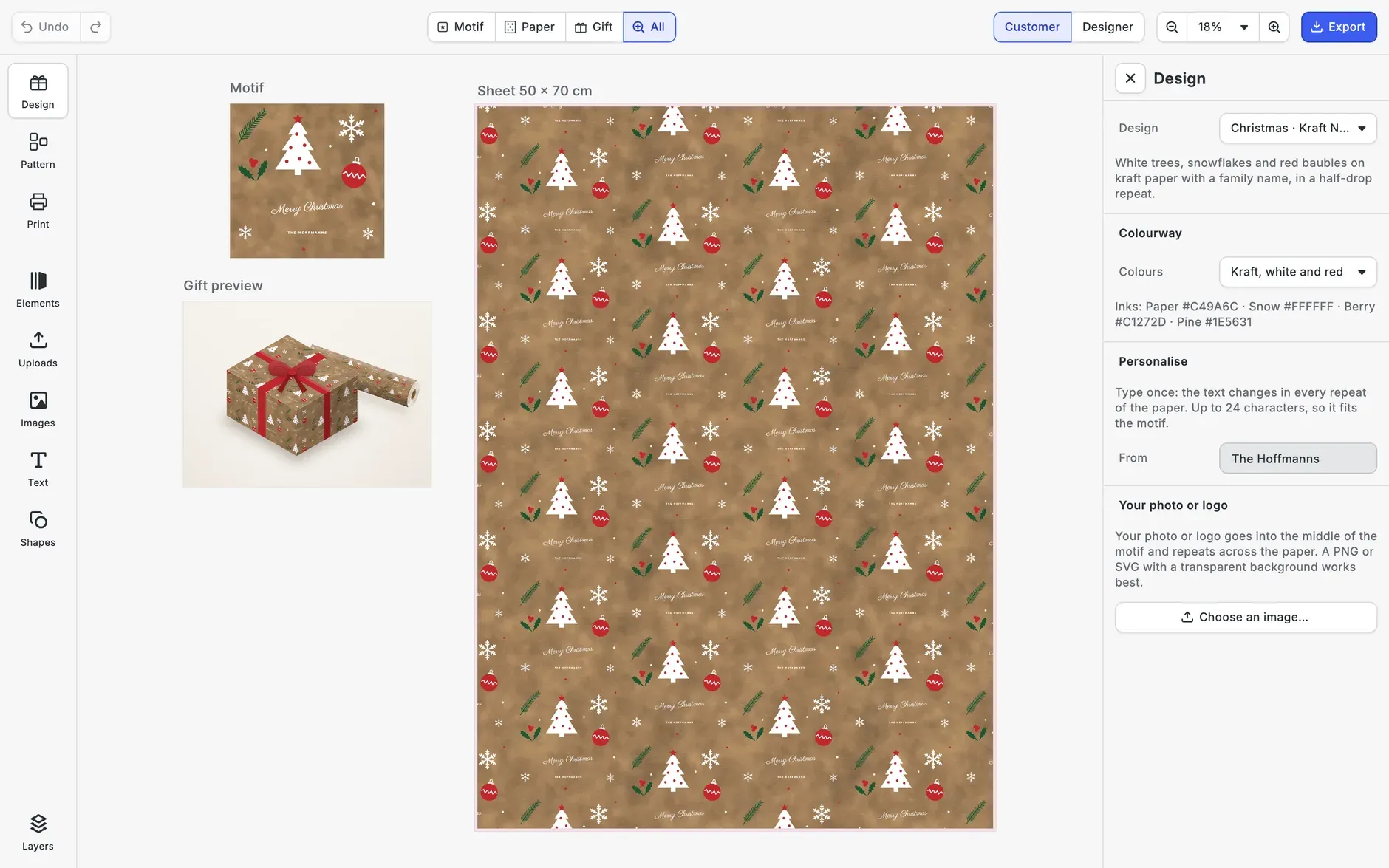
Your users choose the colors of the wrapping paper they order. In CE.SDK, the motifs of one color can share a single fill, so changing one motif in the color panel recolors every motif on that fill across the sheet.
Trusted by 100+
industry leaders















Integrating IMG.LY’s editor meant we didn’t have to build or maintain a complex editing layer ourselves. That kept our team focused on our core AI ad engine and saved us countless development hours — while still giving our customers the ability to polish and customize creatives at scale.
Hikari Senju
CEO, Omneky

With IMG.LY we built a central creative portal that now powers over 140 dealer campaigns across multiple automotive brands. Before this, asset creation was slow and inconsistent.
Martin Röhr
Product Owner, Digitas

By embedding IMG.LY’s editor we were able to hit key RFP requirements and deliver a template-based creative experience that now serves 1,000+ customers. It helped us win more deals and exceed enterprise expectations without needing to hire dedicated design teams.
Rob Driscoll
Director of PM, Optimizely

Since integrating IMG.LY’s editor, we now deliver 30,000+ ad creatives per month, dramatically shorten time-to-launch, and help our clients cut design spend by up to $10,000 per month.
Logan Welbaum
Founder, Plai

Our customers create over a million personalized postcards each year choosing from over hundreds of templates with IMG.LY’s SDK. It’s the only solution that allows us to build our own specialized, on-brand UI that integrates seamlessly with our platform.
Jeanine Zaalberg
Product Manager, SwissPost

From a developer’s perspective, the most powerful feature of the photo editor is the integration process. It was completely flawless, quick, and easy to integrate.
Stefano Fornari
CTO, Funambol

We compared IMG.LY SDK with other solutions and found that it would be the best fit for us since it provides all the features that are crucial for our use case.
Carem Pereira
SCRUM Manager, HP

Four color values make a new colorway
This 50 by 70 cm sheet holds 234 motifs, each with a soft shadow beneath it, and all of them draw on just five fills: the paper, the shadows and three motif colors. Each colorway below sets four of those, the paper and the three motif colors, while every shape stays where the layout put it.
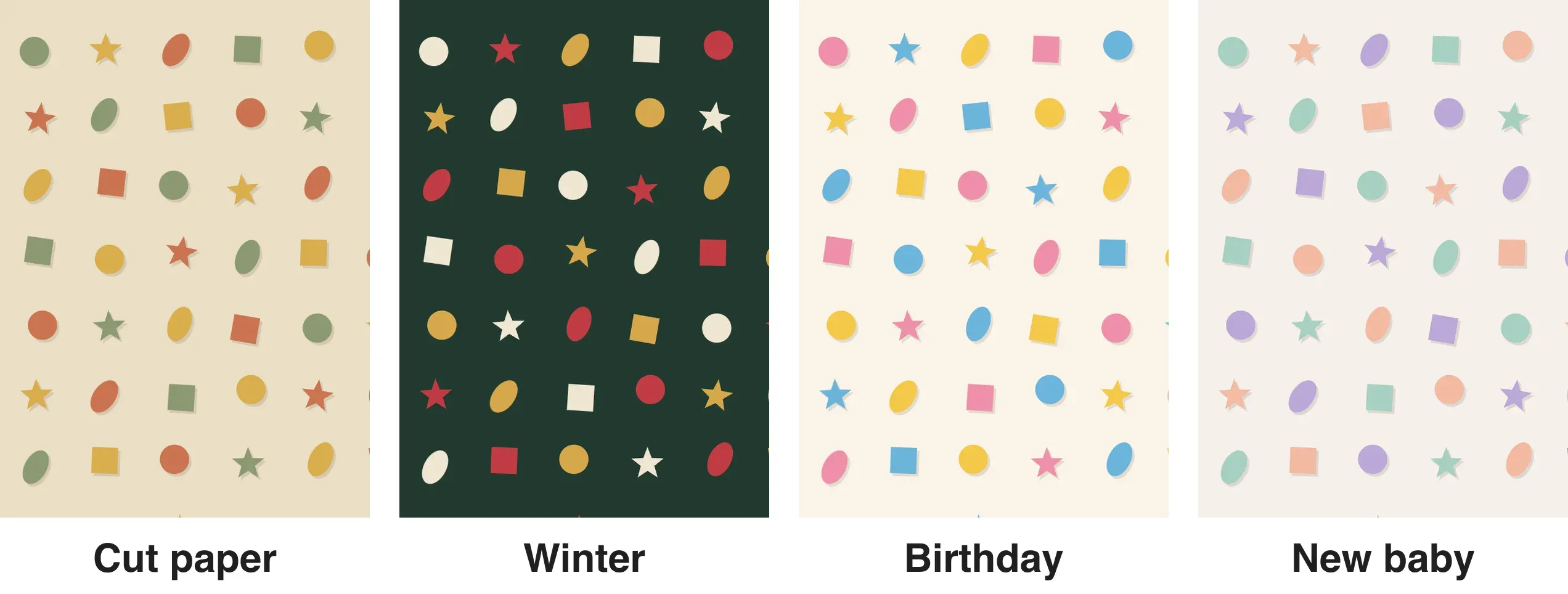
The full sheet prints as vector shapes
Every motif and shadow goes into the PDF as a vector shape on one page, with no image inside, so the whole 50 by 70 cm sheet comes to about 26 KB.
Colorways stored in your catalog
Since a colorway is four color values, your catalog can keep them next to each paper design. Your code writes them into the shared fills when the editor opens, or the engine renders the sheet on your server for orders that need no edits.
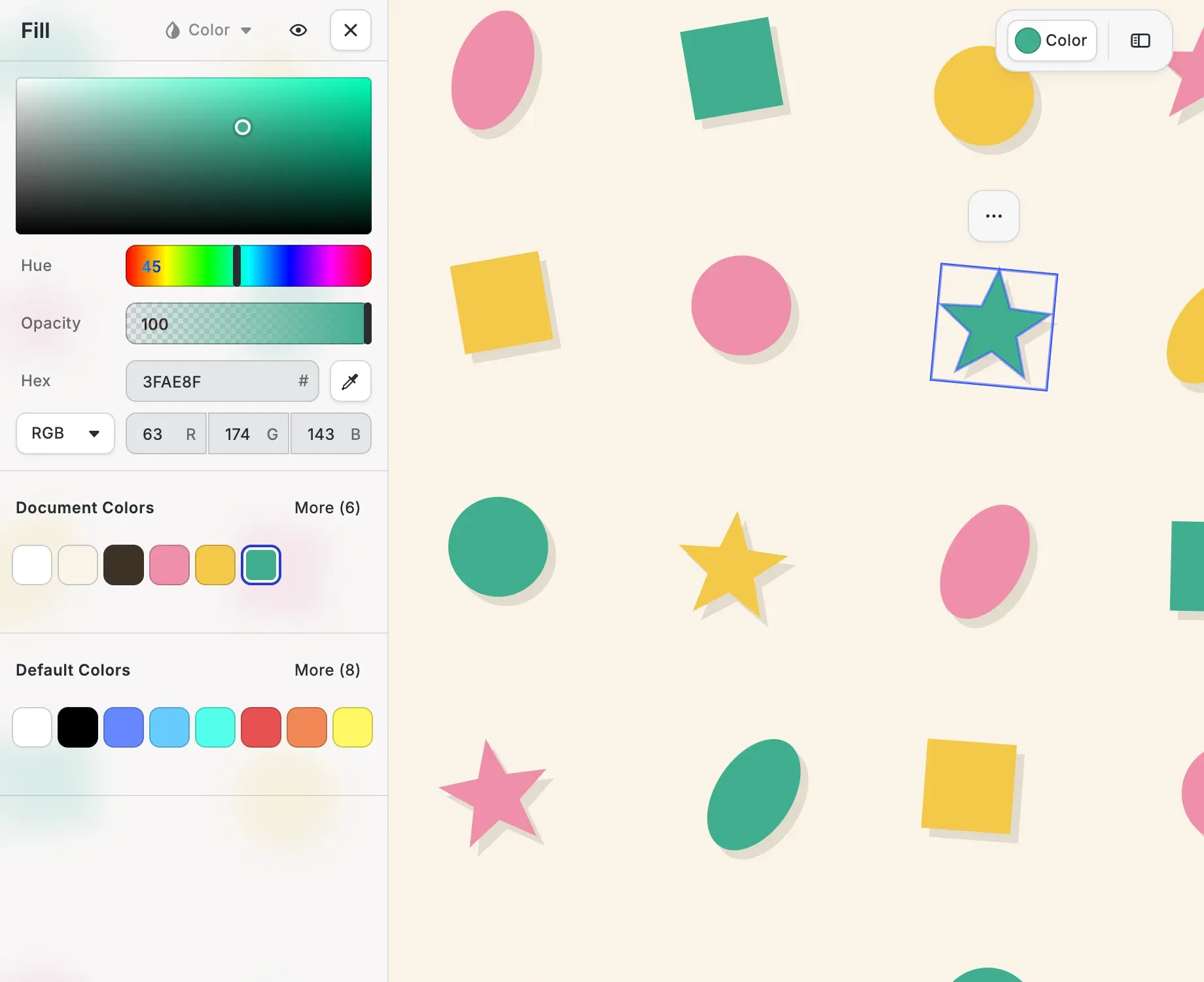
Your users get one control on the sheet
Your template can open the motifs for color and nothing else. When a user clicks one, the toolbar offers a single control, Color, and the motif can’t be moved, resized, duplicated or deleted. A click on the paper or a shadow selects nothing. Your setup also hides the gradient options in the web editor’s color panel, so each motif keeps the solid color it shares with the rest of its group.
Sell each gift wrap in every colorway
Tell us which wrapping paper designs you sell and in how many colorways, and we’ll get back to you with a custom quote for your use case.
Gift paper FAQs
The bottle label editor traces uploaded logos for labels. For cartons and their dielines, see the packaging editor SDK.
A wrapping paper editor inside the print shop or online store where your users order their sheets. CE.SDK opens your pattern templates there, lets users change the colors and exports the finished sheet as a print PDF.
Your template code attaches one color fill to every motif of that color, and a change to that fill shows on all of them.
Yes, once your code gives that motif a fill of its own, a copy of the shared fill attached to that motif alone. The color panel then changes only that motif, and the rest of its color group keeps the shared color.
A motif duplicated in the web editor gets a fill of its own, so it keeps its color while the other motifs change. Your code can attach the shared fill to new motifs, or your setup can turn duplication off for users.
No. Shared fills belong to the engine, so your iOS, Android, desktop and Node.js apps get them too. The user view with its gradient options hidden is set up in the web editor.