


IMG.LY vs InDesign Server
Looking for a modern, flexible, and scalable alternative to InDesign Server? CreativeEditor SDK delivers real-time editing, full customization, and AI-driven automation, all without the complexity of server-based rendering.

What makes IMG.LY the best InDesign Server alternative?
Real-time editing in the browser
IMG.LY provides a fully client-side editing experience with instant updates, so editing needs no server.
Full customization & white-labeling
A fully customizable, white-label solution where you control the UI, branding, and functionality.
Extensibility & plugin system
Custom plugins are treated like built-in features, so you can add new tools, automation, and industry-specific workflows.
Openness & interoperability
Import Photoshop (PSD), Illustrator (AI), and InDesign (IDML) files, export designs back to IDML and to PSD (on the server), and save work-in-progress as scene files.
Trusted by 100+
industry leaders















What our clients say about us
Integrating IMG.LY’s editor meant we didn’t have to build or maintain a complex editing layer ourselves. That kept our team focused on our core AI ad engine and saved us countless development hours — while still giving our customers the ability to polish and customize creatives at scale.
Hikari Senju
CEO, Omneky

With IMG.LY we built a central creative portal that now powers over 140 dealer campaigns across multiple automotive brands. Before this, asset creation was slow and inconsistent.
Martin Röhr
Product Owner, Digitas

By embedding IMG.LY’s editor we were able to hit key RFP requirements and deliver a template-based creative experience that now serves 1,000+ customers. It helped us win more deals and exceed enterprise expectations without needing to hire dedicated design teams.
Rob Driscoll
Director of PM, Optimizely

Since integrating IMG.LY’s editor, we now deliver 30,000+ ad creatives per month, dramatically shorten time-to-launch, and help our clients cut design spend by up to $10,000 per month.
Logan Welbaum
Founder, Plai

Our customers create over a million personalized postcards each year choosing from over hundreds of templates with IMG.LY’s SDK. It’s the only solution that allows us to build our own specialized, on-brand UI that integrates seamlessly with our platform.
Jeanine Zaalberg
Product Manager, SwissPost

From a developer’s perspective, the most powerful feature of the photo editor is the integration process. It was completely flawless, quick, and easy to integrate.
Stefano Fornari
CTO, Funambol

We compared IMG.LY SDK with other solutions and found that it would be the best fit for us since it provides all the features that are crucial for our use case.
Carem Pereira
SCRUM Manager, HP

IMG.LY vs. InDesign Server at a glance
| Feature | IMG.LY | InDesign Server | Notes |
|---|---|---|---|
| Primary Use Case | Cross-platform SDK addressing two core scenarios simultaneously: interactive editor integration for user-facing creative applications, and backend automation infrastructure for programmatic content generation. Encompasses video production, graphic design, and commercial print through unified technical foundation. Deployed for user-driven creative workflows alongside systematic data-driven asset generation. Template definitions serve both manual editing contexts and automated pipeline execution identically. | InDesign Server is a layout and composition engine, based on desktop InDesign, that powers automated publishing solutions. On the server, it executes InDesign layouts, typography, and composition for batch processing workflows. It suits organizations that need InDesign layout without manual desktop editing, processing documents programmatically. | IMG.LY provides comprehensive editing and automation across video, design, and print. InDesign Server automates InDesign document production on the server. |
| Target Audience | Organizations deploying creative capabilities in dual contexts: applications embedding editors for end-user content creation, and infrastructure implementing automation for programmatic asset production. Addresses print-on-demand platforms, marketing automation systems, e-commerce personalization, content management implementations, and enterprises requiring both interactive creation tools and systematic generation workflows. Serves businesses needing unified solution for human creativity and automated production. | Teams building publishing solutions with InDesign Server as the layout and composition engine, working from InDesign documents and templates that their scripts process on the server. | IMG.LY targets organizations needing interactive editing and automation across all platforms. InDesign Server serves teams that automate InDesign document production. |
| Technical Approach | Flexible SDK architecture providing three operational modes: production-ready UI components for deployment, engine APIs for custom interface construction, or headless operation for automation workflows. Native cross-platform engine delivers consistent rendering across browser environments, mobile applications, desktop platforms, and Node.js server infrastructure. Organizations control deployment patterns and infrastructure without external service dependencies. Processing occurs on controlled infrastructure whether client-side or server-side. | InDesign Server is a server application that client applications call over SOAP or through Java APIs to run UXP JavaScript and ExtendScript scripts against the InDesign object model. Those scripts open InDesign documents (INDD) or create new ones. Adobe also offers the hosted InDesign API in Firefly Services, a REST service whose custom scripts use the InDesign Server scripting object model. | IMG.LY offers more comprehensive cross-platform SDK with expanded deployment options including UI, custom, and headless modes. InDesign Server provides server-only SOAP-based engine. |
| Advanced Video Editing | Timeline-based video composition with multi-track architecture supporting frame-accurate editing. WebCodecs API processes MP4 files directly in browsers without transcoding overhead. Unified timeline combines video segments, image overlays, audio channels, and graphic elements. Scene-based organization, template-driven production, and multi-format export. Supports both interactive timeline editing through visual interfaces and programmatic video assembly through automation APIs using identical SDK. | The InDesign object model places movie files on pages as page items with a poster image and player controls, for playback in an exported PDF. | IMG.LY provides complete video editing infrastructure across interactive and automation contexts. InDesign layouts can hold placed movie files as media. |
| Advanced Design Editing | Comprehensive design environment supporting vector graphics, text styling, layout construction, and commercial print output. CMYK and Pantone color space handling for professional printing workflows. Collage composition, web-to-print template systems, professional typography controls, and adaptive layout intelligence. Supports both interactive design editing and programmatic generation. | The InDesign object model, which InDesign Server scripts use, provides paragraph and character styles, master pages, and baseline grids for page layout, plus kerning, tracking, and OpenType features such as ligatures and ordinals. Color handling in the object model covers CMYK and spot inks, spot to process conversion, and spot colors imported from Adobe color books. Print output includes PDF, EPS, and PostScript files. | Both support professional design with CMYK and spot colors for commercial printing. IMG.LY offers interactive editing and automation with cross-platform deployment. InDesign Server provides sophisticated typography automation without interactive interface. |
| Templating & Dynamic Editing | Adaptive template infrastructure with intelligent layout algorithms adjusting automatically to variable content dimensions and aspect ratios. Placeholder-based template architecture populated through interactive visual editors or programmatic APIs using identical template specifications. Role-based access controls enable collaborative template development with defined permissions. Templates maintain consistency whether processed through user editing sessions or automation execution, unified template definitions serving both contexts. | Templates are InDesign documents (INDD) with text variables, data merge fields, and tagged text. IDML, InDesign's XML-based format, lets other systems read and change templates and their contents. InDesign Server scripts populate placeholders, apply styles, and merge records from a CSV or other delimited text file. Layout rules in the InDesign object model scale, recenter, or reposition page objects when a page is resized. | Both offer adaptive layout: IMG.LY adjusts to content dimensions and aspect ratios, while InDesign layout rules reposition page objects on resize. IMG.LY templates are populated in editors or through APIs, InDesign Server templates through scripts. |
| Creative Automation | Automation architecture with equal priority alongside interactive capabilities using unified SDK. Headless Node.js operation enables programmatic generation without UI dependencies. Identical SDK serves user-facing editors and backend automation without additional components or separate products. Integrates with external databases, CRM platforms, and marketing systems for data-driven content production. Template structures function identically across UI-driven creation and API-driven generation. Infrastructure deployment under organizational control. | Server-based automation is the core purpose of InDesign Server. Client applications call its scripts that create documents, merge data, and export output, passing arguments in and receiving a result back. Through the InDesign object model, those scripts can also import XML files into documents and export tagged content as XML. | IMG.LY provides automation as equal capability alongside interactive editing in unified SDK. InDesign Server offers dedicated server-based automation as exclusive product purpose. |
| AI Capabilities | Extensible AI framework supporting custom model integration alongside built-in intelligent algorithms. Smart layout optimization automatically arranges design elements for visual appeal and readability. Plugin architecture enables connecting proprietary or third-party AI services for specialized creative workflows. AI functions as creative assistant while preserving complete manual control over outputs. AI capabilities available in both interactive editing and automation contexts. | Adobe offers generative AI through the Firefly API, a separate Firefly Services product. | IMG.LY offers an extensible AI framework with smart layout algorithms and custom model integration; Adobe's generative AI sits in the separate Firefly API. |
| Asset Management | Federated asset architecture combining embedded libraries with direct external service integrations. Getty Images, Unsplash, and Pexels connect without middleware layers. Organizations extend default asset libraries with custom sources while maintaining data governance policies. Unified interface manages video and design assets together. Client-side architecture maintains media under application control without mandatory external dependencies. Flexible architecture supports embedded, integrated, and custom asset sources. | InDesign Server scripts reach images and graphics through complete file paths on the server or network storage. The InDesign object model places them as links to files that scripts can relink, update, or embed, and it also has object libraries and can place cloud library assets. | IMG.LY offers integrated asset management with direct stock provider connections and unified interface. InDesign Server works with linked files referenced by file path. |
| File Format Support | Exhaustive professional file compatibility. Import: PSD, AI, IDML, SVG, PNG, JPEG, motion formats, custom typefaces, template specifications. Export: PNG, JPEG, WebP, PDF, MP4, IDML, PSD (on the server), and production-grade specifications supporting CMYK workflows. | The InDesign object model places bitmap and vector graphics in layouts and, beyond its print formats, exports JPEG, PNG, IDML, InDesign snippets, InCopy markup, EPUB, HTML, RTF, and text. | Both export JPEG, PNG and IDML; IMG.LY adds WebP and MP4 export and PSD export on the server, while InDesign Server also exports EPUB, HTML, InCopy markup and InDesign snippets. |
| User Interface | Production-ready modular UI components for applications embedding user-facing creative tools. Canvas-based interactions with timeline controls, filter palettes, effect adjustments, and audio management enable direct content manipulation. Component architecture supports interface reorganization, control replacement, and complete custom UI development. Headless mode bypasses UI entirely for automation workflows. Single SDK accommodates both visual editing applications and invisible backend generation systems. | No user interface. InDesign Server runs as headless server process without graphical interface. Document generation occurs programmatically through SOAP web services, requiring custom application development for any user-facing functionality. Organizations build separate applications calling InDesign Server APIs for document production. All user interaction occurs through custom-built applications external to InDesign Server itself. | IMG.LY provides production-ready UI for interactive editing plus headless mode for automation. InDesign Server offers no UI, operating exclusively as headless server requiring external applications. |
| White-labeling | Zero-branding architecture with no vendor identification in user-facing interfaces or generated outputs. Visual customization extends to complete UI restructuring beyond superficial theming. Internationalization support enables global deployments with localized interfaces. Headless mode eliminates UI entirely for fully custom implementations. Organizations achieve precise brand alignment including custom color systems matching corporate guidelines. White-labeling inherent without additional licensing or configuration. | InDesign Server has no user interface of its own, so the integrating team builds and brands every user-facing screen. | IMG.LY offers white-labeled UI components plus headless option. |
| Interactive Editing | Canvas-based interactions delivering instantaneous visual feedback during content manipulation. Timeline navigation, zoom controls, and playback operate without server round-trips. Effect previews render in real-time using GPU acceleration. Cross-platform consistency maintains uniform behavior across browsers, mobile devices, and desktop environments. Direct manipulation patterns matching professional creative applications rather than code-driven workflows. Interactive editing core to user-facing deployment scenarios. | No interactive editing capabilities. InDesign Server processes documents programmatically through batch automation without real-time user interaction. Document generation occurs server-side with rendered output returned after processing completes. No canvas interactions, real-time preview, or direct manipulation. All document modifications occur through scripts and API calls. Interactive editing requires separate InDesign desktop application. | IMG.LY provides real-time interactive editing with immediate visual feedback across platforms. InDesign Server offers no interactive editing, operating exclusively as batch processing automation engine. |
| Multi-Layer Editing | Unlimited layer depth organizing video segments, graphics, audio, and effects with sophisticated composition capabilities. Blending modes, opacity controls, and z-axis ordering enable professional visual effects. Grouping and parent-child relationships establish reusable composition hierarchies. Lock and visibility controls for complex project management. Layer system maintains consistency across web, mobile, and desktop deployments. Interactive and programmatic layer manipulation supported. | InDesign layers organize page elements, and the InDesign object model lets scripts show, hide, lock, reorder, merge, and set layers to print or not, so a layer can stay out of print output. Page items take blend modes such as Multiply, Screen, and Overlay, plus opacity, through transparency settings. InDesign Server controls layers through scripts only. | Both offer layers with blend modes, opacity and lock controls; IMG.LY supports interactive and programmatic layer manipulation, while InDesign Server controls layers through scripts only. |
| Component Architecture | Decoupled engine and editor layers enabling three integration patterns: full UI deployment, custom UI development, or headless operation. Granular component registration injects custom functionality without SDK modification. Order APIs control component layout programmatically. Plugin framework extends capabilities while maintaining upgrade compatibility. Selective component adoption using only required elements rather than monolithic integration. Architecture supports partial or complete SDK adoption based on requirements. | InDesign Server is deployed as a complete server application and integrated through SOAP calls rather than embedded as component libraries. Its functionality is extended through scripts and plug-ins, not by choosing individual components. | IMG.LY offers more flexible and highly modular architecture with granular customization and plugin extensibility. InDesign Server is a complete server application extended through scripts and plug-ins. |
| Cross-Platform Support | Platform-spanning architecture covering web frameworks (React, Angular, Vue, Svelte, Next.js), native mobile (iOS, Android), cross-platform mobile (React Native, Flutter), desktop (Electron, macOS), and backend (Node.js). Unified codebase adapts to platform-specific conventions while maintaining functional consistency. Templates render identically whether processed on client devices or backend servers. Single SDK deployment across all target platforms. | InDesign Server runs on Windows Server or macOS, and client applications call it remotely over SOAP. It ships no browser, mobile, or desktop client components of its own. | IMG.LY offers significantly broader cross-platform deployment including comprehensive web, mobile, desktop, and server support. InDesign Server runs on servers without client-side deployment options. |
| Customizability | Granular configuration spanning UI presentation, functional workflows, and architectural patterns. Toolbar reorganization, asset library customization, and workflow modifications through code-based APIs. Role-based permission frameworks enable multi-tenant architectures. Headless APIs bypass default interfaces for entirely custom implementations. Customization through configuration, APIs, and architectural choices without source code modification. | InDesign Server is customized through UXP JavaScript and ExtendScript scripts, plug-ins, and the applications that call it. Customization focuses on document generation logic, processing workflows, and integration patterns. | IMG.LY provides customization down to the architecture, with configuration across UI, workflows, and infrastructure. InDesign Server offers customization through scripting and API integration for automation workflows exclusively. |
| Extensibility | First-class plugin framework enables custom functionality without SDK source modification. Extension points cover UI components, export formats, asset sources, and processing pipelines. Organizations integrate proprietary or third-party APIs while maintaining upgrade compatibility. Modular architecture supports selective feature loading for optimized bundles. Plugin ecosystem enables extending capabilities while preserving SDK upgradeability. | InDesign Server is extended with plug-ins built on Adobe's InDesign Plug-in and Server SDKs, and with scripts. UXP scripts run in both desktop InDesign and InDesign Server, while UXP plug-ins run in desktop InDesign only and are distributed through Adobe Marketplace. | IMG.LY has a plugin system that extends the editor with third-party integrations, without forking it. InDesign Server provides InDesign plugin architecture for server-side automation extensions. |
| Ease of Integration | Platform-specific documentation with functional code samples across React, Angular, Vue, Flutter, React Native, and server frameworks. Pre-built editor implementations reduce initial setup to configuration rather than development work. Evaluation includes production SDK access for comprehensive assessment. Multi-tier documentation serves quick-start through advanced implementation scenarios. SDK distribution through standard package managers (npm, CocoaPods, Maven). | Integrating InDesign Server means calling it from a custom application and writing scripts against the InDesign object model. Writing a script in desktop InDesign first and then adapting it to the server object model shortens development. InDesign template knowledge is required for effective automation development. | IMG.LY offers more comprehensive documentation spanning broader range of platforms and frameworks with pre-built implementations. InDesign Server integration requires a custom application and scripts written against the InDesign object model. |
| Flexible Rendering Approach | Flexible rendering deployment: client-side editing uses device GPUs and keeps data local, while server-side rendering with the CE.SDK Renderer powers automated pipelines on organization-controlled Node.js infrastructure. The unified engine ensures pixel-identical output in both environments. Choose client-side for user-facing editing and server-side for automation, with the same SDK and the same results. | InDesign Server renders documents on the server and returns output to the application that requested it, with no client-side or in-browser rendering. | IMG.LY offers greater rendering flexibility supporting both client-side and server-side rendering with identical output. InDesign Server renders server-side only. |
| Mobile Performance | Native SDKs for iOS and Android alongside cross-platform framework support (React Native, Flutter) deliver editing capabilities matching desktop experiences. Consistent rendering engine across platforms maintains uniform output quality. Performance optimization targets contemporary device capabilities while supporting older hardware. Codec management and memory optimization address mobile-specific constraints. Mobile deployment supports interactive editing and local rendering. | No mobile deployment capabilities. InDesign Server runs exclusively on server infrastructure without mobile app distribution. Mobile devices access InDesign Server functionality through web applications or mobile apps that call server APIs remotely. Document generation occurs on servers, mobile devices receive rendered outputs. No native mobile document editing or local rendering on mobile devices. | IMG.LY provides native mobile SDKs with local editing and rendering capabilities on iOS and Android. InDesign Server offers no mobile deployment, accessible only through remote API calls from mobile applications. |
| Production Readiness | Deployed across enterprise environments generating 500M+ creative outputs monthly. Continuous release cycles maintain compatibility while introducing new capabilities. Multi-tier support infrastructure scales from community resources to dedicated engineering assistance. Organizations deploy without infrastructure concerns as the SDK manages complexities internally. Production-proven across diverse industries and deployment scales. | Adobe ships InDesign Server in regular releases. Organizations install, license and run it on their own servers. | Both ship regular releases: IMG.LY through continuous release cycles, Adobe for InDesign Server, which organizations install and run on their own servers. |
| Scalability | Dual scaling approach: distributed client-side rendering where user devices contribute processing capacity, and centralized server-side automation on organization-managed Node.js infrastructure. Template-driven workflows generate variations whether users create individually or automation produces millions. Architecture handles both interactive editing at scale (millions of users) and batch automation workloads without performance degradation. Horizontal scaling through additional infrastructure. | InDesign Server can run several instances on one machine, with memory set aside for each; running a second instance roughly doubles throughput, and its SOAP engine is multithreaded. Adobe no longer provides load balancing, and partners sell standalone load balancing solutions. | IMG.LY offers distributed client-side rendering and server-side automation; InDesign Server runs server-side only, scaling through more instances, with load balancing left to partners. |
| Storage & Data Ownership | Zero exfiltration architecture maintains all content within application boundaries during editing operations. Client-side processing eliminates external storage requirements for interactive editing scenarios. Server deployment preserves organizational control over infrastructure and data location. Asset integrations (Getty, Unsplash) activate only when configured. No external service dependencies for core functionality. Complete data sovereignty under organizational control. | Self-hosted InDesign Server reads and writes documents, templates, and assets on file systems and network storage the organization controls. The hosted InDesign API downloads inputs from the caller's cloud storage and deletes them after processing. Without an upload location, it keeps output in Adobe-managed storage for a limited time, and registered scripts stay stored until the user deletes them. | IMG.LY supports client-side and server-side operation with local data control. Self-hosted InDesign Server keeps files on the organization's own storage, while the hosted InDesign API processes them in Adobe's cloud. |
| Offline Capabilities | Complete editing functionality without network connectivity after initial SDK delivery. Local rendering, export operations, and template manipulation work independently of internet access. Asset libraries operate offline when using embedded or custom sources. Interactive editing and programmatic generation function without internet requirements. Valuable for mobile applications, intermittent connectivity scenarios, and secure disconnected environments. | InDesign Server needs an internet connection only to activate its license online, and an offline licensing method needs none. | Both work without internet access: IMG.LY after initial SDK delivery, InDesign Server once its license is activated online or through an offline licensing method. |
| Clear Pricing Model | Usage-based enterprise licensing adapts to platform combinations, deployment scale, and feature requirements. Evaluation period provides production SDK access for comprehensive assessment before commitment. Licensing structure accommodates diverse deployment scenarios and organizational scales. Transparent pricing approach based on actual usage patterns and deployment scope. | Pricing is not documented. | IMG.LY offers usage-based enterprise licensing with an evaluation period that provides production SDK access. |
| Community & Support | Platform-specific documentation covering web, mobile, desktop, and server integration approaches. Enterprise licensing includes dedicated support channels with SLA commitments. Solution architects provide assistance with complex integrations and performance optimization. Community resources available for common implementation patterns. Documentation spans quick-start guides through architectural reference materials. | Adobe's UXP for InDesign documentation covers scripting for desktop InDesign and InDesign Server, including where the server object model differs. The InDesign category of the Creative Cloud Developer Forums is where developers ask questions and offer help. | IMG.LY offers comprehensive multi-platform documentation with dedicated solution architects. InDesign Server developers work from Adobe's UXP documentation and developer forums. |
Key capabilities
Learn more about some of the functionalities of IMG.LY’s SDK.
Editing
Printing


Templating
Text variables.
Enable mass personalization and creative automation by embedding variables.
Placeholders & lockable designs.
Constrain templates to guide your users’ design and ensure brand consistency.
Configurable presets.
Enforce a consistent aesthetic across all creations by using preset filters, adjustments, fonts, and crop ratios.
Customizability
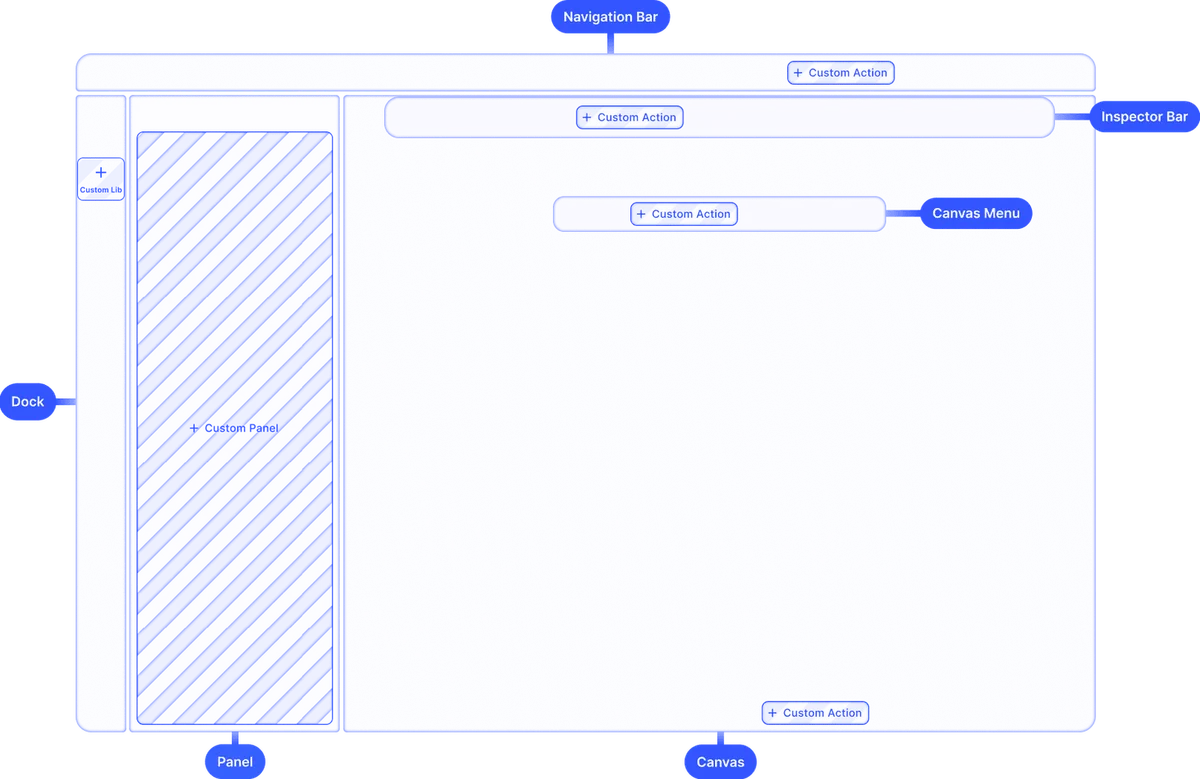
Build custom UIs.
Use the headless API powering all creative operations to implement an entirely custom UI.
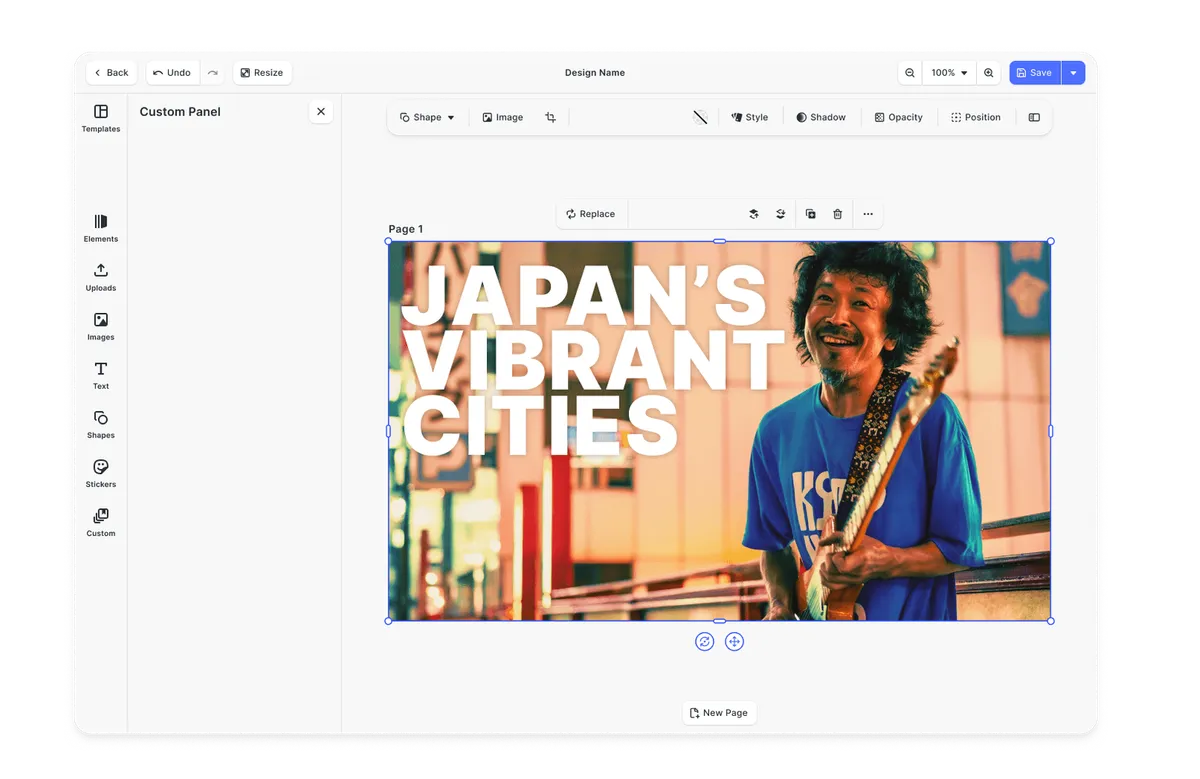
Theming.
Theme the editor to match your app.
Media libraries.
Set up custom libraries that are easily sortable.
Toolbar customization.
Reposition toolbar elements, change icons, or rename tools to fit your use case.
Internationalization.
Add support for additional languages, and customize any button label.
Export options.
Export designs in JPG, PNG, or PDF with custom quality, page ranges, and dimensions.
Check out other use cases
Learn more about related solutions.
Apparel Designer
Whether t-shirts, hoodies or caps, build for any use case, deploy on any platform.
Get in touch
Contact our sales team to learn more about licensing options and get access to our AI plugins for CE.SDK.
FAQs
IMG.LY's CreativeEditor SDK is a good alternative to InDesign Server. It offers real-time, client-side editing, advanced templating, AI-powered automation, and integrations without the need for complex server-based infrastructure.
IMG.LY offers a client-side solution, meaning edits are rendered instantly in the browser, while InDesign Server renders documents on a server and returns the output to the requesting application.
Yes, IMG.LY provides dynamic templating with placeholders, constraints, and programmatic content manipulation allowing scalable, automated design generation similar to InDesign Server but with more flexibility.
No, unlike InDesign Server, which runs on servers you operate or through Adobe's hosted InDesign API, IMG.LY runs entirely in the browser or within your existing app, making it easier to scale and more cost-effective.
Absolutely, IMG.LY supports batch processing, generative AI, and dynamic content generation, eliminating the need for complex InDesign scripting.
IMG.LY is fully customizable, allowing you to tailor the UI, editing tools, and automation features to fit your use case. InDesign Server is customized through JavaScript and ExtendScript scripts and plug-ins, and has no user interface to tailor.
IMG.LY offers flexible APIs that integrate with web, mobile, and headless CMS systems. InDesign Server, on the other hand, is integrated through SOAP calls and scripts.
IMG.LY supports PSD, AI, IDML, SVG, PNG, and more, and exports designs back to IDML and to PSD (on the server), ensuring compatibility with various design workflows. InDesign Server scripts work with InDesign documents, and the InDesign object model exports PDF, EPS, JPEG, PNG, IDML, EPUB, and HTML.
Yes, IMG.LY eliminates the need for expensive server infrastructure, offering a more transparent and scalable pricing model.
Yes, IMG.LY is continuously updated to support the latest creative technologies, AI-powered automation, and modern web standards.