
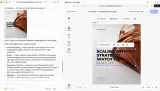

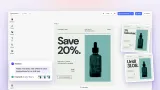
Set up CE.SDK with Devin Desktop
Devin Desktop, the agentic IDE Cognition released as Windsurf and renamed in June 2026, takes ten minutes to turn into a CE.SDK expert. It gets you from an idea like “a social media studio with brand templates” to a working editor running in your browser.
This page is about an agent that writes your CE.SDK integration. For an agent that makes the designs, see CoDesign, the free MCP server or, for your product, CoDesign SDK.
Before you start
You don’t need to be a developer to follow this guide. You need two things on your machine.
- Devin Desktop installed and signed in. If you already run Windsurf, that is the same app under its former name.
- Node.js 20 or newer. It provides the
npxcommand used below and runs the editor you build.
From setup to working editor in three steps
Install the CE.SDK skills
Open a terminal in your project folder (Terminal, then New Terminal) and run
one command. It installs the CE.SDK Agent Skills into .agents/skills/
beside your project: offline CE.SDK docs and starter kits covering 10 web
frameworks. The CLI still ships the agent id under its old name. Add -g to
install the skills once for every project on your machine.
npx skills add imgly/agent-skills -a windsurfVerify it works
Ask a docs question in Cascade. If the answer cites CE.SDK docs, the skills
are active. Cascade picks a skill from your request on its own; to call one
explicitly, prefix its name with @, as in @docs-react.
What export formats does CE.SDK support?Describe what you want to build
Open the Cascade panel and paste a product idea. Devin scaffolds the project,
installs CE.SDK, wires up the features, and prints the command to run it
(usually npm run dev). Run it and your editor opens in the browser.
Build a social media studio with CE.SDK: Instagram post and story presets, a template gallery locked to our brand fonts and colors, background removal for product shots, and MP4 export for animated posts.What you can do
Three skills turn Devin Desktop into a CE.SDK specialist, with live docs
behind every answer. Ask in plain language and Cascade picks the right one, or
call it explicitly with @name.
Build a feature
build sets up a CE.SDK Web project and implements the features you ask
for. Describe the outcome and Devin scaffolds and wires it up.
Understand a concept
explain breaks down how CE.SDK works and how the pieces fit together,
adapted to your framework and level.
Search the live docs
With the MCP server connected, Devin answers CE.SDK questions from the current documentation, so guidance reflects the latest release.
Example prompts
Copy a starting point into Cascade. Start a product, extend it feature by feature, or ask how something works before you commit to it.
Build a CE.SDK ad designer with Unsplash stock photos, background removal, and AI image generation for campaign variants. Build a CE.SDK greeting card maker: seasonal templates, photo upload with filters, and print-ready PDF export. Build a CE.SDK video promo editor: trim clips, add text overlays and music, export as MP4. Add a template gallery so users start from our designs. Add AI generative editing so users can replace image backgrounds from a text prompt. Restrict editing so users can change text but not move the layout. What export formats does CE.SDK support? How do I add background removal to a CE.SDK editor? Show me how to configure the CE.SDK toolbar in React. Tips
Get better results from the first prompt.
- Prompt with outcomes, not implementation: “users pick a template and export a finished story” beats “integrate the scene API”.
- Reload the app after installing the skills.
- Skills fire from a plain-language request. To call one explicitly, prefix its name with
@, as in@build.
Set up another agent
Point a different coding agent at CE.SDK.
Ship a working editor
Install the skills, paste a prompt, and Devin scaffolds a CE.SDK project you can run.
Devin Desktop FAQs
No. Describe the product you want in plain language and Devin scaffolds the project and tells you how to run it. You review the result in the browser and keep prompting until it matches your vision.
Not for the setup. The skills and the MCP server are free and need no API key, and the project Devin scaffolds runs locally without a license key. Licensing only comes in when you deploy what you built.
Both, ideally. Agent Skills bundle the docs and starter kits offline so Devin can scaffold autonomously. The MCP server adds real-time documentation search on top, so answers stay current between releases.
Validate the JSON in `~/.codeium/windsurf/mcp_config.json` and reload the app so it re-reads the config. That path configures the Cascade agent; Devin Local, the default agent in new tabs, reads `.devin/mcp_config.local.json` instead.