
IMG.LY vs. Meishe SDK
Looking for full customization, scalability, and enterprise-grade features? With IMG.LY, you get it all. See why CreativeEditor SDK is the best alternative to Meishe SDK.

What makes IMG.LY the best Meishe SDK alternative?
Full customization & white-labeling
A fully customizable, white-label solution where you control the UI, branding, and functionality.
Extensibility & plugin system
Supports custom plugins and extensibility, allowing businesses to tailor the editor to specific use cases.
Advanced video editing & effects
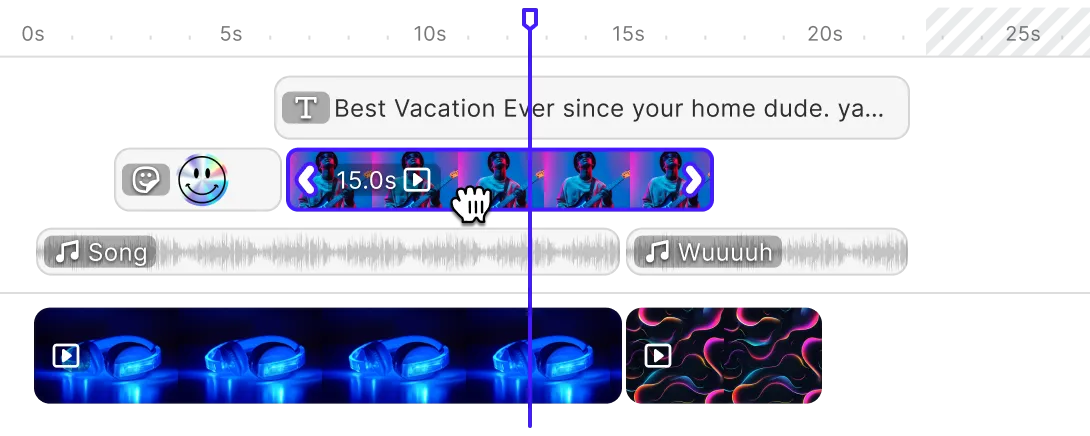
Multi-track video editing with transitions, animations, and AI-powered effects for professional-quality content creation.
Cross-platform support
Runs on Web, iOS, Android, React Native, Flutter, macOS, Electron, and Node.js for maximum flexibility.
Trusted by 100+
industry leaders















What our clients say about us
Integrating IMG.LY’s editor meant we didn’t have to build or maintain a complex editing layer ourselves. That kept our team focused on our core AI ad engine and saved us countless development hours — while still giving our customers the ability to polish and customize creatives at scale.
Hikari Senju
CEO, Omneky

With IMG.LY we built a central creative portal that now powers over 140 dealer campaigns across multiple automotive brands. Before this, asset creation was slow and inconsistent.
Martin Röhr
Product Owner, Digitas

By embedding IMG.LY’s editor we were able to hit key RFP requirements and deliver a template-based creative experience that now serves 1,000+ customers. It helped us win more deals and exceed enterprise expectations without needing to hire dedicated design teams.
Rob Driscoll
Director of PM, Optimizely

Since integrating IMG.LY’s editor, we now deliver 30,000+ ad creatives per month, dramatically shorten time-to-launch, and help our clients cut design spend by up to $10,000 per month.
Logan Welbaum
Founder, Plai

Our customers create over a million personalized postcards each year choosing from over hundreds of templates with IMG.LY’s SDK. It’s the only solution that allows us to build our own specialized, on-brand UI that integrates seamlessly with our platform.
Jeanine Zaalberg
Product Manager, SwissPost

From a developer’s perspective, the most powerful feature of the photo editor is the integration process. It was completely flawless, quick, and easy to integrate.
Stefano Fornari
CTO, Funambol
We compared IMG.LY SDK with other solutions and found that it would be the best fit for us since it provides all the features that are crucial for our use case.
Carem Pereira
SCRUM Manager, HP

IMG.LY vs. Meishe SDK at a glance
| Feature | IMG.LY | Meishe SDK | Notes |
|---|---|---|---|
| Primary Use Case | Cross-platform SDK architecture addressing dual operational contexts: deploys interactive visual editors within user-facing applications while providing headless automation for programmatic asset generation. Encompasses video production and graphic design workflows through a unified platform. Organizations use it for consumer creative tools and systematic content pipelines executing through identical technical infrastructure. Templates function consistently whether users manipulate through interfaces or automation generates outputs via APIs. | Video capture and editing SDK (the Streaming SDK) for mobile and Web apps. With the Streaming SDK, apps record with live effects and beauty filters, edit video and images together on a multi-track timeline, add filters, captions, animated stickers, transitions and themes, and export the result as a video file. | IMG.LY provides a complete production-ready platform for both interactive editing and backend automation across video and design. Meishe SDK focuses on video capture, editing and effects in mobile and Web apps. |
| Target Audience | Marketing automation platforms, e-commerce personalization vendors, social media platforms, and enterprise content management systems. Development teams building white-labeled creative applications requiring both user interfaces and automation capabilities. Organizations seeking comprehensive SDK reducing development cycles while maintaining infrastructure control and brand ownership across all deployment scenarios. | App developers adding video capture, editing and effects with the Streaming SDK, or face beauty, makeup and AR props with the Effect SDK, on mobile and Web. | IMG.LY targets enterprises seeking comprehensive creative solutions with dual-purpose capabilities across platforms. Meishe SDK targets app developers building video capture, editing and effects into their products. |
| Technical Approach | Modular SDK offering three deployment patterns: production-ready UI components, custom interface development with engine APIs, or headless automation workflows. Cross-platform rendering engine maintains consistency across web browsers, native mobile platforms, desktop environments, and Node.js backend infrastructure. Organizations control complete deployment architecture without external service dependencies or vendor lock-in. | Native Streaming SDK with nearly the same API on Android (Java) and iOS (Objective-C). The Streaming SDK follows a non-linear editing model: a timeline of video and audio tracks holds the clips and effects, and the source media files are never modified. Compiling runs on the Streaming SDK's internal threads, with callbacks for progress, failure and cancellation. | IMG.LY offers production-ready UI components, custom interfaces on engine APIs, or headless automation on one cross-platform engine. Meishe SDK offers a native Streaming SDK for Android and iOS built on a non-linear editing model. |
| Advanced Video Editing | Multi-track timeline editing with multiple video and audio tracks. Cuts, trims and splits video clips, fine-tunes clip timing, and controls speed for slow motion and time-lapse. Includes transitions and effects, and exports MP4 video in H.264. | The Streaming SDK edits on a multi-track timeline with clipping and splitting, speed changes, transitions, themes, image clips with cropping, rotation and motion, keyframes on effect parameters, and LUT and color adjustment effects. The Streaming SDK also imports, edits and exports HDR video, and 4K editing and export are available on request. | Both edit video on a multi-track timeline with splitting, speed changes and transitions. |
| Advanced Design Editing | Comprehensive design suite integrating vector graphics, text manipulation, and layout systems for digital content creation. Collage composition, professional typography, adaptive layout intelligence, and role-based collaboration. Exports production-quality files across PNG, JPEG, WebP, TGA, PDF, IDML, and PSD (on the server) formats for digital distribution and marketing materials. | In the Streaming SDK, captions with loadable fonts, color, stroke, opacity and animation, compound captions, animated stickers and AR face props are all placed on a video timeline. A standalone design or layout editor is not documented. | IMG.LY offers a complete production-ready design editor with comprehensive layout capabilities. Meishe SDK places captions and stickers on a video timeline. |
| File Format Support | Import: Images (PNG, JPEG, JPG, GIF, WebP, SVG, BMP); Video (MP4, MOV with codec requirements); Audio (MP3, M4A, MP4, MOV); Templates (IDML InDesign, PSD Photoshop, Scene native format); Lottie animations (JSON). Export: Images (PNG, JPEG, WebP, TGA); Video (MP4); PDF for digital documents; Design files (IDML, plus PSD on the server); Scene and Archive (ZIP) formats. Supports transparent backgrounds, custom resolution, compression levels, and file metadata. | On Android and iOS, the Streaming SDK imports MP4, MOV, WMV, M2V and MPG video, MP3, FLAC, AAC, M4A and WAV audio, and JPG and PNG images, mixed on one timeline, and exports MP4 or MOV with H.264 video and AAC audio, or H.265 on Android devices that support it. The Web SDK reads a wider set, including MKV, WebM, AVI, WebP and PSD files, and also exports WebM, MXF, MPG and AVI. IDML import and export to PDF, IDML or PSD are not documented. | IMG.LY adds design formats: IDML and PSD template import, and PDF, IDML and server-side PSD export. Meishe SDK centers on video, audio and image formats, with a wider set, including PSD images, on the Web. |
| Templating & Dynamic Editing | Adaptive template infrastructure with intelligent layout algorithms responding dynamically to content dimensions and aspect ratios. Placeholder-based architecture populated through visual editors or programmatic APIs using unified specifications. Role-based access controls enable collaborative template development workflows. Templates render consistently across interactive editing sessions and automated batch generation maintaining pixel-perfect output fidelity. | In the Streaming SDK, template packages are filled in code: the app reads the template's replaceable footage and caption slots, passes its own media and text, and gets back a timeline it can play or edit further. Templates can also be generated from an existing timeline, and one template can hold several aspect ratios, chosen at runtime. Adaptive layout is not documented. | IMG.LY provides a sophisticated adaptive template system with intelligent algorithms and full programmatic automation control. Meishe SDK supports template authoring and template filling in code for video. |
| Creative Automation | Equal-priority automation alongside user-facing editing through unified SDK architecture. Headless Node.js operation generates assets programmatically without UI dependencies or overhead. Identical SDK powers interactive editors and backend automation requiring no additional components or separate products. Integrates with databases, CRM platforms, marketing automation systems for data-driven generation. Templates execute identically through UI or API workflows. | With the Streaming SDK, apps can build a timeline and compile it straight to a video file through API calls, without a preview. Streaming SDK smart cut assembles an edit automatically from source videos, the SDK's own analysis files, and template, caption and filter packages. | IMG.LY offers a production-ready unified SDK with comprehensive automation and interactive editing as equal priorities. Meishe SDK supports code-driven compiling, template filling and smart cut on the device. |
| AI Capabilities | Extensible AI framework integrating custom models alongside built-in intelligent features. Smart layout algorithms optimize compositions automatically for visual balance and readability. Plugin architecture connects proprietary or third-party AI services for specialized workflows. AI operates as creative assistant while preserving complete manual control and customization. Framework-agnostic approach enables any AI service integration. | In the Streaming SDK, smart cut analyzes footage with scene and place models and assembles an edit, shot and beat detection mark cut points, and segmentation separates the background, a half body or the sky. Across the Streaming SDK and Effect SDK, face detection drives beauty, reshaping, makeup and face props, avatar effects follow facial expressions, and the detection models are files the app loads from local paths. Plugging in the app's own AI models or outside AI services is not documented. | IMG.LY connects custom or third-party AI models and services through its plugin architecture. Meishe SDK runs its own detection models for smart cut, segmentation and face effects. |
| Asset Management | Federated architecture integrating embedded libraries with external services directly. Getty Images, Unsplash, and Pexels connect without middleware or proxies. Organizations extend with custom sources while maintaining complete data governance. Unified interface manages video, audio, design, and template assets across all workflows. Client-side architecture preserves media under application control without vendor data access. | The Streaming SDK includes built-in effects and transitions, and its asset package manager installs, upgrades and uninstalls downloadable packages for filters, captions, stickers, transitions, themes, templates and face props. The Web SDK also provides material management interfaces for cloud media. Integrations with stock libraries such as Getty Images or Unsplash are not documented. | IMG.LY offers comprehensive enterprise-grade asset management with direct third-party integrations and support for custom sources. Meishe SDK provides built-in and packaged effect assets. |
| User Interface | Production-ready modular UI components deployable in user-facing applications. Timeline controls, filter palettes, effect adjustments, audio mixing, and comprehensive editing interfaces. Component architecture enables reorganization, replacement, or complete custom UI development. Headless mode bypasses UI entirely for automation workflows. Single SDK supports both visual applications and invisible backend operations. | The Streaming SDK supplies editing APIs and view classes such as the live preview window, and apps build their own screens around them. The ShortVideo package includes a generated demo UI that its feature configuration controls. | IMG.LY provides comprehensive production-ready UI with full customization or headless operation for complete automation. Meishe SDK pairs editing APIs with a demo UI in its ShortVideo package. |
| White-labeling | Zero-branding architecture eliminating all vendor identification from interfaces and outputs. Complete UI restructuring beyond surface theming including toolbar layouts, panel organization, and workflow customization. Internationalization infrastructure supports global deployments. Headless mode removes UI completely for custom implementations. Organizations achieve exact brand alignment including corporate design system integration. | Output from the Streaming SDK, on mobile and Web, carries a trial watermark until licensed. Branding options for the ShortVideo package's demo UI are not documented. | IMG.LY provides more sophisticated zero-branding architecture with architectural-level customization and headless option. Meishe SDK removes its output watermark once licensed. |
| Interactive Editing | Instantaneous visual feedback during all manipulation operations across web, mobile, and desktop platforms. Timeline navigation, zoom, playback controls without server dependencies or network latency. Real-time effect preview on the GPU on all platforms. Consistent editing experience across browsers, native mobile, and desktop applications. Direct manipulation matching professional creative tool responsiveness. | The Streaming SDK's live window previews capture and timeline edits in real time without pre-processing, in native apps and in a browser canvas. The Streaming SDK maps touch positions to timeline coordinates, so apps can let users drag clips on the preview. The Effect SDK renders effects on OpenGL textures. | IMG.LY keeps real-time editing with immediate feedback consistent across web, native mobile and desktop. Meishe SDK previews edits in real time in native apps and in a browser canvas. |
| Multi-Layer Editing | Unlimited layer depth accommodating video clips, graphics, audio tracks, and effects with professional composition controls. Advanced blending modes, opacity management, and z-axis positioning enable sophisticated visual effects. Grouping and parent-child hierarchies create reusable component structures. Lock and visibility controls manage complex projects. Layer system maintains consistency across web, mobile, desktop, and server deployments. | The Streaming SDK timeline holds any number of video and audio tracks. Each video track is a layer rendered bottom-up with its own opacity, clips take blending modes such as multiply, screen, overlay and soft light, and captions can be ordered by Z value. Picture-in-picture uses a second video track with a transform effect, and audio clips get their own volume and fades. | Both support multi-layer editing with composition controls. IMG.LY offers deeper nesting with advanced blending across all platforms including server automation. Meishe SDK supports multi-track editing with per-clip blending modes. |
| Component Architecture | Decoupled engine and editor architecture enabling three integration patterns: full UI deployment, custom UI construction, or headless automation. Granular component registration injects custom functionality without modifying SDK source. Order APIs control component layout programmatically. Plugin framework extends capabilities while preserving upgrade compatibility. Selective component adoption loads only required features. | Two SDKs: the Streaming SDK for capture and editing, and the Effect SDK for rendering effects on their own, for example in camera, live broadcast or VR pipelines. The Streaming SDK is an engine whose core modules are the streaming context, timeline, tracks, clips, captions and animated stickers, and its package comes with or without the face module. | IMG.LY separates engine and editor UI, with component registration, Order APIs and a plugin framework. Meishe SDK splits editing and effects into two engine SDKs, with an optional face module. |
| Cross-Platform Support | Platform-spanning architecture covering web frameworks (React, Angular, Vue, Svelte, Next.js), native mobile (iOS, Android), cross-platform mobile (React Native, Flutter), desktop (Electron, macOS), and backend (Node.js). Unified codebase maintains functional consistency across platforms. Templates render identically whether processed on client devices or backend servers. Single SDK deployment strategy. | The Streaming SDK runs on Android, iOS, HarmonyOS and the Web, where it is built on WebAssembly. The ShortVideo package also ships as a React Native package and a Flutter plugin. Windows and macOS versions of the Streaming SDK are not released as a product, and a Node.js SDK is not documented. | IMG.LY offers significantly more comprehensive cross-platform deployment including native mobile, web, desktop, and full server-side automation. Meishe SDK covers Android, iOS, Web and HarmonyOS apps. |
| Customizability | Granular configuration spanning UI presentation, functional workflows, and architectural deployment patterns. Toolbar reorganization, asset library customization, workflow modifications through programmatic APIs. Print functionality includes CMYK and Pantone commercial support. Role-based permissions enable multi-tenant deployments. Headless APIs bypass default interfaces for completely custom implementations without UI constraints. | With the Streaming SDK, apps design their own interface and workflow on its APIs, and each built-in Streaming SDK effect exposes parameters to tune it. The ShortVideo package is customized through a single feature configuration file that trims menus and features. | IMG.LY provides more sophisticated architectural-level customization with comprehensive programmatic control across all layers. Meishe SDK is customized through its APIs, or a feature configuration file in the ShortVideo package. |
| Extensibility | First-class plugin framework enabling custom functionality without SDK source code modification. Extension points encompass UI components, export formats, asset sources, and processing pipelines. Organizations integrate proprietary or third-party APIs while maintaining SDK upgrade compatibility. Modular architecture supports selective feature loading for optimized bundle sizes. Plugin ecosystem preserves upgradeability. | In the Streaming SDK, custom video effect, video transition and audio effect classes let developers write their own processing and run it inside the Streaming SDK's rendering process. A general plugin framework is not documented. | IMG.LY supports a comprehensive enterprise-grade plugin system with architectural extension and upgrade compatibility. Meishe SDK accepts custom effect, transition and audio code. |
| Ease of Integration | Platform-specific documentation with functional code samples across React, Angular, Vue, Flutter, React Native, and server frameworks. Pre-built editor implementations reduce initial setup to configuration steps. Production SDK access during evaluation period enables comprehensive assessment. Multi-tier documentation from quick-start guides through advanced implementation patterns. Distribution through standard package managers (npm, CocoaPods, Maven). | Integration guides and API references for the Streaming SDK on Android, iOS and Web, a HarmonyOS Streaming SDK integration guide, and Agent Skills that walk AI coding tools through Streaming SDK, Effect SDK and ShortVideo package integration. The Streaming SDK downloads after developer registration and ships with sample apps, including a full demo app and a custom effect demo. | IMG.LY offers more comprehensive documentation across broader range of platforms with pre-built implementations reducing integration time. Meishe SDK provides per-platform guides, sample apps and Agent Skills. |
| Flexible Rendering Approach | Flexible rendering deployment: client-side editing uses device GPUs and keeps data local, while server-side rendering with the CE.SDK Renderer powers automated pipelines on organization-controlled Node.js infrastructure. The unified engine ensures pixel-identical output in both environments. Choose client-side for user-facing editing and server-side for automation, with the same SDK and the same results. | The Streaming SDK renders on the user's device, in native apps or in the browser. Server-side rendering is a separate Meishe service within Cloud Editing: an HTTP task API takes a timeline JSON, renders it and returns a link to the output video. | IMG.LY offers more sophisticated unified rendering with both client-side and server-side options enabling automation workflows. Meishe SDK renders on the device, and Meishe offers server rendering as a separate service. |
| Mobile Performance | Native SDKs for iOS and Android with cross-platform framework support (React Native, Flutter). Editing capabilities match desktop experiences with consistent rendering quality and feature parity. Performance optimization targets contemporary devices while supporting older hardware. Codec management and memory optimization address mobile constraints maintaining responsive editing across device tiers. | On Android, the Streaming SDK uses hardware decoding and encoding, with flags to turn either off, a low pipeline option that cuts CPU and GPU use while compiling, and a call that reports the device's GPU power level. The Streaming SDK also ships a smaller segmentation model for older, less powerful phones. | IMG.LY manages codecs and memory across device tiers, including older hardware. Meishe SDK uses hardware codecs on Android and offers lighter options for older phones. |
| Production Readiness | Production-deployed in enterprise environments generating 500M+ creative outputs monthly across diverse industries and use cases. Continuous release cycles maintain compatibility while introducing capabilities. Multi-tier support from community resources through dedicated engineering assistance with SLA commitments. Organizations deploy without infrastructure management as SDK handles technical complexities internally. | Meishe serves enterprises in automotive, broadcasting, live-streaming and social industries, and maintains its SDK with long-term support releases. Dedicated project teams give customers one-on-one technical support and free upgrades. | IMG.LY runs in enterprise production with continuous releases and SLA-backed support. Meishe serves enterprise customers with long-term support releases and dedicated project teams. |
| Scalability | Dual scaling approach: distributed client-side rendering where user devices contribute processing capacity, and centralized server-side automation on organization-managed Node.js infrastructure for systematic generation. Template-driven workflows generate variations whether users create individually or automation produces millions. Architecture handles both interactive editing at scale (millions of users) and batch automation workloads simultaneously. | The Streaming SDK processes video on each user's device; batch server rendering runs through one task queue in Meishe's separate server-rendering service. | IMG.LY offers more comprehensive scalability through both distributed client-side editing and centralized server-side automation infrastructure. Meishe SDK renders on user devices, with batch server rendering in a separate service. |
| Storage & Data Ownership | Zero exfiltration architecture maintaining all content within application boundaries during editing workflows. Client-side processing eliminates external storage requirements for interactive editing. Server deployment preserves organizational control over infrastructure and data location. Asset integrations (Getty, Unsplash) activate only when configured. No required data transmission to vendor servers or external services. | On Android and iOS, the Streaming SDK reads media from file paths the app provides and writes output to a path the app chooses. The Web SDK can upload media to Meishe's cloud, which transcodes it for streaming. Beyond that cloud upload, whether the Streaming SDK sends media to Meishe servers is not documented. | IMG.LY offers sophisticated client-side/server-side architecture with complete infrastructure independence. Meishe SDK writes output where the app chooses, and its Web SDK can upload media to Meishe's cloud. |
| Offline Capabilities | Complete editing functionality without network connectivity after initial SDK delivery. Local rendering, export, and template manipulation operate independently of internet access. Asset libraries function offline when using embedded or custom sources. Valuable for mobile applications and intermittent connectivity scenarios preserving full feature access without degradation. | On Android and iOS, the Streaming SDK edits media from local file paths and loads its license file from a local path, and offline use there is not documented. The Web SDK checks its license through a web request, and the Streaming SDK on HarmonyOS needs network permission for online license authentication. | IMG.LY edits, renders and exports offline after the initial SDK load. Meishe's Web and HarmonyOS SDKs check their licenses online. |
| Clear Pricing Model | Usage-based enterprise licensing adapting to platform combinations, deployment scale, and feature requirements. Evaluation period provides production SDK access for comprehensive assessment before financial commitment. Licensing structure accommodates diverse deployment scenarios and organizational scales. Transparent pricing approach based on actual usage patterns and deployment scope with clear documentation. | Licensed in several SDK editions. | IMG.LY uses usage-based enterprise licensing with an evaluation period. Meishe SDK is licensed in several SDK editions. |
| Community & Support | Platform-specific documentation covering web, mobile, desktop, and server integration scenarios. Enterprise licensing includes dedicated support with SLA commitments and response guarantees. Solution architects assist with complex integrations and performance optimization. Support desk provides release notes, technical FAQs, showcases, and comprehensive API documentation across all platforms and frameworks. | Developer documentation in English and Chinese for the Streaming SDK and Effect SDK, each with a question list, and Meishe technical support. | IMG.LY adds SLA-backed enterprise support and solution architects to its documentation. Meishe SDK offers English and Chinese documentation and technical support. |
Key capabilities
Learn more about some of the functionalities of IMG.LY’s SDK.
Editing
Printing


Templating
Text variables.
Enable mass personalization and creative automation by embedding variables.
Placeholders & lockable designs.
Constrain templates to guide your users’ design and ensure brand consistency.
Configurable presets.
Enforce a consistent aesthetic across all creations by using preset filters, adjustments, fonts, and crop ratios.
Customizability
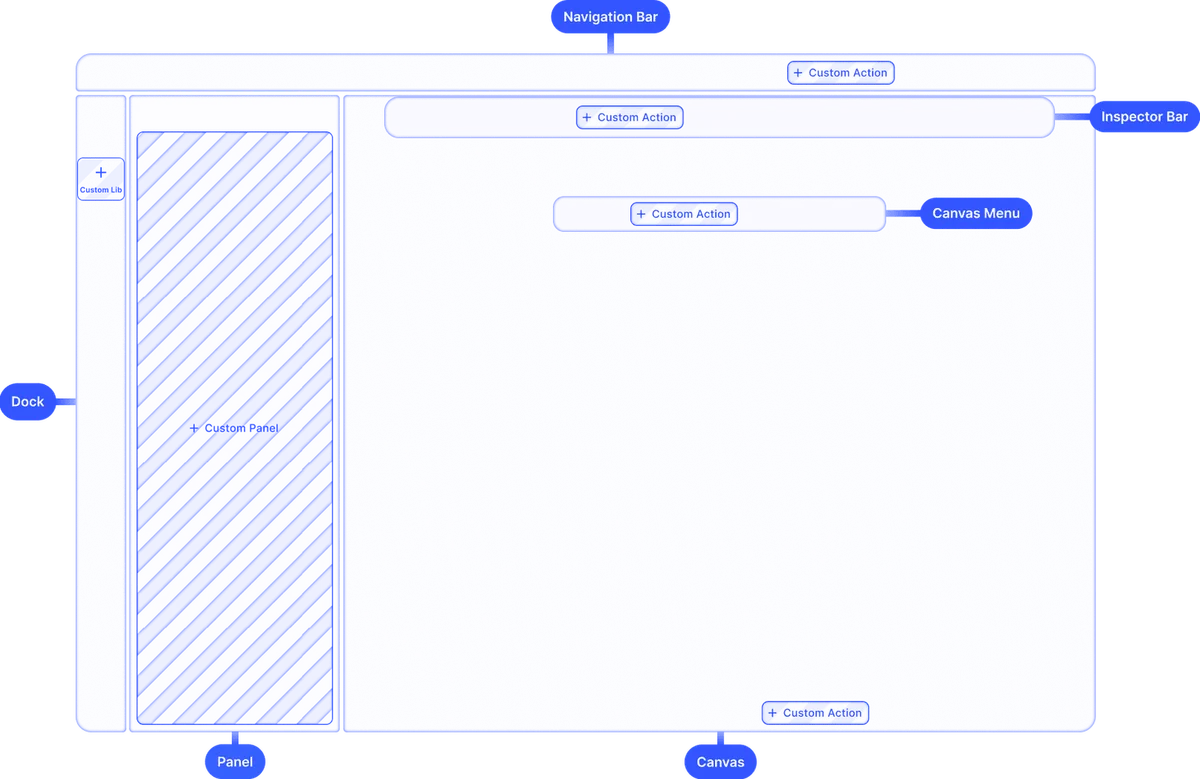
Build custom UIs.
Use the headless API powering all creative operations to implement an entirely custom UI.
Theming.
Theme the editor to match your app.
Media libraries.
Set up custom libraries that are easily sortable.
Toolbar customization.
Reposition toolbar elements, change icons, or rename tools to fit your use case.
Internationalization.
Add support for additional languages, and customize any button label.
Export options.
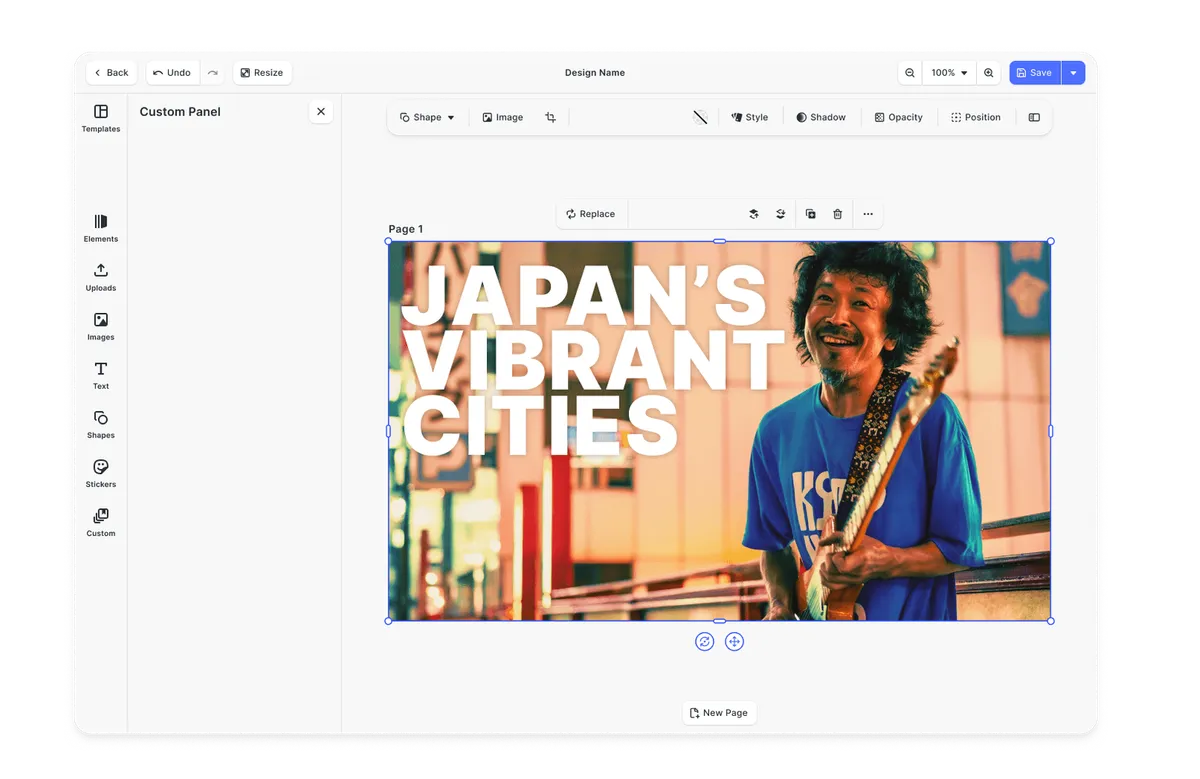
Export designs in JPG, PNG, or PDF with custom quality, page ranges, and dimensions.
Check out other use cases
Learn more about related solutions.
Apparel Designer
Whether t-shirts, hoodies or caps, build for any use case, deploy on any platform.
Get in touch
Contact our sales team to learn more about licensing options and get access to our AI plugins for CE.SDK.
FAQs
If you're looking for a comprehensive, customizable alternative to Meishe SDK, IMG.LY's CreativeEditor SDK is a strong option. It offers advanced video editing, AI-powered automation, and multi-platform support. Looking for full customization, scalability, and enterprise-grade features? With IMG.LY, you get it all.
IMG.LY provides a more extensive feature set, including AI-powered creative automation and full design file compatibility. Meishe SDK focuses on video capture, editing and effects.
Yes, Meishe SDK offers AI-powered features like smart cutting and automated effects, but IMG.LY provides a broader AI-driven automation framework for video, image, and design editing.
IMG.LY supports Web, iOS, Android, React Native, Flutter, macOS, Electron, and Node.js, making it highly versatile. Meishe SDK supports Android, iOS, Web and HarmonyOS, and its ShortVideo package also ships for React Native and Flutter.
IMG.LY integrates with third-party libraries like Unsplash and Getty Images for asset management, whereas Meishe SDK offers built-in effects and downloadable effect packages.
IMG.LY provides a plugin system for deep customization. Meishe SDK lets developers write custom video effects, transitions and audio effects that run inside its rendering.