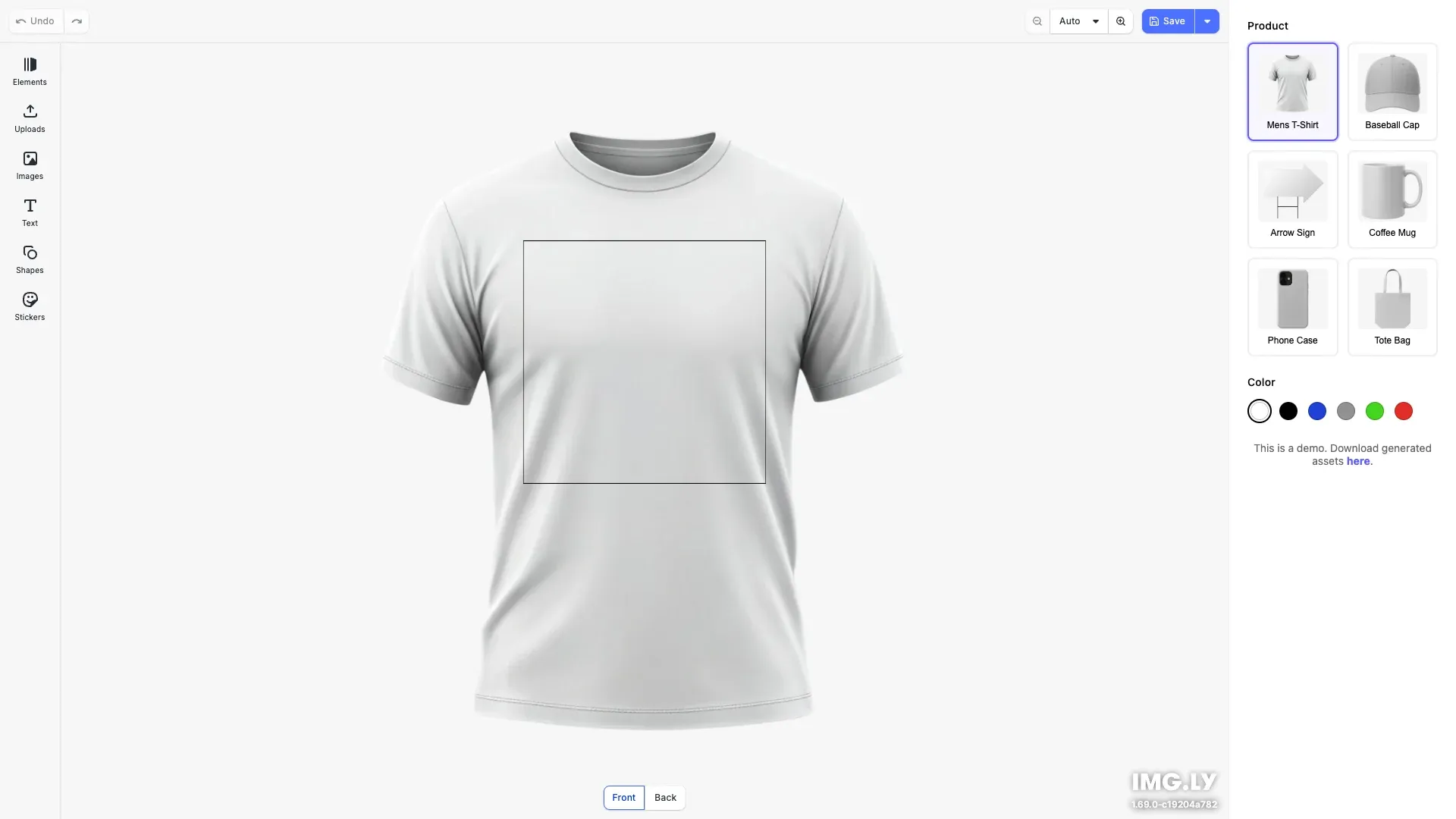
Product Editor for customizing any product with print-ready designs.
Prerequisites#
Before you begin, make sure you have the following:
- Node.js v22+ and npm installed locally – Download Node.js
- A supported browser – Chrome 114+, Edge 114+, Firefox 115+, Safari 15.6+
See Browser Support for the full list.
Get Started#
Start fresh with a standalone Product Editor project. This creates a complete, ready-to-run React application.
Step 1: Clone the Repository#
git clone https://github.com/imgly/starterkit-product-editor-react-web.gitgit clone https://github.com/imgly/starterkit-product-editor-react-web.gitnpx degit imgly/starterkit-product-editor-react-web starterkit-product-editor-react-webnpx degit imgly/starterkit-product-editor-react-web starterkit-product-editor-react-webThe src/ folder contains the editor code:
src/├── app/ # Demo application│ └── utils/│ └── product.ts # Scene metadata & asset download helpers├── imgly/│ ├── config/│ │ ├── actions.ts # Export/import actions│ │ ├── features.ts # Feature toggles│ │ ├── i18n.ts # Translations│ │ ├── plugin.ts # Main configuration plugin│ │ ├── settings.ts # Engine settings│ │ └── ui/│ │ ├── canvas.ts # Canvas configuration│ │ ├── components.ts # Custom component registration│ │ ├── dock.ts # Dock layout configuration│ │ ├── index.ts # Combines UI customization exports│ │ ├── inspectorBar.ts # Inspector bar layout│ │ ├── navigationBar.ts # Navigation bar layout│ │ └── panel.ts # Panel configuration│ ├── plugins/│ │ └── product-backdrop.ts # ProductBackdrop plugin (scene, backdrop & area actions)│ ├── index.ts # Editor initialization function│ └── types.ts # TypeScript type definitions└── index.tsx # Application entry pointStep 2: Install Dependencies#
Install the required packages:
cd starterkit-product-editor-react-web
npm install
cd starterkit-product-editor-react-web
npm installcd starterkit-product-editor-react-web
pnpm installcd starterkit-product-editor-react-web
pnpm installcd starterkit-product-editor-react-web
yarncd starterkit-product-editor-react-web
yarnStep 3: Download Assets#
CE.SDK requires engine assets (fonts, icons, UI elements) to function. These must be served as static files from your project’s public/ directory.
curl -O https://cdn.img.ly/packages/imgly/cesdk-js/1.84.0/imgly-assets.zip
unzip imgly-assets.zip -d public/
rm imgly-assets.zip
curl -O https://cdn.img.ly/packages/imgly/cesdk-js/1.84.0/imgly-assets.zip
unzip imgly-assets.zip -d public/
rm imgly-assets.zipconst config = { // ... baseURL: '/assets' // ...};Step 4: Run the Development Server#
npm run devnpm run devpnpm run devpnpm run devyarn devyarn devOpen http://localhost:5173 in your browser.
Get Started#
Integrate the Product Editor into an existing Svelte application. This adds the editor configuration to your current project structure.
Step 1: Clone#
cd your-projectcd your-projectClone the starter kit and copy the editor configuration to your project:
git clone https://github.com/imgly/starterkit-product-editor-react-web.git
cp -r starterkit-product-editor-react-web/src/imgly ./src/imgly
rm -rf starterkit-product-editor-react-webgit clone https://github.com/imgly/starterkit-product-editor-react-web.git
cp -r starterkit-product-editor-react-web/src/imgly ./src/imgly
rm -rf starterkit-product-editor-react-webnpx degit imgly/starterkit-product-editor-react-web/src/imgly ./src/imglynpx degit imgly/starterkit-product-editor-react-web/src/imgly ./src/imglyThe imgly/ folder contains the editor configuration:
imgly/├── config/│ ├── actions.ts # Export/import actions│ ├── features.ts # Feature toggles│ ├── i18n.ts # Translations│ ├── plugin.ts # Main configuration plugin│ ├── settings.ts # Engine settings│ └── ui/│ ├── canvas.ts # Canvas configuration│ ├── components.ts # Custom component registration│ ├── dock.ts # Dock layout configuration│ ├── index.ts # Combines UI customization exports│ ├── inspectorBar.ts # Inspector bar layout│ ├── navigationBar.ts # Navigation bar layout│ └── panel.ts # Panel configuration├── plugins/│ └── product-backdrop.ts # ProductBackdrop plugin (scene, backdrop & area actions)├── index.ts # Editor initialization function└── types.ts # TypeScript type definitionsStep 2: Install Dependencies#
Install the required packages for the editor:
Core Editor#
Install the Creative Editor SDK:
npm install @cesdk/cesdk-js@1.84.0npm install @cesdk/cesdk-js@1.84.0pnpm add @cesdk/cesdk-js@1.84.0pnpm add @cesdk/cesdk-js@1.84.0yarn add @cesdk/cesdk-js@1.84.0yarn add @cesdk/cesdk-js@1.84.0Step 3: Download Assets#
CE.SDK requires engine assets (fonts, icons, UI elements) to function. These must be served as static files from your project’s public/ directory.
curl -O https://cdn.img.ly/packages/imgly/cesdk-js/1.84.0/imgly-assets.zip
unzip imgly-assets.zip -d public/
rm imgly-assets.zipcurl -O https://cdn.img.ly/packages/imgly/cesdk-js/1.84.0/imgly-assets.zip
unzip imgly-assets.zip -d public/
rm imgly-assets.zipStep 4: Create the Editor Component#
Create a Svelte component using the CE.SDK imperative API (e.g., src/DesignEditor.svelte):
<script>  import { onMount, onDestroy } from 'svelte';  import CreativeEditorSDK from '@cesdk/cesdk-js';  import { initProductEditor } from './imgly';
  let container;  let cesdk = null;
  onMount(async () => {    cesdk = await CreativeEditorSDK.create(container, {      baseURL: '/assets'    });    await initProductEditor(cesdk);  });
  onDestroy(() => {    if (cesdk) {      cesdk.dispose();    }  });</script>
<div bind:this={container} style="width: 100vw; height: 100vh;"></div>
Step 5: Use the Component#
Import and use the Product Editor component in your application:
<script>  import DesignEditor from './DesignEditor.svelte';</script>
<DesignEditor />
Working with Products#
The ProductBackdrop Plugin#
ProductBackdrop is registered inside initProductEditor and owns the scene lifecycle: pages, backdrops, area navigation, page shapes for non-rectangular products, and token substitution on backdrop image URIs.
| Action | Purpose |
|---|---|
product.setupScene(options) |
Create or update the scene’s pages and backdrops from a product config |
product.switchArea(areaId) |
Focus a print area page and reveal its backdrop |
product.getVisibleAreaId() |
Return the currently visible area’s id, or null |
product.applyVariables(variables, areas) |
Substitute {{key}} tokens in backdrop image URIs |
Setting Up and Switching Areas#
product.setupScene takes the list of enabled print areas and the design unit. Each area becomes a separate page with its own backdrop. product.switchArea focuses one of them and zooms to fit.
// Build the scene for a t-shirt with front and back print areasawait cesdk.actions.run('product.setupScene', {  areas: [    {      id: 'front',      pageSize: { width: 20, height: 20 },      mockup: {        images: [{ uri: '/assets/products/tshirt/{{color}}_front.png', width: 815, height: 948 }],        printableAreaPx: { x: 227, y: 194, width: 360, height: 360 }      }    },    {      id: 'back',      pageSize: { width: 20, height: 20 },      mockup: {        images: [{ uri: '/assets/products/tshirt/{{color}}_back.png', width: 815, height: 948 }],        printableAreaPx: { x: 227, y: 194, width: 360, height: 360 }      }    }  ],  designUnit: 'Inch',  variables: { color: 'white' }});
// Navigate to the back areaawait cesdk.actions.run('product.switchArea', 'back');
// Which area is currently visible?const currentArea = await cesdk.actions.run('product.getVisibleAreaId');
The printableAreaPx property defines where the design canvas sits within the mockup image, keeping designs positioned correctly on the product visualization.
Swapping Colors or Variants#
Backdrop image URIs may contain {{key}} tokens. The kit’s catalog uses {{color}}, but any variable name works. Run product.applyVariables when the user picks a different color or variant to re-resolve those tokens without rebuilding the scene.
const enabledAreas = product.areas  .filter((area) => !area.disabled)  .map((area) => ({ id: area.id, mockup: area.mockup }));
await cesdk.actions.run(  'product.applyVariables',  { color: 'red' },  enabledAreas);
Non-rectangular Products#
Products like arrow signs or custom-shaped panels have non-rectangular print areas. Pass an optional SVG path as mockup.pageShape and product.setupScene applies it to the page via the engine’s native vector_path shape. The page is then clipped to that silhouette both on screen and at export—no bitmap mask overlays, no editing/exporting swap at export time.
await cesdk.actions.run('product.setupScene', { areas: [ { id: 'front', pageSize: { width: 12, height: 8 }, mockup: { images: [{ uri: '/assets/products/arrowsign/{{color}}_front.png', width: 1200, height: 800 }], printableAreaPx: { x: 100, y: 80, width: 940, height: 625 }, // SVG path in the printable-area coordinate space (0,0 → width,height) pageShape: 'M628 0.97 C623 3.97 ...' } } ], designUnit: 'Inch', variables: { color: 'white' }});Rectangular areas simply omit pageShape; the plugin resets the page to a plain rectangle when an area stops supplying one.
Customize Assets#
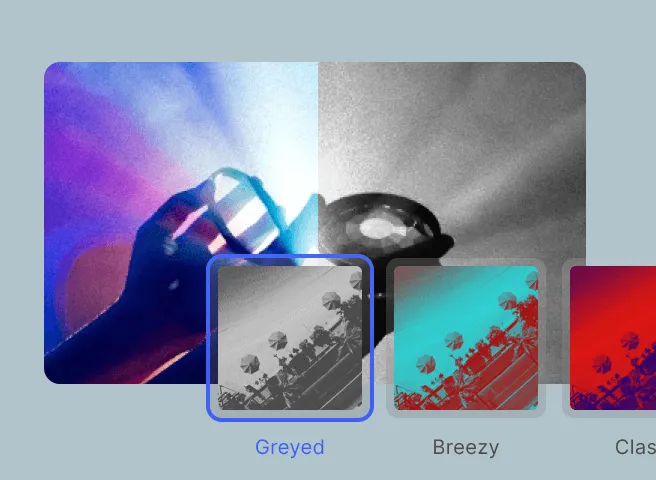
The Product Editor uses asset source plugins to provide built-in libraries for stickers, shapes, and fonts. The starter kit includes a curated selection—customize what’s included based on your needs.
Asset sources are added via plugins in src/index.ts. Enable or disable individual sources:
import {  FiltersAssetSource,  StickerAssetSource,  TextAssetSource,  VectorShapeAssetSource,  EffectsAssetSource,  // ...} from '@cesdk/cesdk-js/plugins';
// Add only the sources you needawait cesdk.addPlugin(new FiltersAssetSource());await cesdk.addPlugin(new StickerAssetSource());await cesdk.addPlugin(new TextAssetSource());await cesdk.addPlugin(new VectorShapeAssetSource());await cesdk.addPlugin(new EffectsAssetSource());// ...For production deployments, self-hosting assets is required—the IMG.LY CDN is intended for development only. See Serve Assets for downloading assets, configuring baseURL, and excluding unused sources to optimize load times.
Configure Actions#
Actions are functions that handle user interactions like exporting designs, saving scenes, and importing files. CE.SDK provides built-in actions that you can run directly or override with custom implementations.
Key built-in actions:
exportDesign– Export the current design to PNG, JPEG, PDF, or other formatssaveScene– Save the scene as a JSON string for later editingimportScene– Import a previously saved scene (.imglyor.scene)exportScene– Export the scene as an.imglyfile, either the scene alone or an archive with all assetsuploadFile– Handle file uploads with progress tracking
Use cesdk.actions.run() to execute any action:
// Run a built-in actionawait cesdk.actions.run('exportDesign', { mimeType: 'image/png' });Import from File Picker#
// Let users open images from their devicecesdk.actions.register('importImage', async () => { const blobURL = await cesdk.utils.loadFile({ accept: 'image/*', returnType: 'objectURL' }); await cesdk.createFromImage(blobURL);});Export and Save#
// Register export action that downloads the edited designcesdk.actions.register('exportDesign', async (exportOptions) => { const { blobs, options } = await cesdk.utils.export(exportOptions); await cesdk.utils.downloadFile(blobs[0], options.mimeType);});Upload to Your Backend#
// Override the built-in exportDesign action to send to your servercesdk.actions.register('exportDesign', async (exportOptions) => {  const { blobs } = await cesdk.utils.export(exportOptions);
  const formData = new FormData();  formData.append('design', blobs[0], 'design.png');
  const response = await fetch('/api/upload', {    method: 'POST',    body: formData  });
const { url } = await response.json(); console.log('Uploaded to:', url);});Customize (Optional)#
Theming#
CE.SDK supports light and dark themes out of the box, plus automatic system preference detection. Switch between themes programmatically:
// 'light' | 'dark' | 'system' | (() => 'light' | 'dark')cesdk.ui.setTheme('dark');See Theming for custom color schemes, CSS variables, and advanced styling options.
Localization#
Customize UI labels and add support for multiple languages. The i18n system supports translation keys for all UI elements:
// Override specific labelscesdk.i18n.setTranslations({  en: {    'actions.export.image': 'Download Design',    'common.cancel': 'Cancel',    'common.apply': 'Apply'  }});
// Add a new languagecesdk.i18n.setTranslations({  de: {    'actions.export.image': 'Design herunterladen'  }});
// Set the active localecesdk.i18n.setLocale('de');
See Localization for supported languages, translation key reference, and right-to-left language support.
UI Layout#
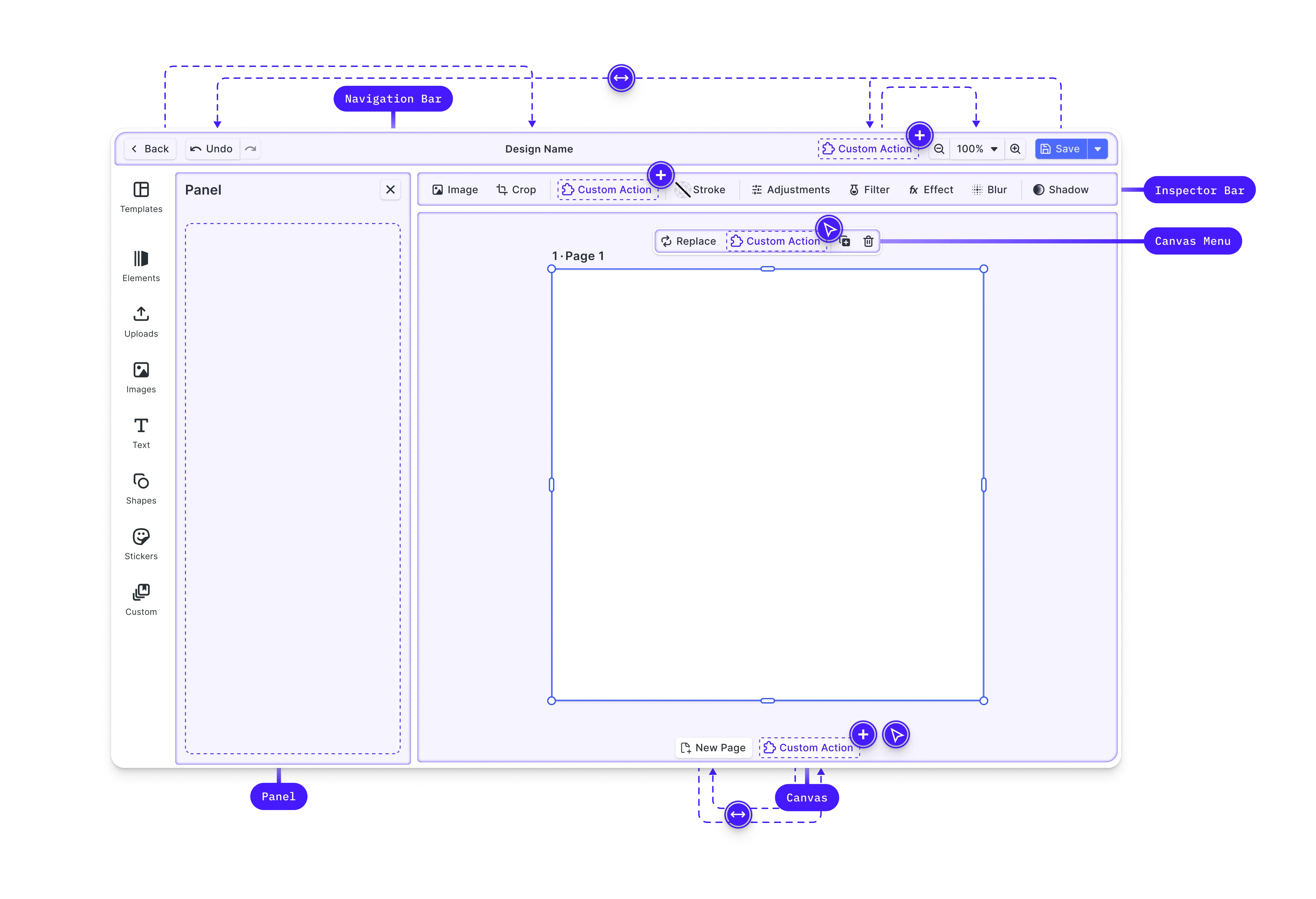
Customize the editor interface by modifying the dock, inspector bar, navigation bar, and canvas menu. CE.SDK provides Order APIs to control which components appear and in what sequence.
// Get current navigation bar componentsconst navOrder = cesdk.ui.getNavigationBarOrder();
// Add a custom button to the navigation barcesdk.ui.insertNavigationBarOrderComponent(  'ly.img.spacer',  { id: 'my-custom-action' },  'after');
// Rearrange dock itemscesdk.ui.setDockOrder([  'ly.img.assetLibrary.dock',  'ly.img.separator',  'my-custom-dock-item']);
// Customize the inspector barcesdk.ui.setInspectorBarOrder([  'ly.img.fill.inspectorBar',  'ly.img.separator',  'ly.img.filter.inspectorBar']);
The Order API methods follow a consistent pattern across all UI areas:
get*Order()– Retrieve the current component orderset*Order()– Replace the entire orderinsert*OrderComponent()– Add components relative to existing ones
See Dock, Inspector Bar, Navigation Bar, Canvas Menu, and Canvas for detailed layout customization options.
Custom Components#
Build custom UI components using the builder system and integrate them in the editor. Custom components receive reactive state updates and can interact with the engine API.
// Register a custom componentcesdk.ui.registerComponent('my-custom-button', ({ builder, engine }) => {  const selectedBlocks = engine.block.findAllSelected();
  builder.Button('apply-effect', {    label: 'Apply Effect',    isDisabled: selectedBlocks.length === 0,    onClick: () => {      // Apply custom logic to selected blocks    }  });});
// Add the component to the navigation barcesdk.ui.insertNavigationBarOrderComponent(  'ly.img.spacer',  'my-custom-button',  'after');
Custom components automatically re-render when the engine state they depend on changes—no manual subscription management required.
See Register New Component for the complete builder API and component patterns.
Settings & Features#
Fine-tune editor behavior through settings and features.
Settings configure core engine behavior—rendering, input handling, and history management:
cesdk.engine.editor.setSettingBool('page/dimOutOfPageAreas', true);cesdk.engine.editor.setSettingBool('mouse/enableZoomControl', true);cesdk.engine.editor.setSettingBool('features/undoHistory', true);Features toggle which editing tools and panels appear in the UI:
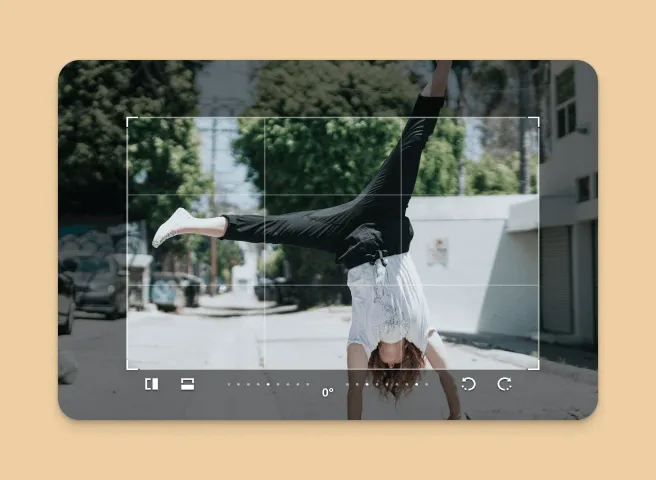
// Toggle editor featurescesdk.feature.enable('ly.img.crop', true);cesdk.feature.enable('ly.img.filter', true);cesdk.feature.enable('ly.img.adjustment', true);See Settings and Features for the complete reference.
Explore Plugins#
CE.SDK has a rich plugin ecosystem that extends the editor with powerful capabilities. Plugins can add new features, integrate third-party services, or customize editor behavior.
Background Removal#
Add AI-powered background removal that runs entirely client-side. The background removal plugin processes images directly in the browser without sending data to external servers.
import BackgroundRemovalPlugin from '@imgly/plugin-background-removal-web';
// Add background removal capabilityawait cesdk.addPlugin(BackgroundRemovalPlugin());
See Background Removal for setup instructions and configuration options.
Print Ready PDF#
Export print-ready PDF/X-4 and PDF/X-3 files with CMYK color profiles for professional printing workflows.
import { convertToPDFX } from '@imgly/plugin-print-ready-pdfs-web';
// Export the current page and convert it into a print-ready PDF/X fileconst [page] = cesdk.engine.block.findByType('page');const pdfBlob = await cesdk.engine.block.export(page, {  mimeType: 'application/pdf'});const printReadyPDF = await convertToPDFX(pdfBlob, {  outputProfile: 'fogra39'});
See Print Ready PDF for setup instructions and configuration options.
AI Integration#
Extend the editor with generative AI capabilities for text-to-image generation, image enhancement, and intelligent editing features. CE.SDK integrates with various AI providers.
import ImageGeneration from '@imgly/plugin-ai-image-generation-web';import { GatewayProvider } from '@imgly/plugin-ai-image-generation-web/gateway';
// Your backend mints a short-lived IMG.LY AI Gateway tokencesdk.actions.register('ly.img.ai.getToken', async () => {  const response = await fetch('/api/ai/token', { method: 'POST' });  const { token } = await response.json();  return token;});
// Add text-to-image generation through the IMG.LY AI Gatewayawait cesdk.addPlugin(  ImageGeneration({    providers: {      text2image: GatewayProvider('bfl/flux-2', {})    }  }));
// Show the image generation panel in the dockcesdk.ui.setComponentOrder({ in: 'ly.img.dock' }, [  'ly.img.ai.image-generation.dock',  ...cesdk.ui.getComponentOrder({ in: 'ly.img.dock' })]);
See Managed Model Gateway for the token endpoint and AI Integration for all AI features.
Custom Asset Sources#
Connect external asset libraries like Unsplash, Getty Images, or your own content management system. Asset sources let users browse and insert content from any source.
You register one with engine.asset.addSource(), without installing a plugin package. See Import From Remote Source for integration patterns and Unsplash for a complete Unsplash integration.
Discover More Plugins#
Explore the full plugin ecosystem in the IMG.LY plugins repository. Available plugins include:
- Vectorizer – Convert raster images to vectors
- Design Presets – Pre-built design templates
- Social Media Templates – Platform-specific sizing
- And more – Check the repository for the latest additions
Key Capabilities#
The Product Editor includes everything needed for multi-product customization and e-commerce integration.
Multiple Product Types
Design on t-shirts, caps, mugs, phone cases, tote bags, and arrow signs with product-specific mockups.
6 Color Options
Choose from 6 product colors with real-time mockup preview updates.
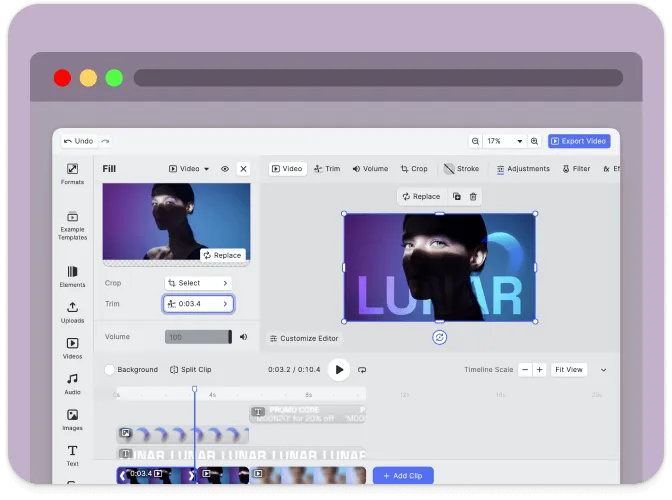
Multi-Area Products
Products like t-shirts and caps support front and back print areas with easy switching.
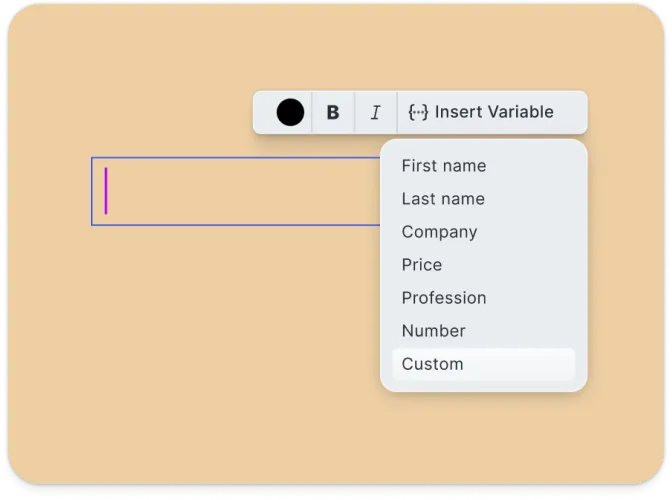
Real-time Mockup Preview
See designs on realistic product mockups that update instantly.
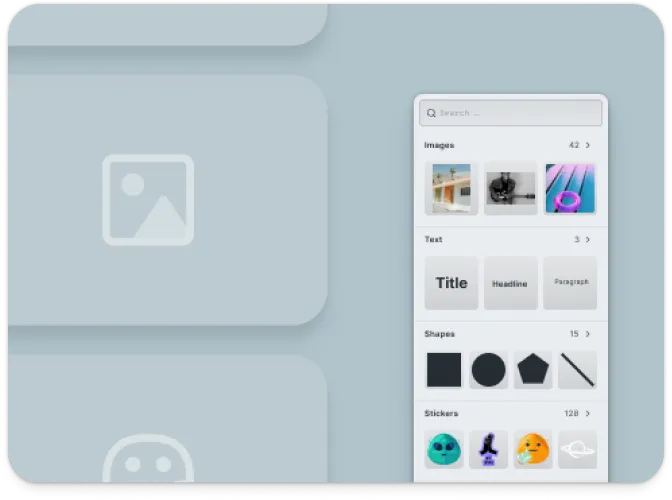
E-commerce Cart Integration
Add to cart functionality with size selection, quantity counters, and price calculation.
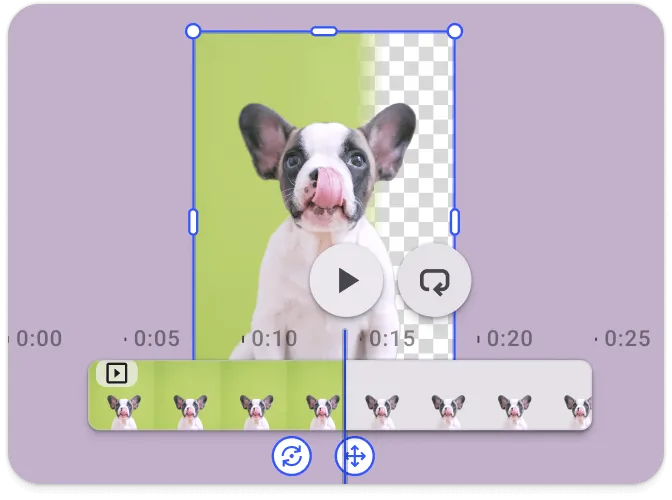
Print-ready Export
Export PDF files and PNG thumbnails for all print areas, with native vector-path page shapes for non-rectangular products.
Troubleshooting#
Editor doesn’t load#
- Check the container element exists: Ensure your container element is in the DOM before calling
create() - Verify the baseURL: Assets must be accessible from the CDN or your self-hosted location
- Check console errors: Look for CORS or network errors in browser developer tools
Assets don’t appear#
- Check network requests: Open DevTools Network tab and look for failed requests to
cdn.img.ly - Self-host assets for production: See Serve Assets to host assets on your infrastructure
Export fails or produces blank images#
- Wait for content to load: Ensure images are fully loaded before exporting
- Check CORS on images: Remote images must allow cross-origin access
Watermark appears in production#
- Add your license key: Set the
licenseproperty in your configuration - Get a license: Contact us at img.ly/forms/contact-sales/
Next Steps#
- Configuration – Complete list of initialization options
- Serve Assets – Self-host engine assets for production
- Actions – Build custom export and save workflows
- Theming – Customize colors and appearance
- Localization – Add translations and language support