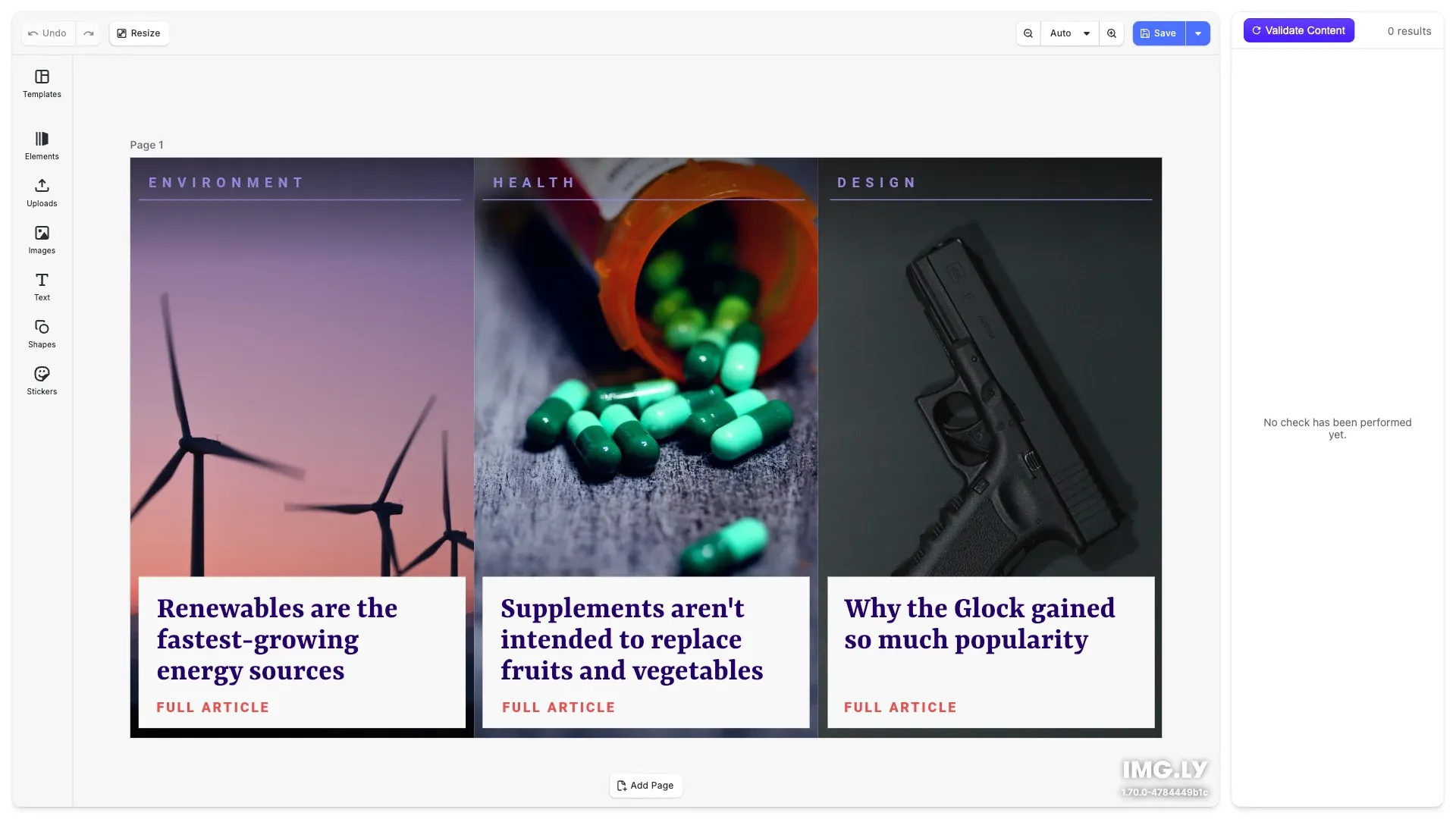
Content moderation made easy. Decide what type of imagery to restrict and receive automatic notifications flagging content that might be violating your guidelines.
Prerequisites#
Before you begin, make sure you have the following:
- Node.js v22+ and npm installed locally – Download Node.js
- A supported browser – Chrome 114+, Edge 114+, Firefox 115+, Safari 15.6+
See Browser Support for the full list.
Get Started#
Start fresh with a standalone Content Moderation Editor project. This creates a complete, ready-to-run React application.
Step 1: Clone the Repository#
git clone https://github.com/imgly/starterkit-content-moderation-react-web.gitgit clone https://github.com/imgly/starterkit-content-moderation-react-web.gitnpx degit imgly/starterkit-content-moderation-react-web starterkit-content-moderation-react-webnpx degit imgly/starterkit-content-moderation-react-web starterkit-content-moderation-react-webThe src/ folder contains the editor code:
src/├── app/ # Demo application├── imgly/│ ├── config/│ │ ├── actions.ts # Export/import actions│ │ ├── features.ts # Feature toggles│ │ ├── i18n.ts # Translations│ │ ├── plugin.ts # Main configuration plugin│ │ ├── settings.ts # Engine settings│ │ └── ui/│ │ ├── canvas.ts # Canvas configuration│ │ ├── components.ts # Custom component registration│ │ ├── dock.ts # Dock layout configuration│ │ ├── index.ts # Combines UI customization exports│ │ ├── inspectorBar.ts # Inspector bar layout│ │ ├── navigationBar.ts # Navigation bar layout│ │ └── panel.ts # Panel configuration│ └── index.ts # Editor initialization function└── index.tsx # Application entry pointStep 2: Install Dependencies#
Install the required packages:
cd starterkit-content-moderation-react-web
npm install
cd starterkit-content-moderation-react-web
npm installcd starterkit-content-moderation-react-web
pnpm installcd starterkit-content-moderation-react-web
pnpm installcd starterkit-content-moderation-react-web
yarncd starterkit-content-moderation-react-web
yarnStep 3: Download Assets#
CE.SDK requires engine assets (fonts, icons, UI elements) to function. These must be served as static files from your project’s public/ directory.
curl -O https://cdn.img.ly/packages/imgly/cesdk-js/1.84.0/imgly-assets.zip
unzip imgly-assets.zip -d public/
rm imgly-assets.zip
curl -O https://cdn.img.ly/packages/imgly/cesdk-js/1.84.0/imgly-assets.zip
unzip imgly-assets.zip -d public/
rm imgly-assets.zipconst config = { // ... baseURL: '/assets' // ...};Step 4: Run the Development Server#
npm run devnpm run devpnpm run devpnpm run devyarn devyarn devOpen http://localhost:5173 in your browser.
Get Started#
Integrate the Content Moderation Editor into an existing Svelte application. This adds the editor configuration to your current project structure.
Step 1: Clone#
cd your-projectcd your-projectClone the starter kit and copy the editor configuration to your project:
git clone https://github.com/imgly/starterkit-content-moderation-react-web.git
cp -r starterkit-content-moderation-react-web/src/imgly ./src/imgly
rm -rf starterkit-content-moderation-react-webgit clone https://github.com/imgly/starterkit-content-moderation-react-web.git
cp -r starterkit-content-moderation-react-web/src/imgly ./src/imgly
rm -rf starterkit-content-moderation-react-webnpx degit imgly/starterkit-content-moderation-react-web/src/imgly ./src/imglynpx degit imgly/starterkit-content-moderation-react-web/src/imgly ./src/imglyThe imgly/ folder contains the editor configuration:
imgly/├── config/│ ├── actions.ts # Export/import actions│ ├── features.ts # Feature toggles│ ├── i18n.ts # Translations│ ├── plugin.ts # Main configuration plugin│ ├── settings.ts # Engine settings│ └── ui/│ ├── canvas.ts # Canvas configuration│ ├── components.ts # Custom component registration│ ├── dock.ts # Dock layout configuration│ ├── index.ts # Combines UI customization exports│ ├── inspectorBar.ts # Inspector bar layout│ ├── navigationBar.ts # Navigation bar layout│ └── panel.ts # Panel configuration└── index.ts # Editor initialization functionStep 2: Install Dependencies#
Install the required packages for the editor:
Core Editor#
Install the Creative Editor SDK:
npm install @cesdk/cesdk-js@1.84.0npm install @cesdk/cesdk-js@1.84.0pnpm add @cesdk/cesdk-js@1.84.0pnpm add @cesdk/cesdk-js@1.84.0yarn add @cesdk/cesdk-js@1.84.0yarn add @cesdk/cesdk-js@1.84.0Step 3: Download Assets#
CE.SDK requires engine assets (fonts, icons, UI elements) to function. These must be served as static files from your project’s public/ directory.
curl -O https://cdn.img.ly/packages/imgly/cesdk-js/1.84.0/imgly-assets.zip
unzip imgly-assets.zip -d public/
rm imgly-assets.zipcurl -O https://cdn.img.ly/packages/imgly/cesdk-js/1.84.0/imgly-assets.zip
unzip imgly-assets.zip -d public/
rm imgly-assets.zipStep 4: Create the Editor Component#
Create a Svelte component using the CE.SDK imperative API (e.g., src/DesignEditor.svelte):
<script>  import { onMount, onDestroy } from 'svelte';  import CreativeEditorSDK from '@cesdk/cesdk-js';  import { initContentModerationEditor } from './imgly';
  let container;  let cesdk = null;
  onMount(async () => {    cesdk = await CreativeEditorSDK.create(container, {      baseURL: '/assets'    });    await initContentModerationEditor(cesdk);  });
  onDestroy(() => {    if (cesdk) {      cesdk.dispose();    }  });</script>
<div bind:this={container} style="width: 100vw; height: 100vh;"></div>
Step 5: Use the Component#
Import and use the Content Moderation Editor component in your application:
<script>  import DesignEditor from './DesignEditor.svelte';</script>
<DesignEditor />
Set Up a Scene#
CE.SDK offers multiple ways to load content into the editor. Choose the method that matches your use case:
// Create a blank design canvas - starts with an empty design sceneawait cesdk.actions.run('scene.create');
// Load from a template archive - restores a previously saved projectawait cesdk.load('https://example.com/template.zip');
// Load from an image URL - creates a new scene with the imageawait cesdk.createFromImage('https://example.com/image.jpg');
// Load from a scene file - restores a scene from JSONawait cesdk.load('https://example.com/scene.json');
The createDesignScene() method is ideal for design workflows, as it creates a blank canvas ready for content.
Customize Assets#
The Content Moderation Editor uses asset source plugins to provide built-in libraries for templates, stickers, shapes, and fonts. The starter kit includes a curated selection—customize what’s included based on your needs.
Asset sources are added via plugins in src/imgly/index.ts. Enable or disable individual sources:
import {  FiltersAssetSource,  StickerAssetSource,  TextAssetSource,  VectorShapeAssetSource,  EffectsAssetSource,  // ...} from '@cesdk/cesdk-js/plugins';
// Add only the sources you needawait cesdk.addPlugin(new FiltersAssetSource());await cesdk.addPlugin(new StickerAssetSource());await cesdk.addPlugin(new TextAssetSource());await cesdk.addPlugin(new VectorShapeAssetSource());await cesdk.addPlugin(new EffectsAssetSource());// ...For production deployments, self-hosting assets is required—the IMG.LY CDN is intended for development only. See Serve Assets for downloading assets, configuring baseURL, and excluding unused sources to optimize load times.
Configure Actions#
Actions are functions that handle user interactions like exporting designs, saving scenes, and importing files. CE.SDK provides built-in actions that you can run directly or override with custom implementations.
Key built-in actions:
exportDesign– Export the current design to PNG, JPEG, PDF, or other formatssaveScene– Save the scene as a JSON string for later editingimportScene– Import a previously saved scene (.imglyor.scene)exportScene– Export the scene as an.imglyfile, either the scene alone or an archive with all assetsuploadFile– Handle file uploads with progress tracking
Use cesdk.actions.run() to execute any action:
// Run a built-in actionawait cesdk.actions.run('exportDesign', { mimeType: 'image/png' });Import from File Picker#
// Let users open images from their devicecesdk.actions.register('importImage', async () => { const blobURL = await cesdk.utils.loadFile({ accept: 'image/*', returnType: 'objectURL' }); await cesdk.createFromImage(blobURL);});Export and Save#
// Register export action that downloads the edited designcesdk.actions.register('exportDesign', async (exportOptions) => { const { blobs, options } = await cesdk.utils.export(exportOptions); await cesdk.utils.downloadFile(blobs[0], options.mimeType);});Upload to Your Backend#
// Override the built-in exportDesign action to send to your servercesdk.actions.register('exportDesign', async (exportOptions) => {  const { blobs } = await cesdk.utils.export(exportOptions);
  const formData = new FormData();  formData.append('design', blobs[0], 'design.png');
  const response = await fetch('/api/upload', {    method: 'POST',    body: formData  });
const { url } = await response.json(); console.log('Uploaded to:', url);});Customize (Optional)#
Theming#
CE.SDK supports light and dark themes out of the box, plus automatic system preference detection. Switch between themes programmatically:
// 'light' | 'dark' | 'system' | (() => 'light' | 'dark')cesdk.ui.setTheme('dark');See Theming for custom color schemes, CSS variables, and advanced styling options.
Localization#
Customize UI labels and add support for multiple languages. The i18n system supports translation keys for all UI elements:
// Override specific labelscesdk.i18n.setTranslations({  en: {    'actions.export.image': 'Download Design',    'common.cancel': 'Cancel',    'common.apply': 'Apply'  }});
// Add a new languagecesdk.i18n.setTranslations({  de: {    'actions.export.image': 'Design herunterladen'  }});
// Set the active localecesdk.i18n.setLocale('de');
See Localization for supported languages, translation key reference, and right-to-left language support.
UI Layout#
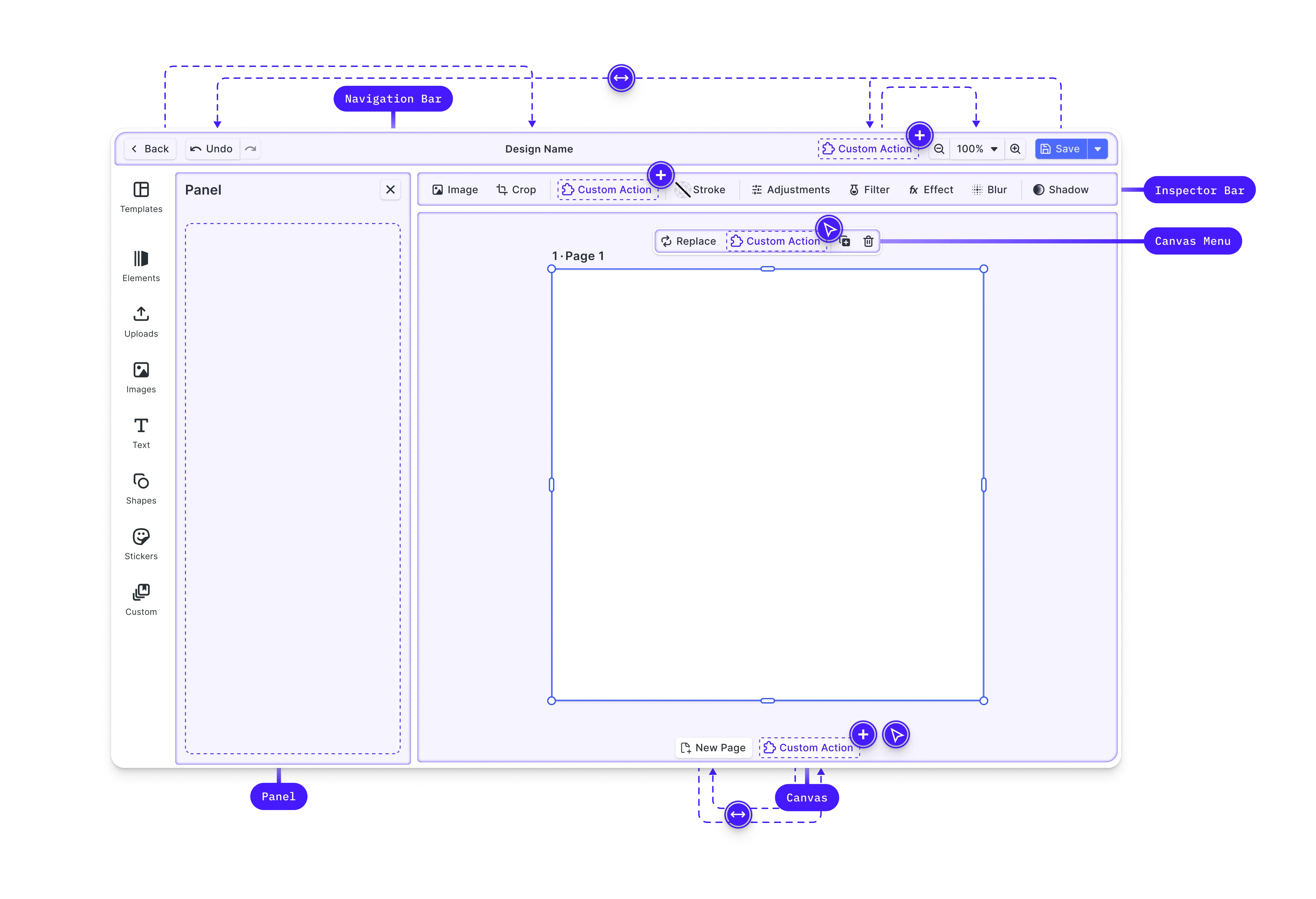
Customize the editor interface by modifying the dock, inspector bar, navigation bar, and canvas menu. CE.SDK provides Order APIs to control which components appear and in what sequence.
// Get current navigation bar componentsconst navOrder = cesdk.ui.getNavigationBarOrder();
// Add a custom button to the navigation barcesdk.ui.insertNavigationBarOrderComponent(  'ly.img.spacer',  { id: 'my-custom-action' },  'after');
// Rearrange dock itemscesdk.ui.setDockOrder([  'ly.img.assetLibrary.dock',  'ly.img.separator',  'my-custom-dock-item']);
// Customize the inspector barcesdk.ui.setInspectorBarOrder([  'ly.img.fill.inspectorBar',  'ly.img.separator',  'ly.img.filter.inspectorBar']);
The Order API methods follow a consistent pattern across all UI areas:
get*Order()– Retrieve the current component orderset*Order()– Replace the entire orderinsert*OrderComponent()– Add components relative to existing ones
See Dock, Inspector Bar, Navigation Bar, Canvas Menu, and Canvas for detailed layout customization options.
Custom Components#
Build custom UI components using the builder system and integrate them in the editor. Custom components receive reactive state updates and can interact with the engine API.
// Register a custom componentcesdk.ui.registerComponent('my-custom-button', ({ builder, engine }) => {  const selectedBlocks = engine.block.findAllSelected();
  builder.Button('apply-effect', {    label: 'Apply Effect',    isDisabled: selectedBlocks.length === 0,    onClick: () => {      // Apply custom logic to selected blocks    }  });});
// Add the component to the navigation barcesdk.ui.insertNavigationBarOrderComponent(  'ly.img.spacer',  'my-custom-button',  'after');
Custom components automatically re-render when the engine state they depend on changes—no manual subscription management required.
See Register New Component for the complete builder API and component patterns.
Settings & Features#
Fine-tune editor behavior through settings and features.
Settings configure core engine behavior—rendering, input handling, and history management:
cesdk.engine.editor.setSettingBool('page/dimOutOfPageAreas', true);cesdk.engine.editor.setSettingBool('mouse/enableZoomControl', true);cesdk.engine.editor.setSettingBool('features/undoHistory', true);Features toggle which editing tools and panels appear in the UI:
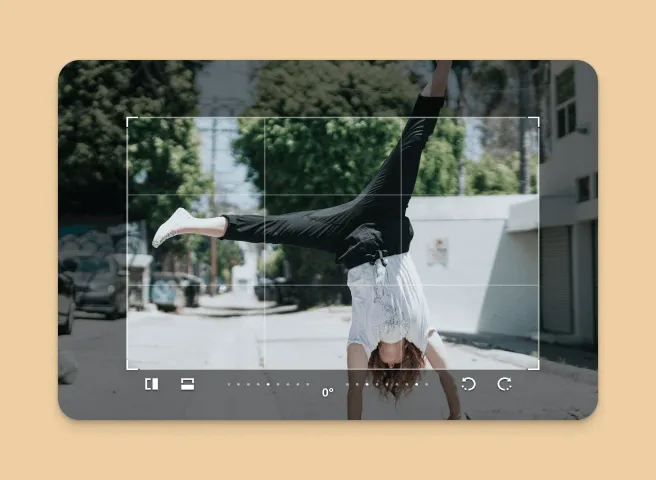
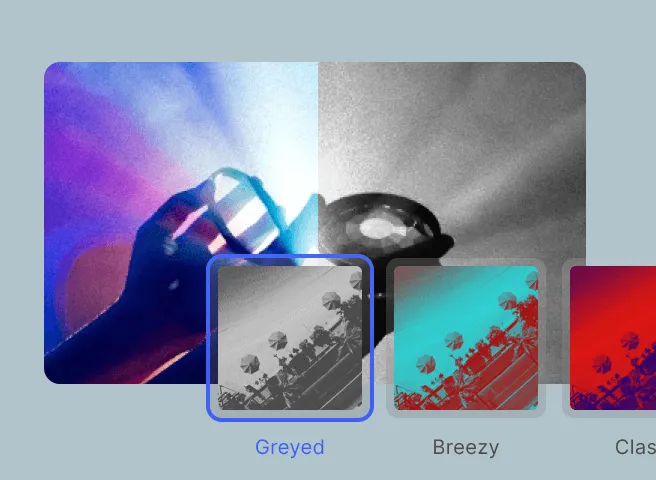
// Toggle editor featurescesdk.feature.enable('ly.img.crop', true);cesdk.feature.enable('ly.img.filter', true);cesdk.feature.enable('ly.img.adjustment', true);See Settings and Features for the complete reference.
Explore Plugins#
CE.SDK has a rich plugin ecosystem that extends the editor with powerful capabilities. Plugins can add new features, integrate third-party services, or customize editor behavior.
Background Removal#
Add AI-powered background removal that runs entirely client-side. The background removal plugin processes images directly in the browser without sending data to external servers.
import BackgroundRemovalPlugin from '@imgly/plugin-background-removal-web';
// Add background removal capabilityawait cesdk.addPlugin(BackgroundRemovalPlugin());
See Background Removal for setup instructions and configuration options.
Print Ready PDF#
Export print-ready PDF/X-4 and PDF/X-3 files with CMYK color profiles for professional printing workflows.
import { convertToPDFX } from '@imgly/plugin-print-ready-pdfs-web';
// Export the current page and convert it into a print-ready PDF/X fileconst [page] = cesdk.engine.block.findByType('page');const pdfBlob = await cesdk.engine.block.export(page, {  mimeType: 'application/pdf'});const printReadyPDF = await convertToPDFX(pdfBlob, {  outputProfile: 'fogra39'});
See Print Ready PDF for setup instructions and configuration options.
AI Integration#
Extend the editor with generative AI capabilities for text-to-image generation, image enhancement, and intelligent editing features. CE.SDK integrates with various AI providers.
import ImageGeneration from '@imgly/plugin-ai-image-generation-web';import { GatewayProvider } from '@imgly/plugin-ai-image-generation-web/gateway';
// Your backend mints a short-lived IMG.LY AI Gateway tokencesdk.actions.register('ly.img.ai.getToken', async () => {  const response = await fetch('/api/ai/token', { method: 'POST' });  const { token } = await response.json();  return token;});
// Add text-to-image generation through the IMG.LY AI Gatewayawait cesdk.addPlugin(  ImageGeneration({    providers: {      text2image: GatewayProvider('bfl/flux-2', {})    }  }));
// Show the image generation panel in the dockcesdk.ui.setComponentOrder({ in: 'ly.img.dock' }, [  'ly.img.ai.image-generation.dock',  ...cesdk.ui.getComponentOrder({ in: 'ly.img.dock' })]);
See Managed Model Gateway for the token endpoint and AI Integration for all AI features.
Custom Asset Sources#
Connect external asset libraries like Unsplash, Getty Images, or your own content management system. Asset sources let users browse and insert content from any source.
You register one with engine.asset.addSource(), without installing a plugin package. See Import From Remote Source for integration patterns and Unsplash for a complete Unsplash integration.
Discover More Plugins#
Explore the full plugin ecosystem in the IMG.LY plugins repository. Available plugins include:
- Vectorizer – Convert raster images to vectors
- Design Presets – Pre-built design templates
- Social Media Templates – Platform-specific sizing
- And more – Check the repository for the latest additions
How Content Moderation Works#
The Content Moderation Editor adds a validation sidebar that checks all images in your design against content policies. When users click “Validate Content”, the system:
- Finds all image blocks in the current scene
- Sends each image to a content moderation API
- Displays results with visual indicators (success, warning, failed)
- Allows block selection to quickly navigate to flagged content
Validation Flow#
The moderation check scans images for four categories of inappropriate content:
import type { CreativeEngine } from '@cesdk/cesdk-js';
import { getImageUrl } from './imgly/utils';
// Check all images in the sceneexport async function checkImageContent(  engine: CreativeEngine): Promise<ModerationResult[]> {  // Find all image blocks  const imageBlocks = engine.block    .findByKind('image')    .map((blockId) => ({      blockId,      url: getImageUrl(engine, blockId) ?? '',      blockName: engine.block.getName(blockId)    }))    .filter(({ url }) => url);
  // Check each image against the moderation API  const results = await Promise.all(    imageBlocks.flatMap(async (block) => {      const categories = await checkImageContentAPI(block.url);      return categories.map((category) => ({        ...category,        ...block      }));    })  );
  return results.flat();}
Content Categories#
The moderation API checks for:
| Category | Description | Threshold |
|---|---|---|
| Weapons | Handguns, rifles, machine guns, threatening knives | >80% = failed, >40% = warning |
| Alcohol | Wine, beer, cocktails, champagne | >80% = failed, >40% = warning |
| Drugs | Cannabis, syringes, glass pipes, bongs, pills | >80% = failed, >40% = warning |
| Nudity | Raw or partial nudity | >80% = failed, >40% = warning |
Connecting Your Own API#
Replace the demo endpoint with your own content moderation service:
const MODERATION_API_URL = 'https://your-api.example.com/moderate';
export async function checkImageContentAPI(  url: string): Promise<ModerationCheckResult[]> {  const response = await fetch(MODERATION_API_URL, {    method: 'POST',    headers: { 'Content-Type': 'application/json' },    body: JSON.stringify({ imageUrl: url })  });
  const results = await response.json();
  // Map your API response to ModerationCheckResult format  return [    {      name: 'Weapons',      description: 'Detected weapons in image',      state: results.weapons > 0.8 ? 'failed' : results.weapons > 0.4 ? 'warning' : 'success'    },    // ... other categories  ];}
Block Selection#
When a user clicks “Select” on a flagged result, the editor navigates to that block:
import type { CreativeEngine } from '@cesdk/cesdk-js';
export function selectBlocks(engine: CreativeEngine, blockIds: number[]): void {  engine.block.select(blockIds);  // The editor automatically zooms to the selected block}
Use Cases#
The Content Moderation Editor is designed for platforms that need to ensure user-generated content meets community guidelines and legal requirements. Common use cases include:
User-Generated Content Platforms#
Allow users to create and customize designs while automatically checking for policy violations before publishing:
// Validate before allowing publishasync function handlePublish(cesdk: CreativeEditorSDK) {  const results = await checkImageContent(cesdk.engine);  const violations = results.filter(r => r.state === 'failed');
  if (violations.length > 0) {    // Block publish and show violations to user    showViolationModal(violations);    return;  }
  // Safe to publish  await publishDesign(cesdk);}
Print-on-Demand Services#
Validate customer uploads before production to avoid printing inappropriate content on merchandise:
- T-shirt and apparel customization – Check uploaded images before printing
- Photo products – Validate images for photo books, calendars, and gifts
- Marketing materials – Ensure brand-safe content for business cards and flyers
Marketing and Advertising Platforms#
Ensure ad creatives comply with platform policies before submission:
// Add custom categories for advertising complianceconst adPolicyResults = await checkImageContentAPI(imageUrl);
// Extend with platform-specific rulesconst platformResults = await checkPlatformCompliance(imageUrl, {  platform: 'facebook',  rules: ['no-before-after', 'no-misleading-claims']});
Enterprise Content Management#
Integrate moderation into design approval workflows:
- Pre-approval validation – Automatically flag content before human review
- Compliance logging – Track moderation results for audit trails
- Role-based access – Allow admins to override warnings with justification
Customizing Moderation Rules#
Adjust thresholds and add custom categories based on your platform’s needs:
// Custom threshold configurationconst THRESHOLDS = {  strict: { failed: 0.5, warning: 0.2 },    // Family-friendly platforms  moderate: { failed: 0.8, warning: 0.4 },  // General audience (default)  relaxed: { failed: 0.95, warning: 0.7 }   // Adult-only platforms};
function getState(confidence: number, mode: keyof typeof THRESHOLDS): ModerationState {  const { failed, warning } = THRESHOLDS[mode];  if (confidence > failed) return 'failed';  if (confidence > warning) return 'warning';  return 'success';}
Key Capabilities#
The Content Moderation Editor includes everything needed for content validation workflows.
Content Detection
Automatically detect inappropriate content including weapons, alcohol, drugs, and nudity in images.
API Integration
Connect to external content moderation APIs for comprehensive policy validation.
Visual Feedback
Display validation results with clear success, warning, and failure states for each check.
Block Selection
Automatically highlight and select blocks that fail content moderation checks.
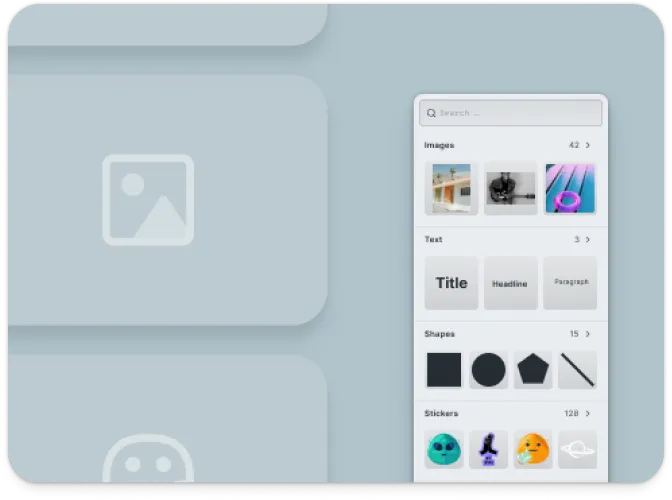
Full Design Editing
Complete design editing capabilities with text, shapes, stickers, and image editing.
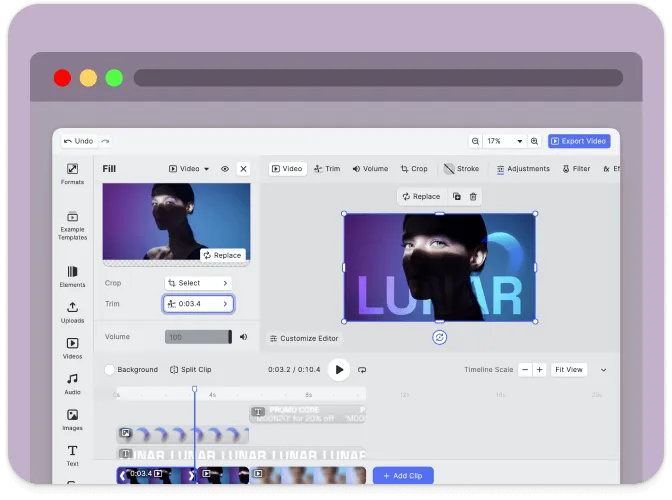
Export Options
Export validated designs to multiple formats including PNG, JPEG, and PDF.
Troubleshooting#
Editor doesn’t load#
- Check the container element exists: Ensure your container element is in the DOM before calling
create() - Verify the baseURL: Assets must be accessible from the CDN or your self-hosted location
- Check console errors: Look for CORS or network errors in browser developer tools
Moderation API fails#
- Check network connectivity: Ensure the moderation API endpoint is accessible
- Verify image URLs: Images must be publicly accessible URLs for the API to fetch
- Check CORS settings: If using a custom API, ensure CORS headers allow requests from your domain
Results don’t appear#
- Check for image blocks: Moderation only checks image blocks, not other content types
- Verify images have URLs: Images must have valid source URLs to be checked
Watermark appears in production#
- Add your license key: Set the
licenseproperty in your configuration - Get a license: Contact us at img.ly/forms/contact-sales/
Next Steps#
- Configuration – Complete list of initialization options
- Serve Assets – Self-host engine assets for production
- Actions – Build custom export and save workflows
- Theming – Customize colors and appearance
- Localization – Add translations and language support