Professional design editing for your web app—create graphics, templates, and multi-page documents. Runs entirely in the browser with no server dependencies.
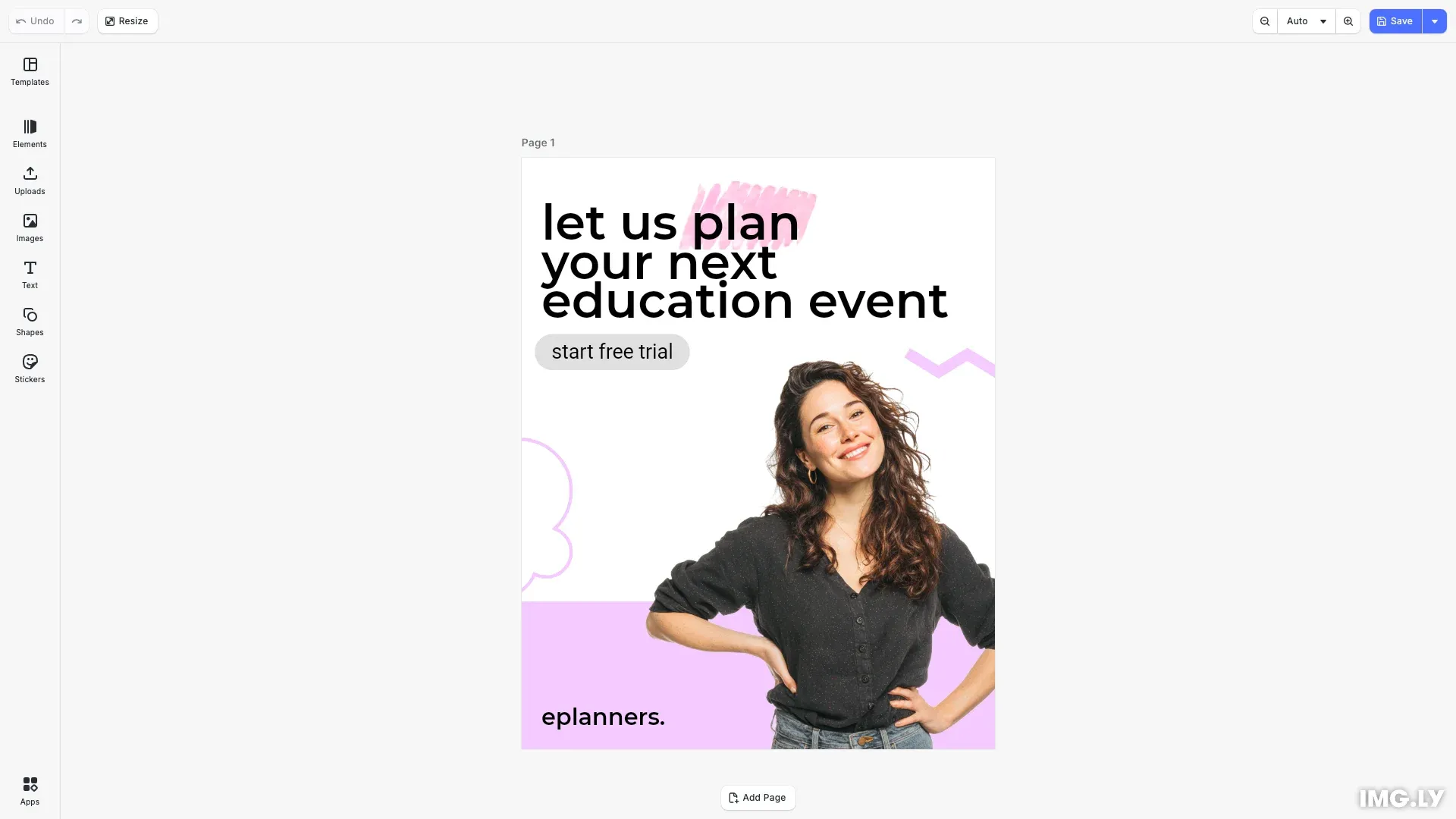
Pre-requisites#
This guide assumes basic familiarity with JavaScript or TypeScript.
- Node.js v20+ with npm – Download
- Supported browsers – Chrome 114+, Edge 114+, Firefox 115+, Safari 15.6+
See Browser Support for the full list
Get Started#
Start fresh with a standalone Design Editor project. This creates a complete, ready-to-run application.
Step 1: Clone the Repository#
git clone https://github.com/imgly/starterkit-design-editor-ts-web.gitgit clone https://github.com/imgly/starterkit-design-editor-ts-web.gitnpx degit imgly/starterkit-design-editor-ts-web starterkit-design-editor-ts-webnpx degit imgly/starterkit-design-editor-ts-web starterkit-design-editor-ts-webThe src/ folder contains the editor code:
src/├── index.ts # Application entry point└── imgly/ ├── index.ts # Editor initialization function ├── config/ │ ├── plugin.ts # Main configuration plugin │ ├── actions.ts # Export/import actions │ ├── features.ts # Feature toggles │ ├── i18n.ts # Translations │ ├── settings.ts # Engine settings │ └── ui/ # UI customization │ ├── index.ts # Combines UI customization exports │ ├── canvas.ts # Canvas configuration │ ├── components.ts # Custom component registration │ ├── dock.ts # Dock layout configuration │ ├── inspectorBar.ts # Inspector bar layout │ ├── navigationBar.ts # Navigation bar layout │ └── panel.ts # Panel configuration └── plugins/ └── background-removal.ts # Background removal pluginStep 2: Install Dependencies#
Install the required packages:
cd starterkit-design-editor-ts-web
npm install
cd starterkit-design-editor-ts-web
npm installcd starterkit-design-editor-ts-web
pnpm installcd starterkit-design-editor-ts-web
pnpm installcd starterkit-design-editor-ts-web
yarncd starterkit-design-editor-ts-web
yarnStep 3: Download Assets#
CE.SDK requires engine assets (fonts, icons, UI elements) to function. These must be served as static files from your project’s public/ directory.
curl -O https://cdn.img.ly/packages/imgly/cesdk-js/1.72.1/imgly-assets.zip
unzip imgly-assets.zip -d public/
rm imgly-assets.zip
curl -O https://cdn.img.ly/packages/imgly/cesdk-js/1.72.1/imgly-assets.zip
unzip imgly-assets.zip -d public/
rm imgly-assets.zipconst config = { // ... baseURL: '/assets' // ...};Step 4: Run the Development Server#
npm run devnpm run devpnpm run devpnpm run devyarn devyarn devOpen http://localhost:5173 in your browser.
Get Started#
Integrate the Design Editor into an existing web application. This adds the editor configuration to your current project structure.
Step 1: Clone#
cd your-projectcd your-projectClone the starter kit and copy the editor configuration to your project:
git clone https://github.com/imgly/starterkit-design-editor-ts-web.git
cp -r starterkit-design-editor-ts-web/src/imgly ./src/imgly
rm -rf starterkit-design-editor-ts-webgit clone https://github.com/imgly/starterkit-design-editor-ts-web.git
cp -r starterkit-design-editor-ts-web/src/imgly ./src/imgly
rm -rf starterkit-design-editor-ts-webnpx degit imgly/starterkit-design-editor-ts-web/src/imgly ./src/imglynpx degit imgly/starterkit-design-editor-ts-web/src/imgly ./src/imglyThe imgly/ folder contains the editor configuration:
imgly/├── index.ts # Editor initialization function├── config/│ ├── plugin.ts # Main configuration plugin│ ├── actions.ts # Export/import actions│ ├── features.ts # Feature toggles│ ├── i18n.ts # Translations│ ├── settings.ts # Engine settings│ └── ui/ # UI customization│ ├── index.ts # Combines UI customization exports│ ├── canvas.ts # Canvas configuration│ ├── components.ts # Custom component registration│ ├── dock.ts # Dock layout configuration│ ├── inspectorBar.ts # Inspector bar layout│ ├── navigationBar.ts # Navigation bar layout│ └── panel.ts # Panel configuration└── plugins/ └── background-removal.ts # Background removal pluginStep 2: Install Dependencies#
Install the required packages for the editor:
Core Editor#
Install the Creative Editor SDK:
npm install @cesdk/cesdk-jsnpm install @cesdk/cesdk-jspnpm add @cesdk/cesdk-jspnpm add @cesdk/cesdk-jsyarn add @cesdk/cesdk-jsyarn add @cesdk/cesdk-jsBackground Removal#
Add AI-powered background removal:
npm install @imgly/background-removal onnxruntime-webnpm install @imgly/background-removal onnxruntime-webpnpm add @imgly/background-removal onnxruntime-webpnpm add @imgly/background-removal onnxruntime-webyarn add @imgly/background-removal onnxruntime-webyarn add @imgly/background-removal onnxruntime-webThe onnxruntime-web package provides the machine learning runtime required for client-side AI processing.
Step 3: Download Assets#
CE.SDK requires engine assets (fonts, icons, UI elements) to function. These must be served as static files from your project’s public/ directory.
curl -O https://cdn.img.ly/packages/imgly/cesdk-js/1.72.1/imgly-assets.zip
unzip imgly-assets.zip -d public/
rm imgly-assets.zipcurl -O https://cdn.img.ly/packages/imgly/cesdk-js/1.72.1/imgly-assets.zip
unzip imgly-assets.zip -d public/
rm imgly-assets.zipStep 4: Add a Container Element#
Add a container element to your HTML where the editor will be mounted:
<div id="cesdk_container" style="width: 100%; height: 100vh;"></div>Step 5: Initialize the Editor#
Import and call the initialization function from your application’s entry point:
import CreativeEditorSDK from '@cesdk/cesdk-js';
import { initDesignEditor } from './imgly';
const config = {  userId: 'your-user-id',  baseURL: '/assets'  // license: 'YOUR_LICENSE_KEY',};
CreativeEditorSDK.create('#cesdk_container', config)  .then(async (cesdk) => {    await initDesignEditor(cesdk);  })  .catch((error) => {    console.error('Failed to initialize CE.SDK:', error);  });
Set Up a Scene#
CE.SDK offers multiple ways to load content into the editor. Choose the method that matches your use case:
// Create a blank design canvas - starts with an empty design sceneawait cesdk.actions.run('scene.create');
// Load from a template archive - restores a previously saved projectawait cesdk.loadFromArchiveURL('https://example.com/template.zip');
// Load from an image URL - creates a new scene with the imageawait cesdk.createFromImage('https://example.com/image.jpg');
// Load from a scene file - restores a scene from JSONawait cesdk.loadFromURL('https://example.com/scene.json');
The createDesignScene() method is ideal for design workflows, as it creates a blank canvas ready for content.
Customize Assets#
The Design Editor uses asset source plugins to provide built-in libraries for templates, stickers, shapes, and fonts. The starter kit includes a curated selection—customize what’s included based on your needs.
Asset sources are added via plugins in src/index.ts. Enable or disable individual sources:
import {  FiltersAssetSource,  StickerAssetSource,  TextAssetSource,  VectorShapeAssetSource,  EffectsAssetSource,  // ...} from '@cesdk/cesdk-js/plugins';
// Add only the sources you needawait cesdk.addPlugin(new FiltersAssetSource());await cesdk.addPlugin(new StickerAssetSource());await cesdk.addPlugin(new TextAssetSource());await cesdk.addPlugin(new VectorShapeAssetSource());await cesdk.addPlugin(new EffectsAssetSource());// ...For production deployments, self-hosting assets is required—the IMG.LY CDN is intended for development only. See Serve Assets for downloading assets, configuring baseURL, and excluding unused sources to optimize load times.
Configure Actions#
Actions are functions that handle user interactions like exporting designs, saving scenes, and importing files. CE.SDK provides built-in actions that you can run directly or override with custom implementations.
Key built-in actions:
exportDesign– Export the current design to PNG, JPEG, PDF, or other formatssaveScene– Save the scene as a JSON string for later editingimportScene– Import a previously saved scene (supports.sceneand.cesdkformats)exportScene– Export the scene as a JSON file or.cesdkarchive with all assetsuploadFile– Handle file uploads with progress tracking
Use cesdk.actions.run() to execute any action:
// Run a built-in actionawait cesdk.actions.run('exportDesign', { mimeType: 'image/png' });Import from File Picker#
// Let users open images from their devicecesdk.actions.register('importImage', async () => { const blobURL = await cesdk.utils.loadFile({ accept: 'image/*', returnType: 'objectURL' }); await cesdk.createFromImage(blobURL);});Export and Save#
// Register export action that downloads the edited designcesdk.actions.register('exportDesign', async (exportOptions) => { const { blobs, options } = await cesdk.utils.export(exportOptions); await cesdk.utils.downloadFile(blobs[0], options.mimeType);});Upload to Your Backend#
// Override the built-in exportDesign action to send to your servercesdk.actions.register('exportDesign', async (exportOptions) => {  const { blobs } = await cesdk.utils.export(exportOptions);
  const formData = new FormData();  formData.append('design', blobs[0], 'design.png');
  const response = await fetch('/api/upload', {    method: 'POST',    body: formData  });
const { url } = await response.json(); console.log('Uploaded to:', url);});Customize (Optional)#
Theming#
CE.SDK supports light and dark themes out of the box, plus automatic system preference detection. Switch between themes programmatically:
// 'light' | 'dark' | 'system' | (() => 'light' | 'dark')cesdk.ui.setTheme('dark');See Theming for custom color schemes, CSS variables, and advanced styling options.
Localization#
Customize UI labels and add support for multiple languages. The i18n system supports translation keys for all UI elements:
// Override specific labelscesdk.i18n.setTranslations({  en: {    'actions.export.image': 'Download Design',    'common.cancel': 'Cancel',    'common.apply': 'Apply'  }});
// Add a new languagecesdk.i18n.setTranslations({  de: {    'actions.export.image': 'Design herunterladen'  }});
// Set the active localecesdk.i18n.setLocale('de');
See Localization for supported languages, translation key reference, and right-to-left language support.
UI Layout#
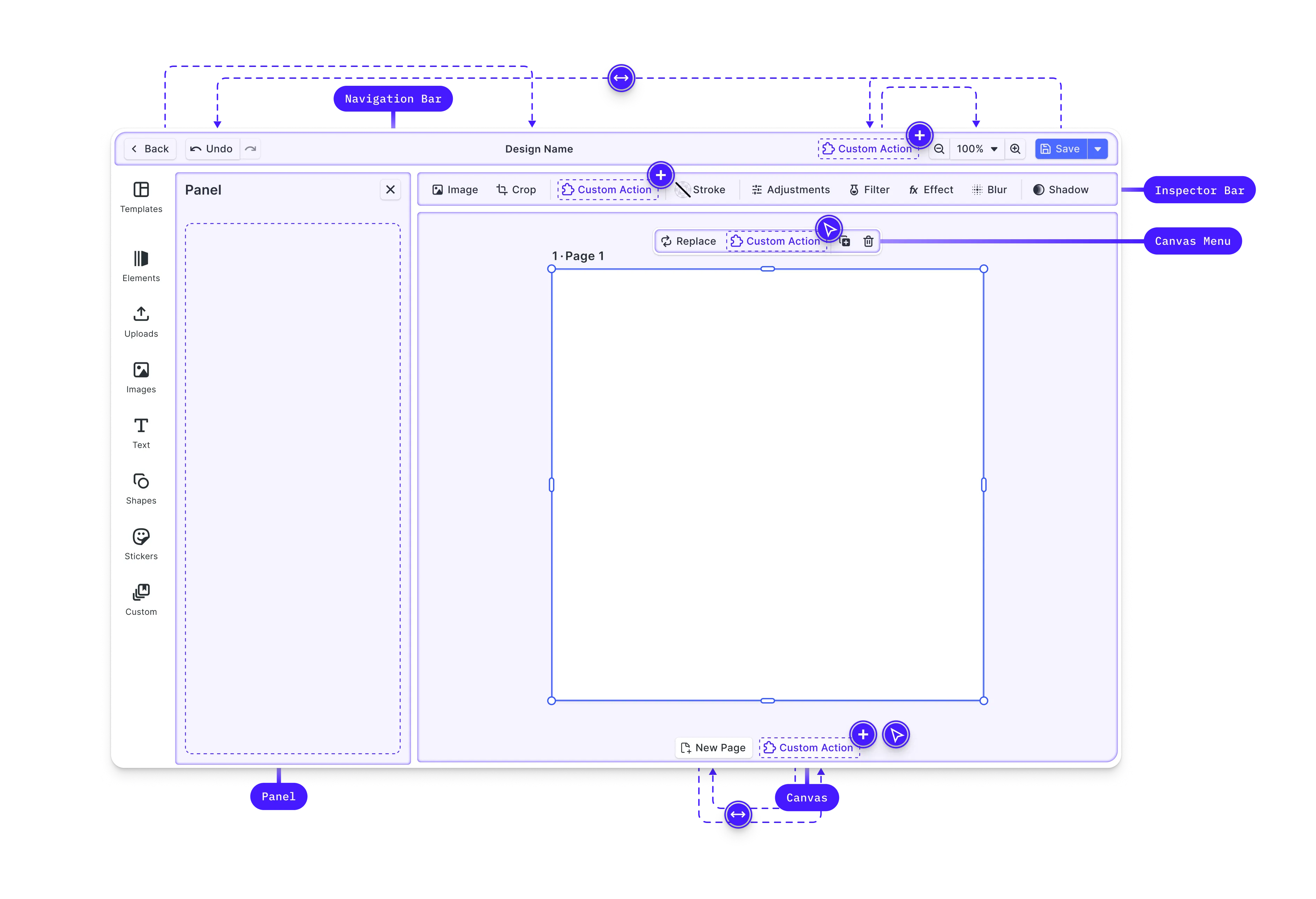
Customize the editor interface by modifying the dock, inspector bar, navigation bar, and canvas menu. CE.SDK provides Order APIs to control which components appear and in what sequence.
// Get current navigation bar componentsconst navOrder = cesdk.ui.getNavigationBarOrder();
// Add a custom button to the navigation barcesdk.ui.insertNavigationBarOrderComponent(  'ly.img.spacer',  { id: 'my-custom-action' },  'after');
// Rearrange dock itemscesdk.ui.setDockOrder([  'ly.img.assetLibrary.dock',  'ly.img.separator',  'my-custom-dock-item']);
// Customize the inspector barcesdk.ui.setInspectorBarOrder([  'ly.img.fill.inspectorBar',  'ly.img.separator',  'ly.img.filter.inspectorBar']);
The Order API methods follow a consistent pattern across all UI areas:
get*Order()– Retrieve the current component orderset*Order()– Replace the entire orderinsert*OrderComponent()– Add components relative to existing ones
See Dock, Inspector Bar, Navigation Bar, Canvas Menu, and Canvas for detailed layout customization options.
Custom Components#
Build custom UI components using the builder system and integrate them in the editor. Custom components receive reactive state updates and can interact with the engine API.
// Register a custom componentcesdk.ui.registerComponent('my-custom-button', ({ builder, engine }) => {  const selectedBlocks = engine.block.findAllSelected();
  builder.Button('apply-effect', {    label: 'Apply Effect',    isDisabled: selectedBlocks.length === 0,    onClick: () => {      // Apply custom logic to selected blocks    }  });});
// Add the component to the navigation barcesdk.ui.insertNavigationBarOrderComponent(  'ly.img.spacer',  'my-custom-button',  'after');
Custom components automatically re-render when the engine state they depend on changes—no manual subscription management required.
See Register New Component for the complete builder API and component patterns.
Settings & Features#
Fine-tune editor behavior through settings and features.
Settings configure core engine behavior—rendering, input handling, and history management:
cesdk.engine.editor.setSettingBool('page/dimOutOfPageAreas', true);cesdk.engine.editor.setSettingBool('mouse/enableZoomControl', true);cesdk.engine.editor.setSettingBool('features/undoHistory', true);Features toggle which editing tools and panels appear in the UI:
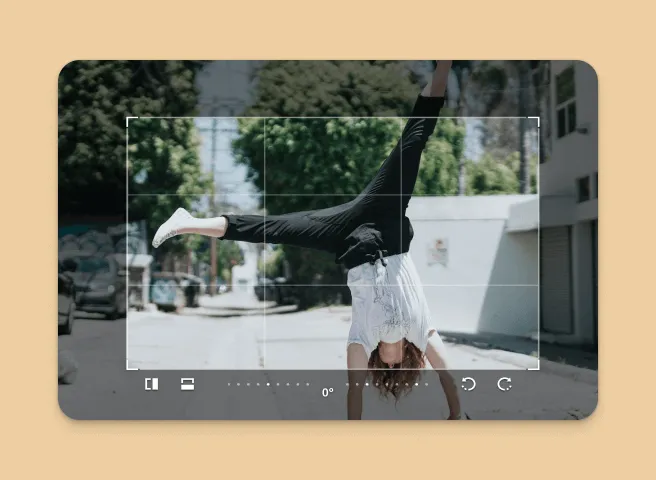
// Toggle editor featurescesdk.feature.enable('ly.img.crop', true);cesdk.feature.enable('ly.img.filter', true);cesdk.feature.enable('ly.img.adjustment', true);See Settings and Features for the complete reference.
Explore Plugins#
CE.SDK has a rich plugin ecosystem that extends the editor with powerful capabilities. Plugins can add new features, integrate third-party services, or customize editor behavior.
Background Removal#
Add AI-powered background removal that runs entirely client-side. The background removal plugin processes images directly in the browser without sending data to external servers.
import BackgroundRemovalPlugin from '@imgly/plugin-background-removal';
// Add background removal capabilityawait cesdk.addPlugin(BackgroundRemovalPlugin());
See Background Removal for setup instructions and configuration options.
Print Ready PDF#
Export print-ready PDF/X-3 files with CMYK color profiles for professional printing workflows.
import PrintReadyPDFPlugin from '@imgly/plugin-print-ready-pdf';
// Add print-ready PDF export capabilityawait cesdk.addPlugin(PrintReadyPDFPlugin());
See Print Ready PDF for setup instructions and configuration options.
AI Integration#
Extend the editor with generative AI capabilities for text-to-image generation, image enhancement, and intelligent editing features. CE.SDK integrates with various AI providers.
import AIPlugin from '@imgly/plugin-ai-generation';
// Configure AI generationawait cesdk.addPlugin(AIPlugin({  provider: 'your-ai-provider',  apiKey: 'your-api-key'}));
See AI Integration for provider setup and supported AI features.
Custom Asset Sources#
Connect external asset libraries like Unsplash, Getty Images, or your own content management system. Asset sources let users browse and insert content from any source.
import UnsplashAssetSource from '@imgly/plugin-unsplash';
// Add Unsplash integrationawait cesdk.addPlugin(UnsplashAssetSource({  accessKey: 'your-unsplash-access-key'}));
See Custom Asset Sources for integration patterns.
Discover More Plugins#
Explore the full plugin ecosystem in the IMG.LY plugins repository. Available plugins include:
- Vectorizer – Convert raster images to vectors
- Design Presets – Pre-built design templates
- Social Media Templates – Platform-specific sizing
- And more – Check the repository for the latest additions
Key Capabilities#
The Design Editor includes everything needed for professional design editing.
Multi-Page Documents
Create presentations, brochures, and multi-page designs with intuitive page management.
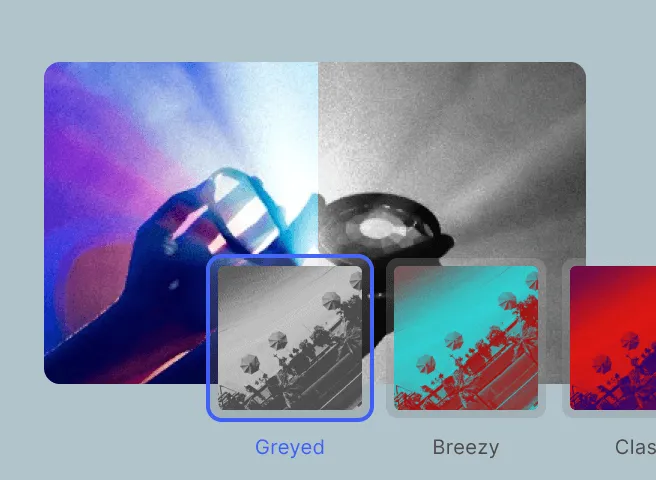
Professional Filters
Apply color grading with LUT filters, duotone effects, and customizable image adjustments.
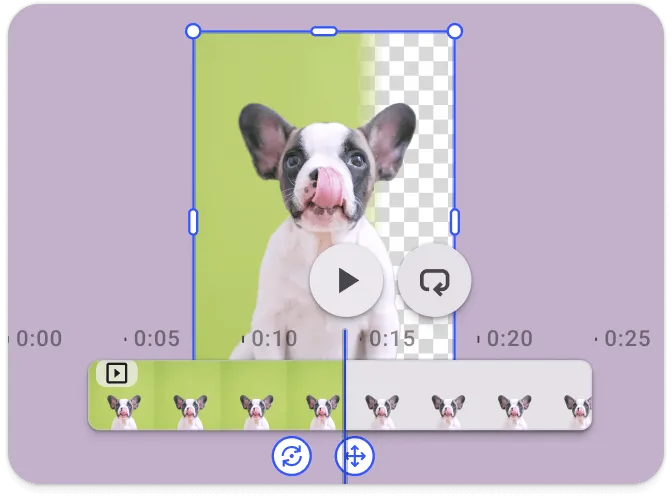
Background Removal
AI-powered background removal that runs entirely in the browser without server dependencies.
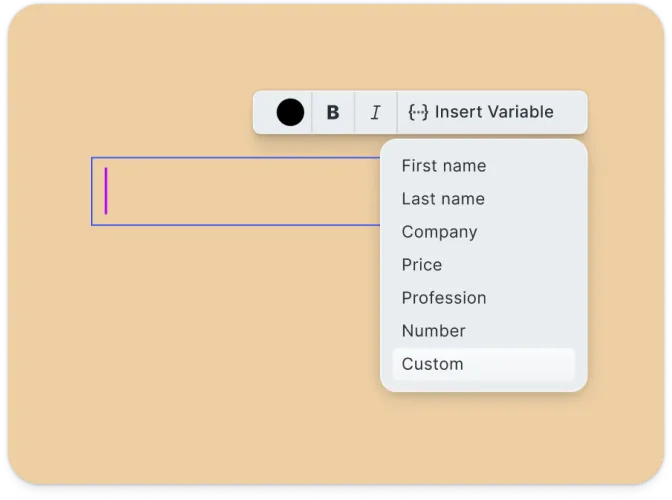
Text & Typography
Add styled text with comprehensive typography controls, fonts, and visual effects.
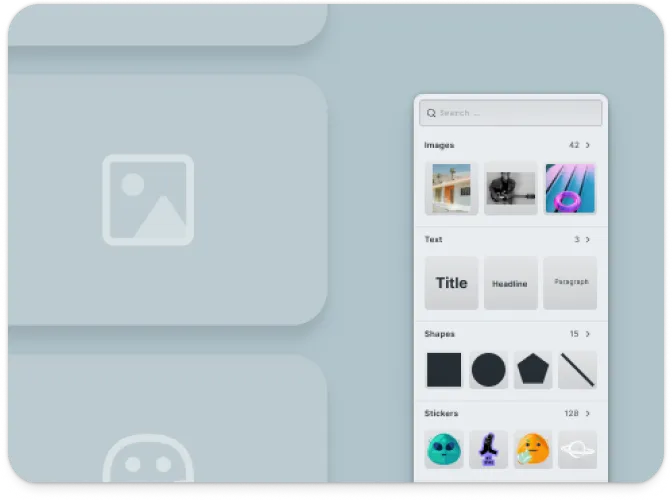
Asset Libraries
Access built-in collections of templates, stickers, shapes, and graphics, plus import custom assets.
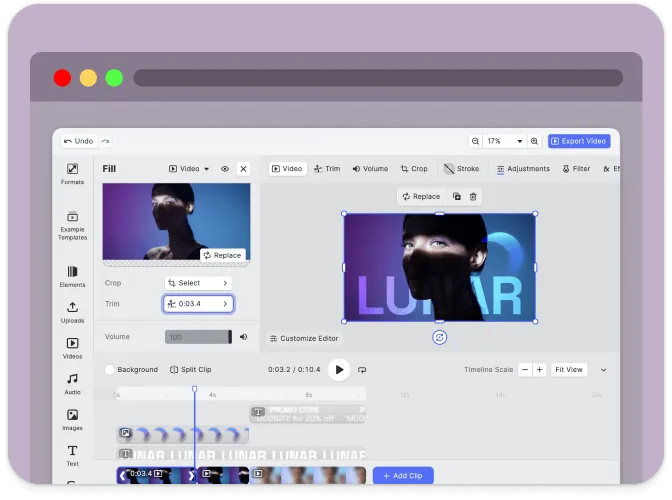
Export Options
Export to multiple formats including PNG, JPEG, and PDF with quality and size controls.
Troubleshooting#
Editor doesn’t load#
- Check the container element exists: Ensure your container element is in the DOM before calling
create() - Verify the baseURL: Assets must be accessible from the CDN or your self-hosted location
- Check console errors: Look for CORS or network errors in browser developer tools
Assets don’t appear#
- Check network requests: Open DevTools Network tab and look for failed requests to
cdn.img.ly - Self-host assets for production: See Serve Assets to host assets on your infrastructure
Export fails or produces blank images#
- Wait for content to load: Ensure images are fully loaded before exporting
- Check CORS on images: Remote images must allow cross-origin access
Watermark appears in production#
- Add your license key: Set the
licenseproperty in your configuration - Sign up for a trial: Get a free trial license at img.ly/forms/free-trial
Next Steps#
- Configuration – Complete list of initialization options
- Serve Assets – Self-host engine assets for production
- Actions – Build custom export and save workflows
- Theming – Customize colors and appearance
- Localization – Add translations and language support