


IMG.LY vs. PixiJS
Building creative editing tools for your users that go beyond low-level rendering? See why CreativeEditor SDK is the go-to choice when you need fully featured creative editing capabilities, rather than a graphics renderer alone.
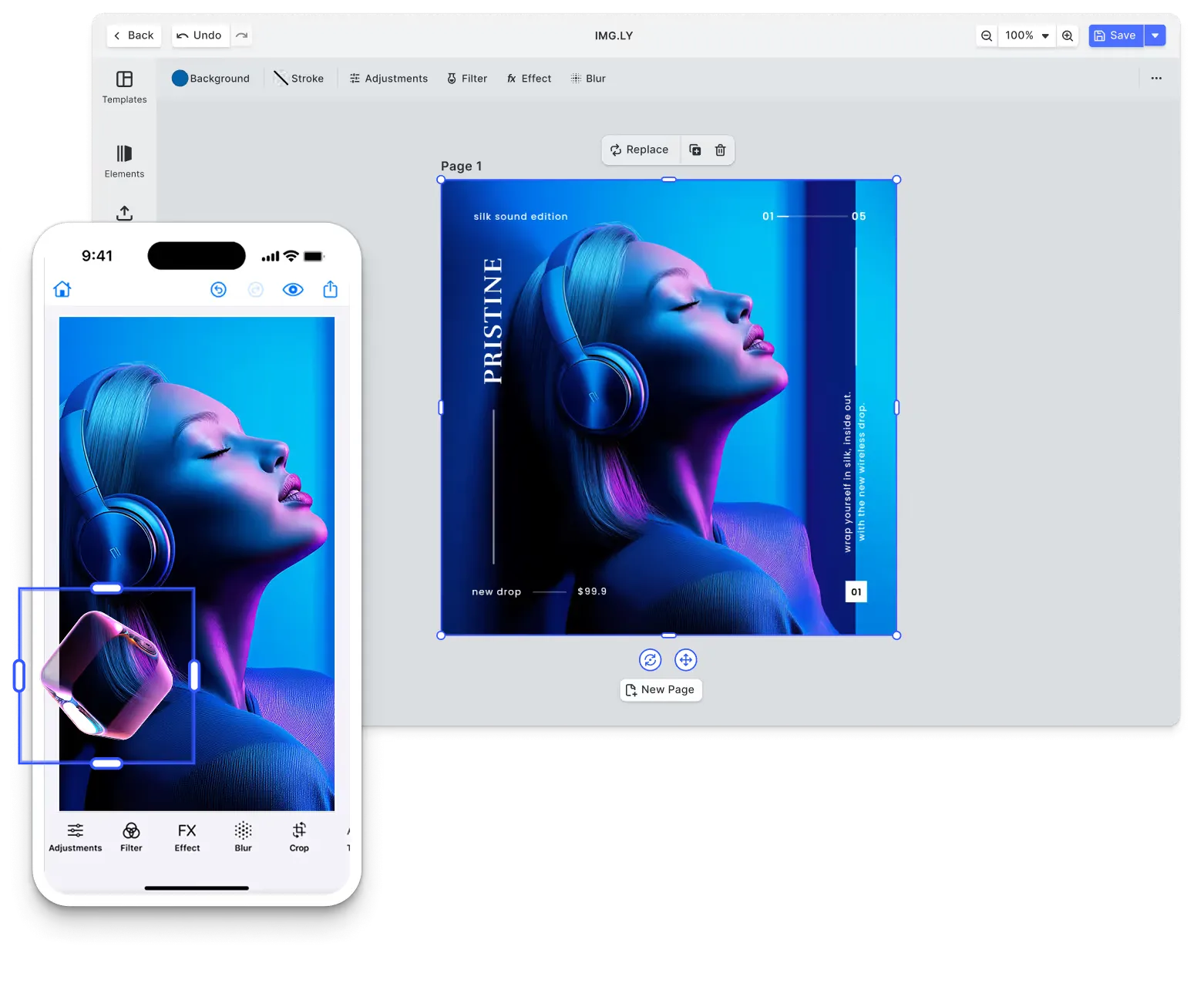
What makes IMG.LY the best PixiJS alternative?
End-to-end creative editing SDK
IMG.LY delivers full-featured photo, video, and design editing SDKs that include professional tools, UI, and APIs, all powered by a high-performance rendering core optimized for creative use cases.
Deep customization
IMG.LY provides a complete, white-label editor interface that can be themed, extended, or replaced entirely with your own components. Focus on your app’s vision, not low-level graphics handling.
Cross-platform consistency
Build once, deploy everywhere. With SDKs for Web, iOS, Android, React Native, and Flutter, IMG.LY ensures pixel-perfect rendering and identical creative experiences across devices - from browsers to native mobile apps.
Headless automation & creative workflows
Bring creative automation to your stack with headless APIs for templating, batch rendering, and dynamic asset generation. Whether it’s user-driven editing or fully programmatic creation, IMG.LY adapts to both.
Trusted by 100+
industry leaders














What our clients say about us
Integrating IMG.LY’s editor meant we didn’t have to build or maintain a complex editing layer ourselves. That kept our team focused on our core AI ad engine and saved us countless development hours — while still giving our customers the ability to polish and customize creatives at scale.
Hikari Senju
CEO, Omneky

With IMG.LY we built a central creative portal that now powers over 140 dealer campaigns across multiple automotive brands. Before this, asset creation was slow and inconsistent.
Martin Röhr
Product Owner, Digitas

By embedding IMG.LY’s editor we were able to hit key RFP requirements and deliver a template-based creative experience that now serves 1,000+ customers. It helped us win more deals and exceed enterprise expectations without needing to hire dedicated design teams.
Rob Driscoll
Director of PM, Optimizely

Since integrating IMG.LY’s editor, we now deliver 30,000+ ad creatives per month, dramatically shorten time-to-launch, and help our clients cut design spend by up to $10,000 per month.
Logan Welbaum
Founder, Plai

Our customers create over a million personalized postcards each year choosing from over hundreds of templates with IMG.LY’s SDK. It’s the only solution that allows us to build our own specialized, on-brand UI that integrates seamlessly with our platform.
Jeanine Zaalberg
Product Manager, SwissPost

From a developer’s perspective, the most powerful feature of the photo editor is the integration process. It was completely flawless, quick, and easy to integrate.
Stefano Fornari
CTO, Funambol

We compared IMG.LY SDK with other solutions and found that it would be the best fit for us since it provides all the features that are crucial for our use case.
Carem Pereira
SCRUM Manager, HP

IMG.LY vs. PixiJS at a glance
| Feature | IMG.LY | PixiJS | Notes |
|---|---|---|---|
| Primary Use Case | End-to-end creative editing SDKs for photo, video, and design. Provides full-featured editors, modular SDK components, and headless integration options for a range of creative applications including social media, marketing, print-on-demand, and content creation workflows. | High-performance 2D rendering engine for displaying graphics using WebGL and Canvas. Designed for building browser-based games, interactive ads, data visualizations, and custom visual experiences from scratch. | IMG.LY provides turnkey creative editing solutions. PixiJS is a rendering engine requiring full custom development to build editing tools. |
| Target Audience | Product teams and enterprises needing complete creative editing SDK that integrates into existing workflows. Used by SaaS platforms, social and marketing apps, and print businesses requiring production-ready tools. | Game developers, creative coders, and engineers building custom interactive experiences from the ground up. Popular with indie game studios, digital agencies creating interactive campaigns, and developers building bespoke visualizations. | IMG.LY targets teams and developers needing production-ready yet highly customizable creative editing capabilities. PixiJS targets developers with deep technical expertise building custom rendering solutions from the ground up. |
| Technical Approach | Comprehensive SDK with modular UI, headless API, and templating system. Supports Web, iOS, Android, React Native, Flutter, and Node.js. Built for high performance. | Open-source JS rendering library using WebGL with Canvas fallback. Provides scene graphs and sprite handling but lacks editing logic. | IMG.LY offers complete creative editing infrastructure. PixiJS provides low-level rendering primitives that must be assembled into higher-level features. |
| Editing Features | Comprehensive creative editing capabilities including image adjustments, filters, text and sticker overlays, transformations, timeline-based video editing, and full design tools for layout, templates, typography, and print-ready export (CMYK, bleed, margins). | None built-in. PixiJS provides sprite rendering, texture management, basic interaction events (click, touch), and transform handling. All editing features like cropping, adjustments, filters, text, drawing tools, timelines must be custom-built from scratch using low-level APIs. | IMG.LY ships with complete editing toolsets across photo, video, and design. PixiJS requires months of development to build basic editing functionality. |
| Advanced Design Editing Capabilities | Offers professional-grade creative functionality, including layer management, RAW image editing, batch processing APIs, multi-track video timelines, as well as advanced design tools with grid systems, alignment guides, snap-to controls, print-ready export, and brand enforcement options. | Focused on performance-oriented rendering through WebGL shaders, filters, and particle systems. Provides extensive control over visual effects and blending, but no native creative editing or design tools. | IMG.LY delivers advanced creative capabilities across image, video, and design workflows. PixiJS focuses on rendering performance and low-level control. |
| Audio/Video Support | Provides a full-featured video timeline with transitions, visual effects, and support for text and audio overlays. Audio capabilities include multi-track editing, captions, animations, and precise synchronization. | No audio or video playback features. PixiJS is for 2D graphics only. Possible to use HTML5 video/audio elements separately and synchronize with PixiJS rendering manually if needed. Community sound plugin available but limited. | IMG.LY provides complete video/audio editing capabilities. PixiJS has no audio/video support and requires external solutions. |
| Creative Automation | Built-in automation through template-based batch processing, API workflows, variable data merging, and server-side rendering. Automatic generation of thousands of personalized designs/videos from templates by merging data sources programmatically. | No automation features. Custom automation systems using JavaScript have to be build manually, same as integration of data sources and implementation of rendering pipelines. | IMG.LY includes turnkey automation workflows. PixiJS requires building them from scratch. |
| Templating & Dynamic Editing | Template creation and editing with smart placeholders, brand constraints, and role-based permissions. Supports data-driven personalization and automation through APIs for large-scale creative workflows. | No template system. Developers must code template logic manually. | IMG.LY provides creation, editing and API-driven template automation. PixiJS requires custom implementation. |
| AI Capabilities | Built-in AI tools for background removal, text-to-image generation, image-to-image transformation, and text-to-video creation. Supports integration of custom models (e.g., via fal.ai) and makes AI features accessible both in the editor and through APIs. | No AI features. Developers can integrate third-party AI services by fetching results via APIs and rendering them using PixiJS, but all integration work is manual. No built-in AI tooling or UI. | IMG.LY includes production-ready AI tools with UI integration. PixiJS requires custom AI service integration. |
| User Interface | Full-featured editing UI with drag-and-drop tools, configurable panels, timeline editing, asset libraries, and live preview. Fully customizable to match any brand. | No built-in UI. PixiJS provides rendering only, developers must build all controls and interfaces manually. | IMG.LY ships with a complete, customizable editor UI. PixiJS requires building everything from scratch. |
| White-labeling | Fully white-label: complete control over branding, colors, fonts, and theming. | PixiJS ships no UI, so there is no vendor branding to remove and nothing to theme. Whatever the interface looks like is whatever you build. | Neither imposes branding. IMG.LY themes a supplied editor; with PixiJS there is no interface until you write one. |
| Customizability | Deep customization via configuration, theming APIs, and plugin architecture. Enable/disable tools, inject custom logic, and extend workflows while maintaining production stability. | Total flexibility at the code level. Build any visuals or interactions with JS and WebGL. No prebuilt features or structure. | IMG.LY balances customization with production-ready reliability. PixiJS offers freedom but zero built-in features. |
| Extensibility | Built for extensibility through a modular plugin system and comprehensive APIs. Developers can add custom tools, panels, and integrate backend systems through APIs like background removal, vectorization, and creative automation. The SDK’s architecture supports deep customization without modifying the core, ensuring long-term stability. | Fully extensible at the code level with JavaScript and TypeScript. Supports community plugins for effects, particles, and UI frameworks, but all integrations and higher-level functionality must be implemented manually. | IMG.LY combines plugin-based extensibility with powerful APIs for AI, asset handling, and automation. PixiJS offers code-level extensibility but lacks built-in creative APIs. |
| Ease of Integration | Low barrier to entry; frontend developers can integrate with JavaScript/TypeScript knowledge. Comprehensive documentation, code examples, integration guides for all frameworks, and solution engineering support available. | Moderate to steep; requires solid JavaScript knowledge, understanding of WebGL concepts (textures, shaders, batching), scene graphs, and game loop architecture. Excellent documentation for the rendering engine, but building editing tools requires advanced skills. | IMG.LY is accessible to frontend developers with standard web skills. PixiJS requires deeper technical knowledge and significant development time for editing features. |
| Platform Support | Cross-platform SDK for Web, iOS, Android, React Native, Flutter, Electron, and Node.js. Unified creative engine ensures consistency and offline support. | Web browsers only. Can be wrapped for mobile/desktop, but lacks native bindings. | IMG.LY supports true native mobile/desktop with offline capabilities. PixiJS is browser-only and requires wrappers for mobile/desktop deployment. |
| Mobile Performance | Optimized for mobile with gestures, adaptive quality, and 60fps editing on mid-range devices. Offline-first architecture. | Excellent WebGL rendering, but mobile UX and gestures must be coded manually. | IMG.LY is optimized for mobile editing. PixiJS performs well but requires extra dev work. |
| Rendering Approach | Flexible rendering deployment: client-side editing uses device GPUs and keeps data local, while server-side rendering with the CE.SDK Renderer powers automated pipelines on organization-controlled Node.js infrastructure. The unified engine ensures pixel-identical output in both environments. Choose client-side for user-facing editing and server-side for automation, with the same SDK and the same results. | Hardware-accelerated WebGL rendering optimized for sprites and particles. | IMG.LY optimizes for editing; PixiJS for rendering performance. |
| Offline Capabilities | Full offline editing and export once SDK is loaded. Users create, edit, and export content without internet connection. Essential for mobile apps and environments with unreliable connectivity. All processing happens on-device. | Works offline for rendering once loaded, PixiJS is client-side JavaScript. However, asset loading, data persistence, and export functionality must be implemented with offline support in mind. | IMG.LY provides complete offline editing capabilities. PixiJS rendering works offline but features requiring data handling need custom offline implementation. |
| Scalability | Designed for production applications serving millions of users. Client-side rendering distributes load across user devices. Optional server-side rendering for automation. Powers 500+ million creations monthly across consumer and enterprise apps. | Excellent rendering performance: handles thousands of sprites at 60fps even on mobile. Performance depends on developer optimization. No built-in scalability features for multi-user editing or cloud processing. | IMG.LY scales from individual users to enterprise deployments. PixiJS scales rendering performance but requires building application scalability yourself. |
| Storage & Data Ownership | Flexible architecture supporting client-side processing (data stays on device) and optional server-side deployment. Self-host on your infrastructure or use cloud deployments. Full offline editing capabilities ensure data privacy and GDPR compliance. | Operates entirely in the browser, so the data stays yours, but there is no built-in storage, export, or data management. File handling, export pipelines, and storage integration are yours to implement. | IMG.LY handles storage flexibly; PixiJS leaves it to the developer. |
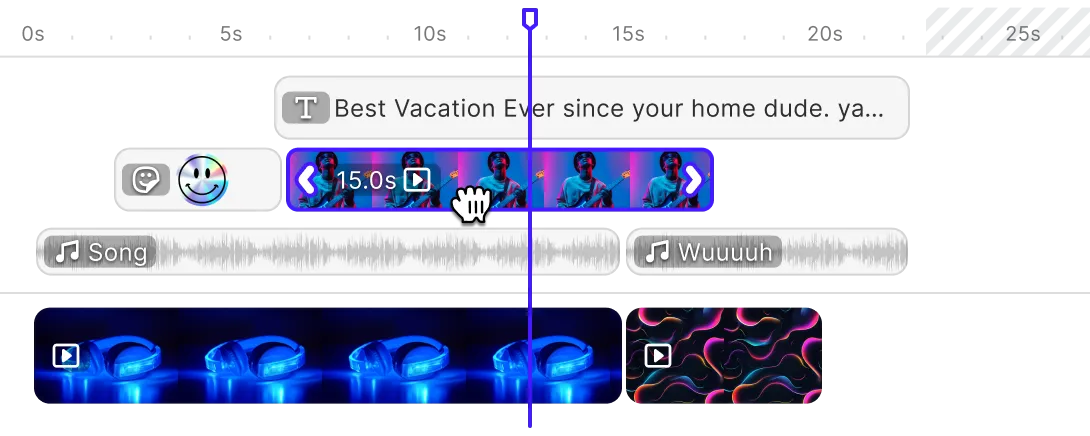
| File Format Support | Supports a wide range of professional file formats. Import: PSD, AI, IDML, SVG, PNG, JPEG, video formats, and custom fonts. Export: PNG, JPEG, WebP, PDF, MP4, and print-ready formats with CMYK support. | No import/export features. PixiJS renders creations programmatically. Loads images as textures from URLs, but no file format parsers, importers, or export functionality. All file handling has to be implemented manually. | IMG.LY enables full compatibility with professional design and media formats. PixiJS requires custom implementation for all file operations. |
| Asset Management | Built-in asset library system with search, filtering, tagging, and organization. Integrations with Getty Images, Unsplash, Airtable, and custom sources via API. Users browse and insert assets through visual interface. | None. Developers load sprites and textures programmatically via URLs or base64. Must build custom asset browsers, upload systems, and organization tools if needed. | IMG.LY offers ready-made asset libraries. PixiJS does not. |
| Production Readiness | Proven in production across enterprise apps. Regular updates, QA, and support. | Stable engine used in games and visual apps. App stability depends on your code. | IMG.LY is production-ready out of the box. PixiJS stability depends on implementation. |
| Pricing Model | Enterprise licensing based on usage and platform. Free trial available. | Free and open-source under MIT license. | IMG.LY offers enterprise licensing with support. PixiJS is free but requires heavy dev investment. |
| Community & Support | Dedicated engineers, SLAs, and professional onboarding. Extensive docs and tutorials. | A large and active open-source community with a busy Discord and frequent releases, but no SLAs. | IMG.LY offers enterprise-grade support. PixiJS provides community-only help. |
Key capabilities
Learn more about some of the functionalities of IMG.LY’s SDK.
Editing
Printing





Templating
Text variables.
Enable mass personalization and creative automation by embedding variables.
Placeholders & lockable designs.
Constrain templates to guide your users’ design and ensure brand consistency.
Configurable presets.
Enforce a consistent aesthetic across all creations by using preset filters, adjustments, fonts, and crop ratios.
Customizability
Build custom UIs.
Use the headless API powering all creative operations to implement an entirely custom UI.
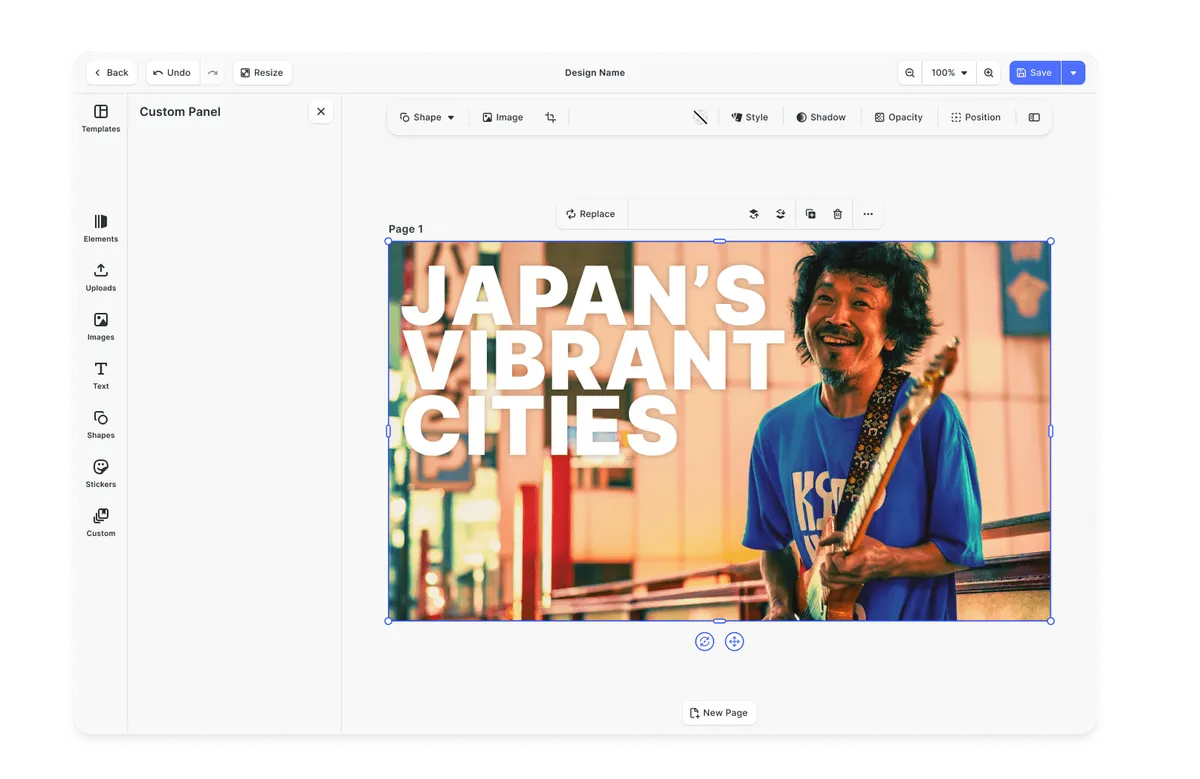
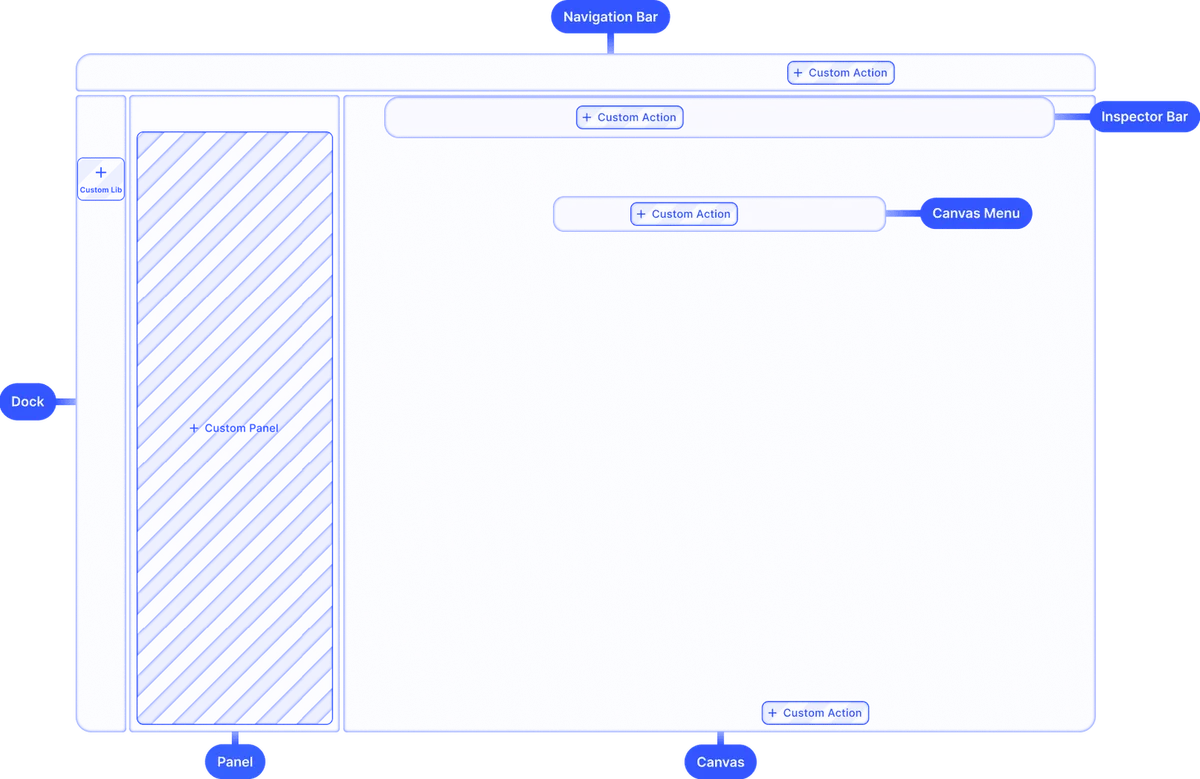
Theming.
Theme the editor to match your app.
Media libraries.
Set up custom libraries that are easily sortable.
Toolbar customization.
Reposition toolbar elements, change icons, or rename tools to fit your use case.
Internationalization.
Add support for additional languages, and customize any button label.
Export options.
Export designs in JPG, PNG, or PDF with custom quality, page ranges, and dimensions.
Check out other use cases
Learn more about related solutions.
Apparel Designer
Whether t-shirts, hoodies or caps, build for any use case, deploy on any platform.
Get in touch
Contact our sales team to learn more about licensing options and get access to our AI plugins for CE.SDK.
FAQs
IMG.LY provides a complete, production-ready editing UI with drag-and-drop tools, timeline editing, and asset libraries out of the box. PixiJS is a low-level 2D rendering engine that requires developers to build all UI components, editing tools, and workflows from scratch.
IMG.LY includes comprehensive editing capabilities (image adjustments, filters, text overlays, video timelines) ready for end users, while PixiJS only provides sprite rendering and texture management requiring months of custom development to build basic editing functionality.
IMG.LY provides full video editing with multi-track timelines, audio mixing, transitions, and effects. PixiJS has no built-in audio or video support and focuses solely on 2D graphics rendering.
IMG.LY offers complete white-label control with customizable branding, colors, fonts, and theming APIs. PixiJS has no UI, so all branding depends entirely on what developers build from scratch.
IMG.LY enables rapid deployment with pre-built editors that can be customized, while PixiJS requires extensive engineering effort to develop basic editing features using low-level rendering primitives.
IMG.LY includes built-in template-based automation, batch processing APIs, and server-side rendering for programmatic content generation. PixiJS has no automation features and is purely a client-side rendering library.