

IMG.LY vs. Marq
For full customization, scalable automation, and advanced creative workflows, see why IMG.LY SDK is a powerful alternative to Marq.
What makes IMG.LY the best Marq alternative?
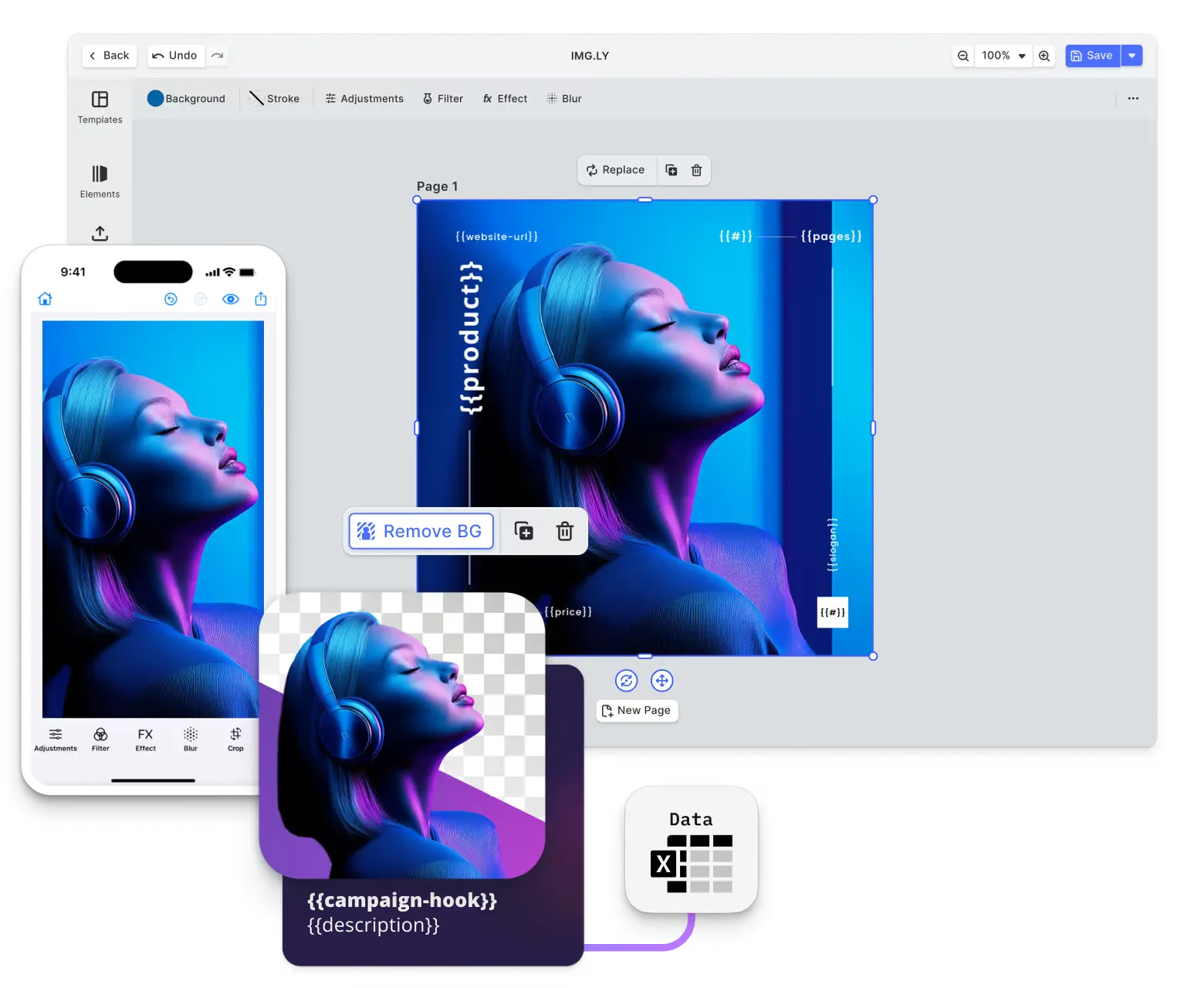
Interactive editing plus automation
Combines embedded, real-time editing with headless automation in the same engine. Templates created in visual editors can power batch generation, personalization, and large-scale programmatic production.
Professional design and print workflows
Advanced vector editing, typography controls, and print-ready export support enable high-quality design and production workflows, including professional color management and industry-standard output.
Cross-platform SDK architecture
Native SDKs for web, mobile, desktop, and server environments provide consistent rendering and performance across devices, supporting both interactive applications and backend automation pipelines.
Full customization and data control
A fully customizable, white-label architecture with offline support and flexible deployment options, giving complete control over UI, workflows, and data ownership.
Trusted by 100+
industry leaders














What our clients say about us
Integrating IMG.LY’s editor meant we didn’t have to build or maintain a complex editing layer ourselves. That kept our team focused on our core AI ad engine and saved us countless development hours — while still giving our customers the ability to polish and customize creatives at scale.
Hikari Senju
CEO, Omneky

With IMG.LY we built a central creative portal that now powers over 140 dealer campaigns across multiple automotive brands. Before this, asset creation was slow and inconsistent.
Martin Röhr
Product Owner, Digitas

By embedding IMG.LY’s editor we were able to hit key RFP requirements and deliver a template-based creative experience that now serves 1,000+ customers. It helped us win more deals and exceed enterprise expectations without needing to hire dedicated design teams.
Rob Driscoll
Director of PM, Optimizely

Since integrating IMG.LY’s editor, we now deliver 30,000+ ad creatives per month, dramatically shorten time-to-launch, and help our clients cut design spend by up to $10,000 per month.
Logan Welbaum
Founder, Plai
Our customers create over a million personalized postcards each year choosing from over hundreds of templates with IMG.LY’s SDK. It’s the only solution that allows us to build our own specialized, on-brand UI that integrates seamlessly with our platform.
Jeanine Zaalberg
Product Manager, SwissPost

From a developer’s perspective, the most powerful feature of the photo editor is the integration process. It was completely flawless, quick, and easy to integrate.
Stefano Fornari
CTO, Funambol
We compared IMG.LY SDK with other solutions and found that it would be the best fit for us since it provides all the features that are crucial for our use case.
Carem Pereira
SCRUM Manager, HP

IMG.LY vs. Marq at a glance
| Feature | IMG.LY | Marq | Notes |
|---|---|---|---|
| Primary Use Case | Dual-purpose SDK combining user-facing embedded editing with backend automation for programmatic generation at scale. The same unified engine handles both interactive visual editors embedded in apps and headless content generation for high-volume production workflows. | Cloud-based brand templating and web-to-print platform designed for creating, managing, and distributing branded content at scale. Focuses on enabling distributed teams to produce on-brand materials through lockable templates and automated data population. | IMG.LY serves as both an embedded editor and automation engine. Marq focuses on brand governance and template-based content creation for teams. |
| Target Audience | Serves both organizations seeking highly customizable solutions and those needing quick integration through ready-to-use starter kits. Targets developers building custom web-to-print platforms, marketing teams requiring template-based design workflows, and enterprises needing high-volume automated content generation. Template-based workflows make it accessible to non-designers while SDK depth serves technical teams. | Marketing teams, brand managers, sales enablement teams, and distributed organizations requiring brand consistency across locations or departments. Targets non-designers who need to create branded materials within controlled parameters set by design teams. | Both can serve marketing teams and non-designers through template-based workflows. IMG.LY additionally serves developers building custom platforms, while Marq focuses exclusively on business users. |
| Technical Approach | Custom C++ rendering engine (CreativeEngine) with native SDKs for Web, Mobile (iOS, Android, React Native, Flutter), Desktop (Electron, macOS), and Server (Node.js). Provides both client-side and server-side rendering with full headless mode for programmatic automation, processing over 500 million productions monthly. | Cloud-based web application with REST APIs, Webhook APIs, and iframe-based embedded editor. Provides developer platform for custom integrations and workflow automation, with embedding options for incorporating Marq templates into external applications through configurable iframes. | IMG.LY provides significantly broader platform coverage with native SDKs across web, mobile, desktop, and server environments, while Marq focuses on web-based embedding through iframes. |
| Advanced Design Editing | Professional-grade vector graphics engine with advanced typography features, layer management, masking, effects, and non-destructive editing workflows. Supports complex layout systems with adaptive designs that respond to content changes. | Web-based drag-and-drop editor with layers, advanced text controls, text box reflowing, and typesetting features. Supports image cropping, custom font uploads (with limitations for Adobe Creative Cloud fonts), and professional desktop publishing tools for creating brochures, flyers, newsletters, and presentations. | Both provide professional design tools suitable for print production. IMG.LY offers more comprehensive vector editing and typography control. |
| Print Production Support | Full professional print production support including CMYK and Pantone spot color spaces, PDF/X output with embedded color profiles, configurable bleed, and cutout lines that cutting printers read directly. Ensures print-ready files meet industry standards for commercial printing. | Supports PDF export with bleed and crop marks for print preparation. PDF/X standard compliance is not publicly documented. Provides print-oriented output capabilities for common web-to-print use cases like business cards, brochures, and marketing collateral. | IMG.LY explicitly supports industry-standard PDF/X formats and spot color workflows required for commercial print production, while Marq's PDF/X compliance is not documented. |
| File Format Support | Comprehensive format support including PDF (with PDF/X), PNG, JPEG, WebP, SVG, video (MP4, WebM), and direct import/export of design files. Supports embedded fonts, ICC color profiles, and maintains vector fidelity across formats. | Supports common image formats (PNG, JPEG, SVG), PDF export for print, and video embedding from external platforms (YouTube, Vimeo, Facebook, Brightcove). Allows import of images and assets from integrated sources including DAM systems and cloud storage. | Both handle standard image and PDF formats for web-to-print workflows. IMG.LY provides more extensive format support including video rendering and PDF/X variants, while Marq focuses on image import and PDF export with external video embedding. |
| Templating & Dynamic Editing | Template-based workflows with variable data binding, adaptive layouts that automatically adjust to content changes, and role-based template permissions. Templates can include locked elements, editable regions, and dynamic data placeholders that connect to external data sources for automated population. | Lockable templates protect brand elements (logos, fonts, colors) while allowing authorized users to customize specific content areas. Template admins can create templates with controlled editing permissions, and templates can be organized with filters and user group assignments for enterprise-scale management. | Both provide template systems for brand control. IMG.LY provides both programmatic template manipulation with variable data automation and lockable templates for brand consistency, while Marq focuses on user-based template access control and brand governance. |
| Creative Automation | Full headless mode enables programmatic content generation at scale without UI overhead. Supports batch generation, server-side rendering, API-driven automation workflows, and integration with data pipelines for high-volume personalized print production. | Creative automation allows auto-population of templates with data from CRM systems, company directories, and spreadsheets. Users can trigger bulk updates across multiple templates simultaneously, connect CRM opportunities for automated content generation, and scale content production. | Both support automated content generation for web-to-print workflows. IMG.LY provides headless server-side rendering for programmatic automation at massive scale, while Marq focuses on data-driven template population and CRM-triggered automation for distributed teams. |
| Variable Data & Personalization | Native variable data binding connects templates to external data sources (databases, APIs, spreadsheets) for dynamic text, images, and layout adjustments. Supports merge fields, conditional logic, and data-driven asset selection for personalized print materials like business cards, brochures, and direct mail at scale. | Data automation auto-populates template fields from CRM systems, company directories, and spreadsheets to accelerate personalized content creation. Integrations with DAM and CRM systems enable dynamic asset selection and data-driven customization for sales enablement, localized marketing materials, and personalized print collateral. | Both enable variable data for personalized print production. IMG.LY provides programmatic variable data binding for headless automation workflows, while Marq emphasizes CRM and DAM integrations for user-initiated data-driven personalization. |
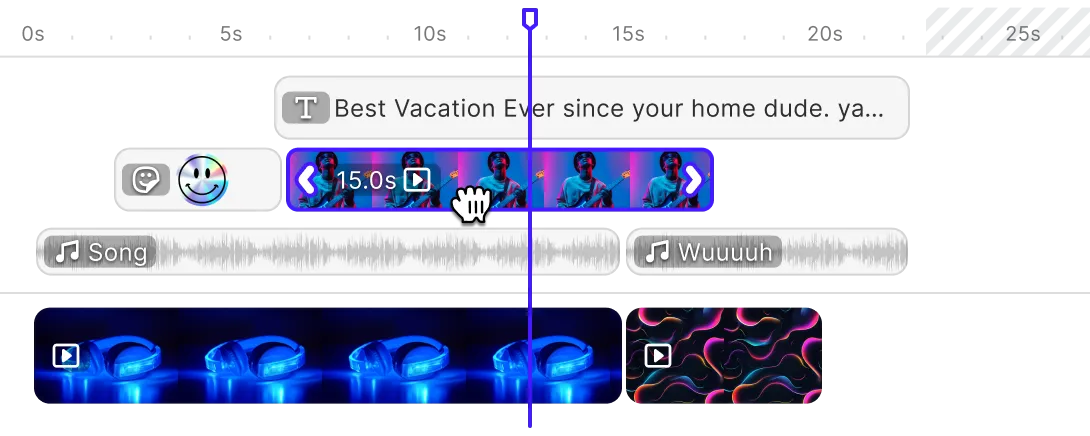
| Advanced Video Editing | Multi-track timeline-based video editing with trim, split, transitions, effects, text overlays, and audio mixing. Supports frame-accurate editing, keyframe animation, color grading, and video export in multiple formats. Can generate video content programmatically through headless automation for dynamic video campaigns. | Video embedding only (YouTube, Vimeo, Facebook, Brightcove), no timeline-based editing capabilities. Users can embed video content from external platforms into designs for presentations and digital publications, but cannot edit video timelines or perform video production within the platform. | IMG.LY provides comprehensive video editing and rendering capabilities for multimedia campaigns. Marq supports video embedding from external sources but does not offer video editing functionality. |
| AI Capabilities | AI features accessible through plugin architecture including text-to-image generation, background removal, image-to-image transformation, and smart cropping. AI capabilities can be invoked both in user-facing editors and programmatically through headless automation for scaled intelligent content generation workflows. | Marq AI covers an AI Brand Assistant that flags logo, color, and typography violations as people work, AI Marqet as a marketplace of prebuilt brand-safe automations, and Brand OS, in beta, trained on a customer brand guidelines and templates to generate on-brand content. The emphasis is brand governance over AI output rather than generative image or video tooling. | IMG.LY provides AI-powered design assistance through its plugin system. Marq does not currently document AI capabilities as part of its feature set. |
| Asset Management | Integrations with Getty Images, Unsplash, and custom DAM systems through extensible plugin architecture. Supports direct asset search, licensing, and insertion from integrated sources. Developers can build custom asset connectors to enterprise DAM systems and asset libraries through the SDK. | Integrations with Digital Asset Management (DAM) systems, Google Drive, Dropbox, and cloud storage platforms. Connected DAM assets become immediately usable in templates, transforming static libraries into active brand campaigns. Centralized Brand Kit stores logos, colors, fonts, and approved assets for consistent access. | Both support DAM integrations for centralized asset management. IMG.LY emphasizes developer-extensible asset plugins and programmatic asset access, while Marq provides pre-built DAM integrations and centralized Brand Kit management for business users. |
| User Interface | Provides ready-to-use editor interfaces through starter kits for immediate deployment, alongside fully customizable white-label options for custom-branded experiences. Teams can launch with pre-configured editors optimized for template-based workflows, then customize as needed. UI adapts to web, mobile, and desktop platforms with native controls. | Web-based drag-and-drop interface optimized for brand templating workflows with template library, editor canvas, and asset browser. UI is standardized across the platform with configuration options for embedded editors through allowlist parameters controlling available features and actions. | Both provide professional editing interfaces ready for template-based workflows. IMG.LY offers both pre-built and fully customizable options, while Marq provides a consistent interface with configuration-based customization. |
| White-labeling | Complete white-labeling with full removal of IMG.LY branding, customizable UI components, and branded export watermarks. Organizations can deliver the editing experience under their own brand identity without any reference to IMG.LY in user-facing implementations. | White-labeling capabilities are not publicly documented. Platform maintains Marq branding in the standard interface. Focus is on brand templating and governance for customers' brands rather than white-labeling the Marq platform itself for resale or custom-branded deployments. | IMG.LY provides comprehensive white-labeling for custom-branded implementations. Marq's white-labeling capabilities are not documented, with focus on customer brand management rather than platform rebranding. |
| User Roles & Permissions | Role-based template permissions control who can edit, or customize specific templates and design elements. Developers implement custom permission systems through the SDK, defining granular access control for templates, assets, and editing capabilities based on application-specific user roles and workflows. | Multiple administrator roles including Account Owner, Team Admin, Group Admin, and Template Admin, each with specific permission scopes. Template admins control template access and editing permissions, while collaboration settings govern project sharing, asset access, and team collaboration capabilities across user groups and departments. | Both support role-based access control for templates and content. IMG.LY provides standard roles of creator and adapter as well developer-defined permission systems for custom implementations, while Marq offers structured administrative roles and enterprise-level permission management through its managed platform. |
| Interactive Editing | Real-time interactive editing in all deployment environments (web, mobile, desktop) with instant visual feedback, undo/redo, preview modes, and responsive canvas interactions. Same editing capabilities available in both user-facing embedded editors and when configured for template-based workflows. | Real-time web-based collaborative editing with drag-and-drop interactions, live preview, chat functionality in the editor, and template-guided workflows. Users can share projects for collaboration with team members, make edits within defined template constraints, and preview changes before finalizing print-ready outputs. | Both provide real-time interactive editing for web-to-print workflows. IMG.LY offers cross-platform interactive editing across web, mobile, and desktop, while Marq focuses on web-based collaborative editing with built-in team communication features. |
| Component Architecture | Modular SDK architecture with extensible plugin system for custom components, effects, asset sources, and export formats. Developers can create reusable design components, custom UI elements, and template structures that users can reuse across projects while maintaining design system consistency. | Lockable template elements serve as the component approach, where designers create templates with protected brand components (logos, fonts, colors, layouts) that users cannot modify. Smart assets enable dynamic brand application across templates, allowing departments or offices to automatically display appropriate branded elements. | Both support reusable component concepts for brand consistency. IMG.LY provides a developer-extensible component and plugin architecture, while Marq uses lockable template elements and smart assets as its structured approach to component-based design control. |
| Cross-Platform Support | Native SDKs for Web (React, Vue, Angular, Svelte, Next.js), Mobile (iOS, Android, React Native, Flutter), Desktop (Electron, macOS), and Server (Node.js). Same CreativeEngine runs across all platforms with consistent rendering and feature parity, enabling unified web-to-print solutions across devices. | Web-based platform accessible through modern browsers with responsive interface. Developer platform provides REST APIs, Webhooks, and iframe-based embedding for integrating Marq functionality into external web applications. Mobile access available through responsive web interface, though native mobile SDKs are not documented. | IMG.LY provides native cross-platform SDKs with consistent functionality across web, mobile, desktop, and server environments. Marq operates as a web-first platform with API and embedding options for integration into external applications. |
| Extensive Customizability | Extensive customization through SDK configuration, custom UI development, plugin architecture, and programmatic control over all aspects of the editing and rendering pipeline. Developers can customize layouts, tools, workflows, export settings, and create entirely custom editing experiences on top of the core rendering engine. | Embedded editor customization through allowlist parameters and enabledFeatures configuration to limit available tools and actions. Template-level customization controls which elements users can edit, available fonts and colors, and permissible content modifications. Platform UI and core functionality remain standardized with configuration-based customization. | IMG.LY offers comprehensive developer-driven customization of the entire platform experience, while Marq provides configuration-based customization of template permissions and embedded editor feature sets. |
| Extensibility | Plugin architecture enables custom extensions for asset sources, AI capabilities, export formats, effects, and UI components. Developers can build proprietary functionality, integrate enterprise systems, and extend the platform without modifying core SDK code. Open architecture supports custom workflow integrations. | REST APIs, Webhook APIs, and developer platform enable custom integrations with CRM systems, DAM platforms, and business applications. SCIM API supports automated user lifecycle management through identity providers. Developers can build custom workflows that trigger Marq actions based on external events or automate content generation. | Both provide extensibility for custom integrations. IMG.LY emphasizes plugin-based architectural extensibility for custom functionality, while Marq focuses on API-driven workflow automation and enterprise system integrations. |
| Ease of Integration | Offers starter kits and pre-built solutions for quick integration alongside full SDK access for custom implementations. Teams can deploy production-ready editors within hours using starter kits, or invest in deeper customization as needs evolve. Comprehensive documentation, quick-start guides, and example applications support both rapid deployment and complex automation pipelines. | Managed platform approach with pre-built integrations for common tools (Google Drive, Dropbox, DAM systems, CRM platforms). Developer platform provides REST APIs and embedding documentation for custom integrations. Lower technical barrier for standard use cases through ready-to-use integrations and iframe embedding. | Both support quick deployment for standard use cases. IMG.LY provides starter kits for rapid integration while retaining full customization flexibility, whereas Marq offers managed platform simplicity with configuration-based customization. |
| Rendering Approach | Hybrid rendering architecture with client-side rendering in browsers and native apps, plus server-side rendering for headless automation. Custom C++ CreativeEngine ensures consistent output across all platforms. Can render entirely server-side for high-volume batch processing without client device overhead. | Cloud-based rendering through web application infrastructure. Content is rendered in the browser for interactive editing, with server-side PDF generation for final print exports. Rendering tied to web platform architecture, with API endpoints available for programmatic content generation through template manipulation. | Both support server-side rendering for print output. IMG.LY provides greater flexibility with hybrid client/server rendering and fully headless operation for scaled automation, while Marq operates through cloud-based web application rendering infrastructure. |
| Offline Capabilities | Full offline support after initial SDK load for client-side applications. Once loaded, the SDK operates entirely offline for editing and rendering, critical for high-volume print automation and environments with unreliable connectivity. Server-side deployments run autonomously without external service dependencies. | Not available. Marq is a cloud-based platform requiring internet connection for access, editing, and rendering operations. Users must maintain connectivity to access templates, collaborate with teams, and generate print-ready outputs through the web application infrastructure. | IMG.LY supports offline operation critical for print automation at scale and disconnected environments. Marq requires continuous internet connectivity as a cloud-based service, which may impact high-volume automated print workflows. |
| Production Readiness | Enterprise-proven with over 500 million automated productions monthly. Designed for production-scale web-to-print operations with high-availability server deployments, error handling, job queuing, and monitoring capabilities. Supports mission-critical print fulfillment workflows requiring reliability and performance. | Enterprise-ready platform with SAML authentication, SCIM user provisioning, enterprise governance features, and scalable cloud infrastructure. Proven in distributed brand management scenarios across enterprise organizations requiring centralized brand control with localized content production capabilities. | Both are production-ready for enterprise deployments. IMG.LY emphasizes high-volume automated generation scalability, while Marq focuses on enterprise brand governance and distributed team collaboration at scale. |
| Storage & Data Ownership | Customer controls storage and data ownership. SDK operates within customer infrastructure for on-premises or private cloud deployments. Headless server implementations store generated content in customer-controlled storage systems. No customer data stored on IMG.LY infrastructure beyond optional license management. | Cloud-based storage managed by Marq platform infrastructure. Projects, templates, and assets are stored within Marq's cloud environment. Specific data ownership policies are not publicly documented. Standard cloud security practices apply with user access control through administrative permissions and collaboration settings. | IMG.LY enables customer-controlled data storage and ownership through self-hosted deployments. Marq operates as a managed cloud platform with cloud-based storage, though specific data ownership policies are not publicly detailed. |
| Clear Pricing Model | Enterprise licensing with usage-based pricing model. Pricing scales with production volume and platform usage rather than per-seat licensing. Custom enterprise agreements available for high-volume deployments. Transparent pricing discussions through direct sales engagement for production-scale implementations. | Tiered subscription pricing with multiple plans accommodating different team sizes and feature requirements. Enterprise plans available with custom pricing for large organizations requiring advanced governance, integrations, and support. Free trial available, with pricing details accessible through sales consultation. | Both use enterprise-focused pricing models. IMG.LY emphasizes usage-based licensing for scalable automation scenarios, while Marq uses tiered subscriptions based on team size and feature requirements. |
Key capabilities
Learn more about some of the functionalities of IMG.LY’s SDK.
Editing
Printing





Templating
Text variables.
Enable mass personalization and creative automation by embedding variables.
Placeholders & lockable designs.
Constrain templates to guide your users’ design and ensure brand consistency.
Configurable presets.
Enforce a consistent aesthetic across all creations by using preset filters, adjustments, fonts, and crop ratios.
Customizability
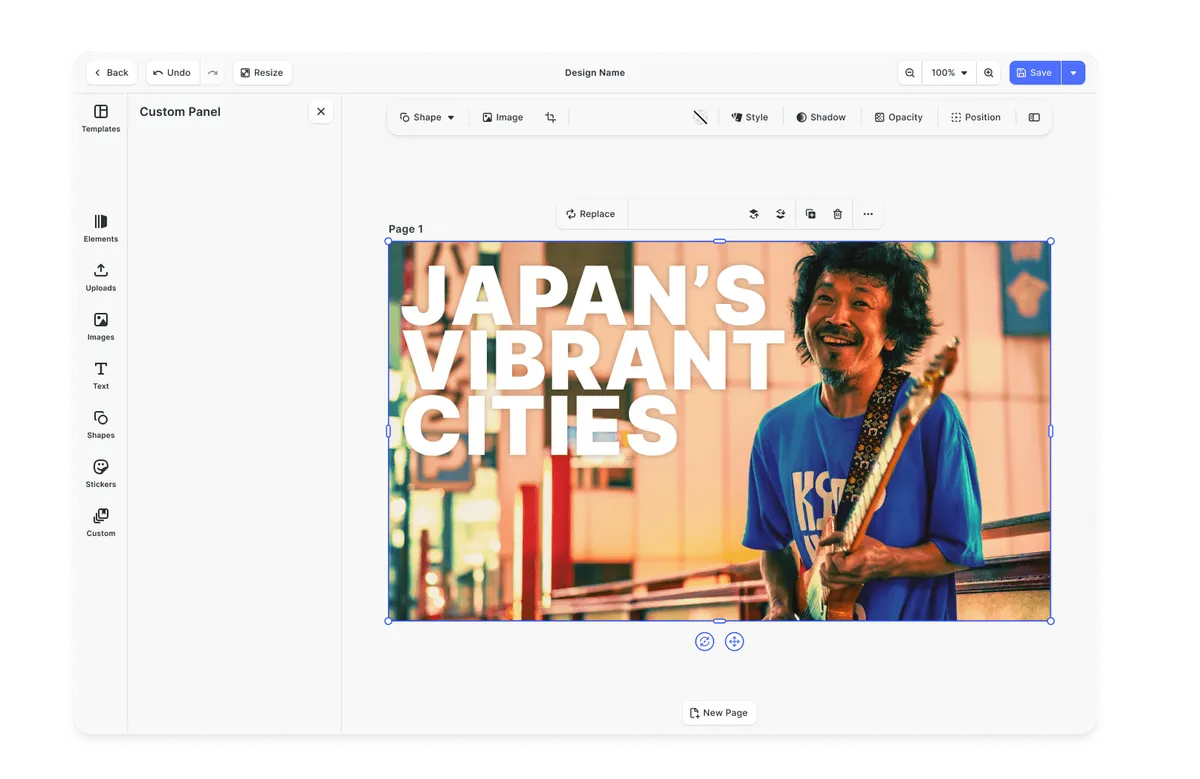
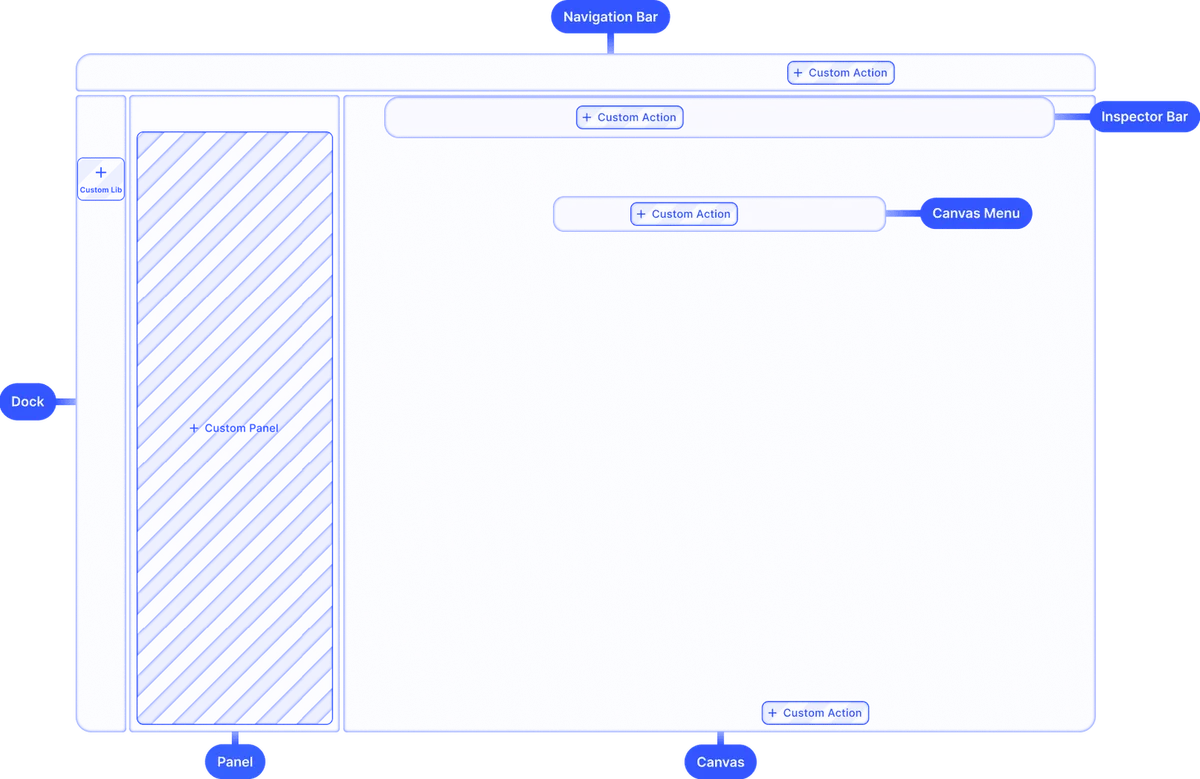
Build custom UIs.
Use the headless API powering all creative operations to implement an entirely custom UI.
Theming.
Theme the editor to match your app.
Media libraries.
Set up custom libraries that are easily sortable.
Toolbar customization.
Reposition toolbar elements, change icons, or rename tools to fit your use case.
Internationalization.
Add support for additional languages, and customize any button label.
Export options.
Export designs in JPG, PNG, or PDF with custom quality, page ranges, and dimensions.
Check out other use cases
Learn more about related solutions.
Apparel Designer
Whether t-shirts, hoodies or caps, build for any use case, deploy on any platform.
Get in touch
Contact our sales team to learn more about licensing options and get access to our AI plugins for CE.SDK.
FAQs
IMG.LY provides an embeddable SDK for building custom web-to-print applications where editing becomes a native product feature with full control over infrastructure and deployment. Marq is a cloud-based brand templating platform accessed through managed web application with iframe-based embedding options.
IMG.LY targets developers building custom web-to-print platforms with native SDKs, extensive customization, and headless automation capabilities. Marq serves marketing teams and distributed organizations with a managed platform focused on brand governance, template control, and pre-built integrations.
IMG.LY provides native SDKs for Web, iOS, Android, React Native, Flutter, desktop (Electron, macOS), and server (Node.js) with consistent rendering across all platforms. Marq operates as web-based platform with responsive interface and API access, without native mobile or desktop SDKs.
IMG.LY includes multi-track timeline-based video editing with transitions, effects, audio mixing, and programmatic video generation for multimedia campaigns. Marq supports video embedding from external platforms (YouTube, Vimeo) but does not offer video editing functionality.
IMG.LY supports full offline operation after initial SDK load, critical for high-volume print automation and disconnected environments with customer-controlled infrastructure. Marq requires continuous internet connectivity as a cloud-based service for all access, editing, and rendering operations.
IMG.LY offers complete white-labeling with full removal of branding, customizable UI components, and branded export options for custom-branded implementations. Marq's white-labeling capabilities are not publicly documented, focusing instead on customer brand management within the Marq platform.