


Design Constraint
Also known as: Constraint
Definition
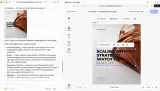
A restriction applied to a specific block in a CE.SDK scene that controls what an Adopter can modify about that element. Design constraints are set by a Creator and enforced when the scene is opened in the Adopter role. They are the mechanism that allows a designed template to be safely personalized without breaking the layout, violating brand guidelines, or exposing controls that end-users should not access.
Roles and Constraints
CE.SDK has four roles, each with a different level of editing access. Constraints operate between Creator and Adopter.
Creator
The unrestricted role for designers and template authors. Has full control over the scene and is where constraints are configured.
Adopter
The restricted role for end-users. Can only interact with elements the Creator has explicitly unlocked.
Viewer
Read-only access for reviewing or previewing a design without any editing capability.
Presenter
Read-only access optimized for displaying designs in full-screen or slideshow contexts.
How Constraints Work
CE.SDK uses a two-tier permission system. Roles define a user type with default scope settings. Scopes are the granular capabilities: moving a layer, editing text, changing a fill, deleting an element, selecting a block.
By default, all scopes are set to Allow at the global level, meaning any user can do anything. To introduce constraints, a Creator sets specific global scopes to Defer, which tells the engine to fall back to individual block-level scope settings. Block-level scopes default to disabled, so once Defer is set globally, no block can be manipulated unless its scope has been explicitly enabled at the block level by the Creator.
This model allows fine-grained, per-element control. One text block can be made editable while another is locked. One image placeholder can be swappable while the logo beside it is immovable. Each constraint is independent and configured at the block level.
Constrainable Properties
Constraints can be applied to the full range of block-level capabilities, including selection, movement, style changes, fill type changes, text editing, and deletion. The specific scopes available map to the actions a user can take on a given block, enabling only those appropriate for the Adopter’s task.
Use Cases
Brand template enforcement
A marketing team designs a social media template in Creator mode, locking the logo position and brand colors. The Adopter (a regional marketing manager) can update the headline text and swap the campaign image, but cannot touch the locked elements. The output is always brand-compliant.
Web-to-print personalization
A print platform allows customers to personalize products from a catalog of templates. Constraints define which text fields are editable (name, date, message) and which elements are fixed (layout, colors, brand marks). The Adopter interface shows only the editable controls, reducing friction and preventing errors.
Employee self-service design tools
HR or internal communications teams can open constrained templates and update variable fields without needing designer involvement. The constraint system guarantees the design remains within spec regardless of who edits it.
Links
Documentation and references for this concept.
Related Terms
Scope
A named permission that controls whether a specific editing operation is allowed, operating at two levels: global (edito…
Creator Role
The most permissive role in CE.SDK, designed for designers and administrators who build and manage templates, with unres…
Template
A pre-designed CE.SDK scene that defines a reusable layout with some elements locked for brand consistency and others op…