

Adopter Role
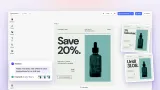
Adopter mode constrains the editor to a controlled subset of operations. Only the blocks the Creator unlocked are available for selection or editing, and only in the ways the Creator permitted. The editing surface presents just the relevant controls: no full property panel, no layer manager, no opportunity to modify brand-critical elements by accident.
This is the role that customer-facing CE.SDK products typically run in. The user is not building a design from the ground up but customizing a template within the boundaries the template author established in advance.
What the Adopter interface looks like
The Adopter’s editing surface is intentionally narrow. The visible controls depend on which scopes the Creator enabled on each block.
- A locked block has no selection affordance at all. The Adopter cannot click into it. It might be visually present (a logo, a background, a structural frame) but it is outside their interaction layer entirely.
- An editable block surfaces only the operations its scopes allow. A text block with
text/editenabled butlayer/movedisabled lets the Adopter rewrite the copy but not reposition the text box. - A placeholder block surfaces a Replace button or text cursor, depending on its type. Image placeholders open an asset library scoped to image content; text placeholders enter inline edit mode.
The result is a surface where every visible control corresponds to something the user is allowed to do. The friction-causing class of “looks editable but is not” does not happen.
Common Adopter products
Adopter mode is the default for most customer-facing CE.SDK products.
- Apparel customization in the T-Shirt Designer: customers add text and graphics inside the print boundary the Creator defined.
- Postcard and greeting card personalization in the Postcard Editor: end users pick a template, rewrite the message, swap photos, address it.
- Brand template usage for regional marketing teams: customize the headline and image inside a corporate template, with the brand colors and logo locked. Digitas Germany used this pattern to power 140+ dealer campaigns across multiple automotive brands.
The standard Design Editor Starter Kit also boots in Adopter mode by default, with Design Editor (Advanced) reserved for Creator-level work.
Switching from Adopter to Creator
Within a single editor instance, the role can change at runtime. The standard pattern: build the template in Creator mode, switch to Adopter to preview what end users will see, switch back to keep iterating. The same scene file flows between modes without reload.
See creator-role for the template-authoring side and scope for the per-block permission mechanism that makes the Adopter constraints work.
Links
Documentation and references for this concept.
Related Terms
Role
A user type in CE.SDK that determines the default set of editing permissions and the UI experience presented when the ed…
Creator Role
The most permissive role in CE.SDK, designed for designers and administrators who build and manage templates, with unres…
Scope
A named permission that controls whether a specific editing operation is allowed, operating at two levels: global (edito…